A novel screening system developed at Kyoto University enables researchers to investigate sperm cell development and health at the molecular level. The new approach, published in Cell Genomics, promises breakthroughs in male contraception and infertility treatments.
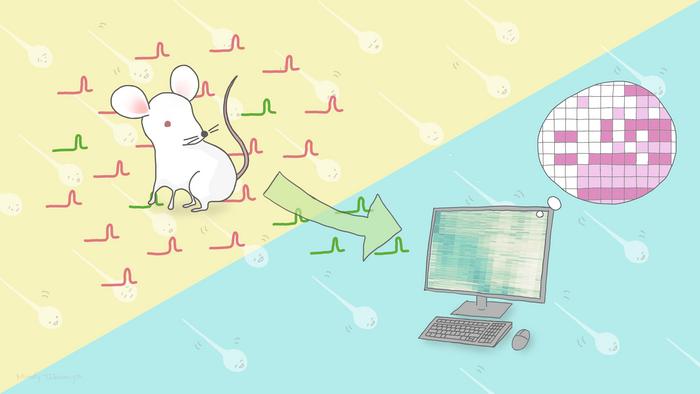
Credit: Mindy Takamiya/Kyoto University iCeMS
A novel screening system developed at Kyoto University enables researchers to investigate sperm cell development and health at the molecular level. The new approach, published in Cell Genomics, promises breakthroughs in male contraception and infertility treatments.
The study, led by Professor Jun Suzuki of the Institute for Integrated Cell-Material Sciences (iCeMS), addresses a critical gap by directly targeting genes within testicular cells inside living organisms. Utilizing a genetic tool called CRISPR, which can be likened to genetic scissors, the researchers developed a method to investigate which genes contribute to healthy sperm production in living animals. Until now, this had mainly been done in cells cultivated in the laboratory. The researchers randomly disrupted genes by developing a method to introduce a collection of genetic tools in lentivirus into testicular cells in testes at high efficiency. Through this method, the researchers made it possible to analyze the effects of targeted genes on specific biochemical reactions in the sperm cells, such as the movement of lipids (fats) in cell membranes.
Using the method, the team focused on sperms with defective capacitation, a process through which sperms become capable of fertilizing an egg. They identified these sperms by measuring how much calcium they absorbed. By using this method in live animals, they were able to identify a specific gene, Rd3, as being crucial for maintaining sperm cell health, particularly during sperm cell development. Despite Rd3’s previous association with eye function, the team found it is also highly active in round sperm cells, an early stage in sperm production, and that it plays a significant role in regulating sperm health. This discovery was made possible by examining how Rd3 interacts with mitochondria, structures responsible for energy production within cells.
To further understand Rd3’s function, Suzuki and his colleagues developed Hub-Explorer, a computational tool that revealed Rd3’s impact on regulation of oxidative stress—a condition linked to cellular damage. Rd3’s role in regulating oxidative stress revealed its significance in maintaining sperm integrity during development.
“While women have many available birth control options, choices for men remain limited,” says Noguchi, a first author of this paper. “This new screening method holds promise by aiding the discovery of key molecules, potentially leading to new birth control options and infertility therapies for men.”
“These discoveries not only advance our understanding of sperm cell development but also demonstrate the potential to uncover mysteries in different biological processes,” adds Suzuki. “The method can also be applied to other tissues, potentially expediting the development of drugs for a wide range of diseases.”
Despite these advancements, challenges remain. The researchers observed a gradual decline in the number of cells with targeted genes, suggesting room for improvement. They are currently exploring alternative approaches to enhance the effectiveness of their technique, and they plan to apply it to investigate various biological processes and diseases in other areas of the body.
###
Paper:
“In vivo CRISPR screening directly targeting testicular cells”
Cell Genomics
About Kyoto University’s Institute for Integrated Cell-Material Sciences (iCeMS):
At iCeMS, our mission is to explore the secrets of life by creating compounds to control cells, and further down the road to create life-inspired materials.
https://www.icems.kyoto-u.ac.jp/
For more information, contact:
Christopher Monahan / I. Mindy Takamiya
[email protected]
Journal
Cell Genomics
Article Title
In vivo CRISPR screening directly targeting testicular cells
Article Publication Date
5-Mar-2024