An international group of researchers leveraged open-access digital collections to validate an age-old hypothesis in evolutionary ecology. The classic hypothesis proposes that predators select for a great variety of camouflage and a limited variety of warning signals, but the idea has never been tested on natural prey.
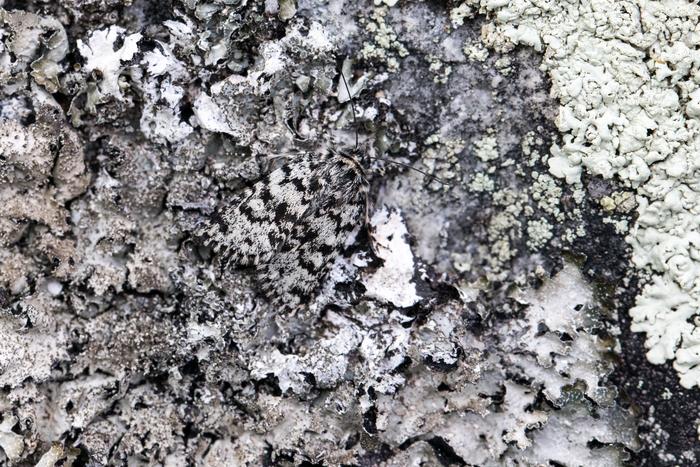
Credit: Jyrki Lehto
An international group of researchers leveraged open-access digital collections to validate an age-old hypothesis in evolutionary ecology. The classic hypothesis proposes that predators select for a great variety of camouflage and a limited variety of warning signals, but the idea has never been tested on natural prey.
The group of researchers, led by the University of Helsinki, finally gave the hypothesis its due empirical validation by accessing biodiversity databases with thousands of images in a ground-breaking analysis of variation in moth colouration.
The theory in question focuses on prey defences under the pressure of predators, such as birds. Camouflaged, or ‘cryptic’, prey aim to break the so-called target image of predators, and therefore display a wide array of patterns and colours. In contrast, toxic prey signal distastefulness with distinctive markings in a strategy called ‘aposematism’, and therefore stick to a uniform warning signal. In other words, cryptic species don’t want to be recognised but aposematic species do, leading to different evolutionary pressures on the variation of their colouration.
“For decades research has focused on explaining why aposematic species are variable even though theory does not allow it,” says Professor Johanna Mappes from University of Helsinki. But despite the debate this theory encourages, nobody has empirically tested its underlying hypothesis until now.
Instead of heading to the field, the team obtained their data from digitised records hosted by the Natural History Museum of London, the Global Biodiversity Information Facility and the Symbiotica Collections of Arthropods Network. They examined 2800 wing images from 82 moth species to assess the variation of patterns and colours within each species. Statistical tests factored in evolutionary history and ecological influences to determine whether variation differed between camouflaged and aposematic species.
Results aligned with the classic hypothesis: camouflaged species exhibited greater variation in wing patterns than aposematic species. But the difference in variation was not present across all measured dimensions. Although cryptic species displayed a greater variety of wing patterns, the variation of colour and contrast for those patterns was strikingly similar between cryptic and aposematic species. This suggests that pattern variability may be more crucial in disrupting predators’ search images while maintaining essential colour features for camouflaging or signalling on specific surfaces in their habitats. Warning signalling purpose in aposematic animals may also allow for colour variation in larger scale than has been expected previously.
“Of course there is also variation among aposematic species, just less than among cryptic ones.”, Professor Mappes says.
This study also underscores the untapped potential of using digital collections as a testbed for outstanding research questions. The answers to important questions may already exist in museums, not in forgotten basements or dusty shelves, but digitised and freely available online.
However, natural history museums are still undervalued to test evolutionary and ecological theories, says Professor Mappes. Collections can offer a powerful research pathway to empiricists, who must otherwise contend with their mere mortal means in the face of theory that covers generational timescales and continental scopes.
In conclusion, this pioneering study demonstrates that the answers to evolutionary questions may already reside in online archives. By embracing the digital era, evolutionary ecologists can address mysteries without relying on elaborate field systems, but by utilizing the amazing efforts of museums to digitise their physical collections.
Journal
Nature Communications
DOI
10.1038/s41467-024-45329-5
Subject of Research
Animals
Article Title
Predator selection on phenotypic variability of cryptic and aposematic moths.
Article Publication Date
23-Feb-2024