• HOME
  • NEWS
  • EXPLORE
    • CAREER
      • Companies
      • Jobs
    • EVENTS
    • iGEM
      • News
      • Team
    • PHOTOS
    • VIDEO
    • WIKI
  • BLOG
  • COMMUNITY
    • FACEBOOK
    • INSTAGRAM
    • TWITTER
Saturday, June 6, 2026
BIOENGINEER.ORG
No Result
View All Result
  • Login
  • HOME
  • NEWS
  • EXPLORE
    • CAREER
      • Companies
      • Jobs
        • Lecturer
        • PhD Studentship
        • Postdoc
        • Research Assistant
    • EVENTS
    • iGEM
      • News
      • Team
    • PHOTOS
    • VIDEO
    • WIKI
  • BLOG
  • COMMUNITY
    • FACEBOOK
    • INSTAGRAM
    • TWITTER
  • HOME
  • NEWS
  • EXPLORE
    • CAREER
      • Companies
      • Jobs
        • Lecturer
        • PhD Studentship
        • Postdoc
        • Research Assistant
    • EVENTS
    • iGEM
      • News
      • Team
    • PHOTOS
    • VIDEO
    • WIKI
  • BLOG
  • COMMUNITY
    • FACEBOOK
    • INSTAGRAM
    • TWITTER
No Result
View All Result
Bioengineer.org
No Result
View All Result
Home NEWS Science News Biology

Anti-ageing drug rapamycin improves immune function through endolysosomes

Bioengineer by Bioengineer
February 28, 2024
in Biology
Reading Time: 2 mins read
0
Anti-aging drug rapamycin
Share on FacebookShare on TwitterShare on LinkedinShare on RedditShare on Telegram

The therapeutic drug rapamycin, which is normally used in cancer therapy and after organ transplants, can extend the lifespan and health span of laboratory animals. Understanding how rapamycin extend lifespan is important, as it helps to prevent unwanted side effects. “We know that rapamycin extends lifespan via two mechanisms: increased autophagy and decreased activity of a protein called S6K. It has been shown that mice with altered S6K live longer. But the mechanism by which S6K extends lifespan is unclear,” says Sebastian Grönke, co-author of the study.
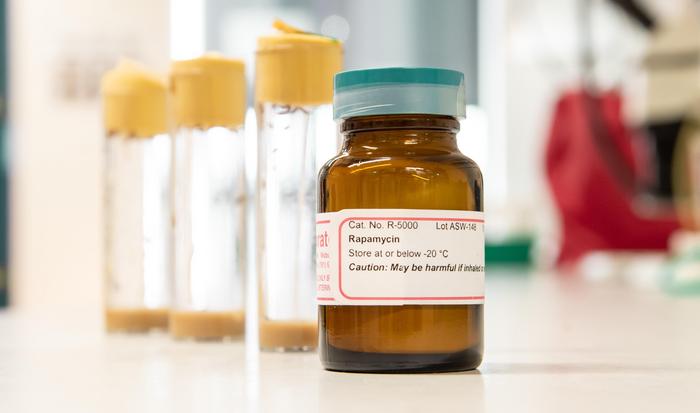
Anti-aging drug rapamycin

Credit: K. Link/ Max Planck Institute for Biology of Ageing

The therapeutic drug rapamycin, which is normally used in cancer therapy and after organ transplants, can extend the lifespan and health span of laboratory animals. Understanding how rapamycin extend lifespan is important, as it helps to prevent unwanted side effects. “We know that rapamycin extends lifespan via two mechanisms: increased autophagy and decreased activity of a protein called S6K. It has been shown that mice with altered S6K live longer. But the mechanism by which S6K extends lifespan is unclear,” says Sebastian Grönke, co-author of the study.

Better immune function in old age thanks to endolysosomes

The researchers were able to show that an altered activity of S6K influences the endolysosomes. These break down material in the cells and play an important role in regulating various cellular processes, such as inflammatory reactions. “When we suppressed S6K activity or the inflammatory signalling in the fat body, the flies lived longer, showed better immune function at old age and were able to clear bacterial infections more efficiently,” explains Pingze Zhang, first author of the study. “Ultimately, we assume that the endolysosomes prevent the age-related increase in pro-inflammatory factors and that this is precisely where rapamycin attacks,” concludes Sebastian Grönke.
 
Syntaxin 13: a link also found in mice

The researchers also identified an important link between the endolysosomal system and age-related inflammation: the protein syntaxin 13. This protein is increased in the liver of rapamycin-treated mice, suggesting that the regulation of the endolysosomal system and the control of inflammatory pathways during ageing is similar between flies and mice.


Journal

Nature Aging

DOI

10.1038/s43587-024-00578-3

Method of Research

Experimental study

Subject of Research

Animals

Article Title

Nature Aging

Article Publication Date

27-Feb-2024

Share12Tweet8Share2ShareShareShare2

Related Posts

New Study Reveals the Role of Insects in Our Ancestors’ Diet — Biology

New Study Reveals the Role of Insects in Our Ancestors’ Diet

June 5, 2026
RNA-Protein Self-Replication Systems Show Path Toward Evolutionary Extinction — Biology

RNA-Protein Self-Replication Systems Show Path Toward Evolutionary Extinction

June 5, 2026

Active Helitron Transposon Family Discovered in Wheat

June 5, 2026

How the Body Produces Reliable Antibodies Amidst Biological Chaos

June 5, 2026

POPULAR NEWS

  • ESMO 2025: mRNA COVID Vaccines Enhance Efficacy of Cancer Immunotherapy

    322 shares
    Share 129 Tweet 81
  • Multi-Hospital Study Reveals Long Covid Burden Is Twice as High as Current Estimates

    89 shares
    Share 35 Tweet 22
  • Saying Goodbye to PGY-6: Pediatric Fellowship Realities

    79 shares
    Share 32 Tweet 20
  • Common Food Preservatives Associated with Elevated Blood Pressure and Increased Heart Disease Risk

    57 shares
    Share 23 Tweet 14

About

We bring you the latest biotechnology news from best research centers and universities around the world. Check our website.

Follow us

Recent News

Catalytic Endo-Stereoselective [2+2] Norbornadiene-Alkyne Cycloaddition

Motor Cortex Microstructure Links to Parkinson’s Severity

Cortico-Pallidal Beta Activity Disrupts Turning in Parkinson’s

Subscribe to Blog via Email

Enter your email address to subscribe to this blog and receive notifications of new posts by email.

Join 82 other subscribers
  • Contact Us

Bioengineer.org © Copyright 2023 All Rights Reserved.

Welcome Back!

Login to your account below

Forgotten Password?

Retrieve your password

Please enter your username or email address to reset your password.

Log In
No Result
View All Result
  • Homepages
    • Home Page 1
    • Home Page 2
  • News
  • National
  • Business
  • Health
  • Lifestyle
  • Science

Bioengineer.org © Copyright 2023 All Rights Reserved.