COLUMBUS, Ohio – Until recently, Orthacanthus gracilis could have been considered the “John Smith” of prehistoric shark names, given how common it was.
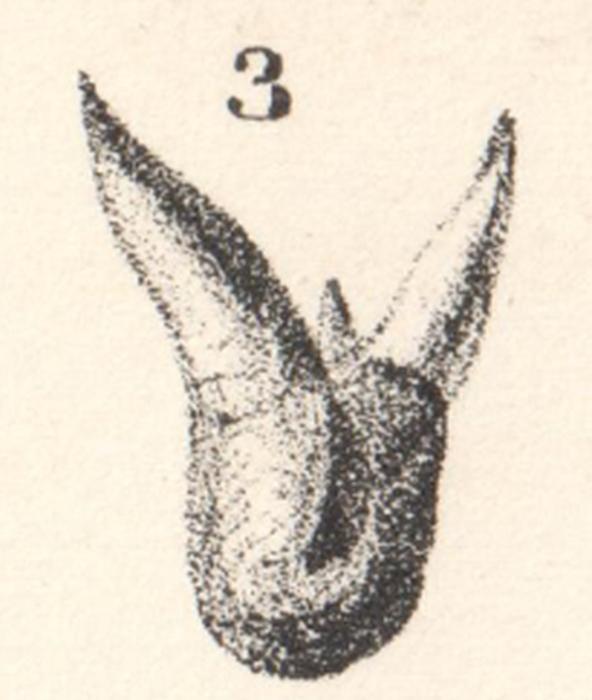
Credit: Modified from Babcock (2024), after Newberry (1875).
COLUMBUS, Ohio – Until recently, Orthacanthus gracilis could have been considered the “John Smith” of prehistoric shark names, given how common it was.
Three different species of sharks from the late Paleozoic Era – about 310 million years ago – were mistakenly given that same name, causing lots of grief to paleontologists who studied and wrote about the sharks through the years and had trouble keeping them apart.
But now Loren Babcock, a professor of earth sciences at The Ohio State University, has finished the arduous task of renaming two of the three sharks – and in the process rediscovered a wealth of fossil fishes that had been stored at an Ohio State museum for years but had been largely forgotten.
In order to change the names, Babcock had to go through a process governed by the International Commission on Zoological Nomenclature (ICZN). He had to document the need to change the names, propose new names and submit them to an ICZN-recognized journal for peer review and then have the ICZN officially accept the names.
“It was one of the most complex naming problems we have had in paleontology, which is probably one reason no one attempted to fix it until now,” Babcock said.
“A lot of scientists in the field have written, thanking me for doing this. We are all happy it is finally done,” he said.
One measure of the impact the renaming has had on the field: Babcock’s paper announcing the new names was just published in the journal ZooKeys on Jan. 8, but it has already been referenced on seven different Wikipedia pages.
The original Orthacanthus gracilis fossil was found in Germany and named in 1848. That species gets to keep the name.
The remaining two fossils were found in Ohio and named by the famous American paleontologist John Strong Newberry in 1857 and 1875.
Babcock renamed the Ohio sharks Orthacanthus lintonensis and Orthacanthus adamas, both based on the name of the place where they were originally found.
Why did Newberry give the two Ohio sharks the same name?
“He probably just forgot. It was nearly 20 years between the time the two species were named,” Babcock said.
And as far as giving it the same name as a German species: “In those days, it was really difficult to search for names that were already in existence – they did not have the internet.”
The sharks themselves were fascinating creatures, Babcock said. They were large and creepy, nearly 10 feet long, and looked more like eels than present-day sharks, with long dorsal fins extending the length of their backs and a peculiar spine extending backward from their heads.
They lived in the fresh or brackish water of what are known as “coal swamps” of the late Carboniferous Period (323-299 million years ago) during the late Paleozoic Era. They belong to an extinct group of chondrichthyans (which includes sharks, skates and rays) called the xenacanthiforms.
Newberry was for a time the chief geologist at the Geological Survey of Ohio. He played an important role in the early growth of what is now the Orton Geological Museum at Ohio State.
Babcock, who is the current director of the Orton Museum, decided to begin the renaming process after reviewing the museum’s collection. He was surprised to see how many fossils the museum had that had been collected by Newberry, including the two prehistoric sharks.
Babcock wrote about Orton’s Newberry collection in a new article published in the Journal of Vertebrate Paleontology.
Through the years, scientists have written about how various Newberry specimens had been lost. It turns out many had been at the Orton Museum.
“No museum has a larger collection of Newberry’s fossils except for the American Museum of Natural History in New York City,” Babcock said.
“Not a lot of people are aware of that – I did not even know the extent of our collection. If you’re looking for part of the Newberry collection and can’t find it in the American Museum of Natural History, it is probably going to be here.”
Journal
ZooKeys
DOI
10.3897/zookeys.1188.108571
Method of Research
Observational study
Subject of Research
Not applicable
Article Title
Replacement names for two species of Orthacanthus Agassiz, 1843 (Chondrichthyes, Xenacanthiformes), and discussion of Giebelodus Whitley, 1940, replacement name for Chilodus Giebel, 1848 (Chondrichthyes, Xenacanthiformes), preoccupied by Chilodus Müller & Troschel, 1844 (Actinopterygii, Characiformes)
Article Publication Date
8-Jan-2024