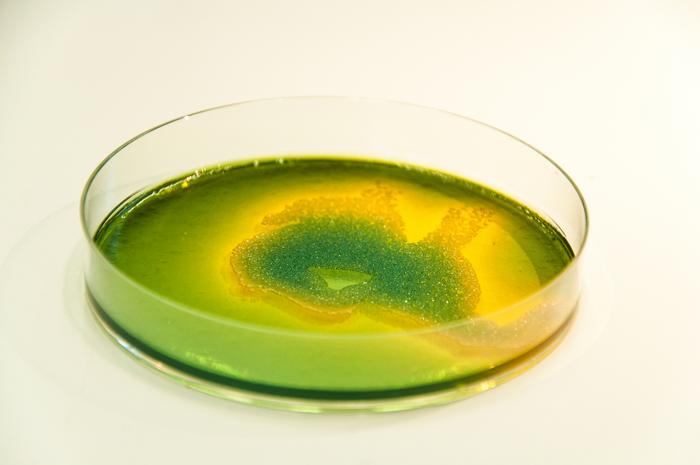
As water temperatures rise, so does the risk of various microorganisms harmful to humans and ecosystems increasingly appearing in large numbers in the North Sea and Baltic, a phenomenon we currently know mainly from tropical regions. Previous research conducted at the Alfred Wegener Institute has revealed that, in mild summers, bacteria belonging to the genus Vibrio can only be found in small amounts in seawater; in response to heat waves, however, their growth can skyrocket, particularly when the water temperature exceeds 22 degrees Celsius – and the chances of that happening are on the rise due to climate change. These “vibrions” (pathogenic microorganisms) can lead to gastrointestinal disease or severe inflammation.
Credit: Alfred-Wegener-Institut / Tina Wagner
As water temperatures rise, so does the risk of various microorganisms harmful to humans and ecosystems increasingly appearing in large numbers in the North Sea and Baltic, a phenomenon we currently know mainly from tropical regions. Previous research conducted at the Alfred Wegener Institute has revealed that, in mild summers, bacteria belonging to the genus Vibrio can only be found in small amounts in seawater; in response to heat waves, however, their growth can skyrocket, particularly when the water temperature exceeds 22 degrees Celsius – and the chances of that happening are on the rise due to climate change. These “vibrions” (pathogenic microorganisms) can lead to gastrointestinal disease or severe inflammation.
“We can’t yet reliably gauge or predict the threat posed by pathogenic vibrions and other microorganisms harmful to the health of humans and ecosystems, or their negative economic impacts on Europe,” says Dr Katja Metfies, a molecular ecologist at the Alfred Wegener Institute, Helmholtz Centre for Polar and Marine Research (AWI) and head of the joint project. “As such, I’m very pleased that we can now address the topic in PrimePrevention.” The research consortium’s ultimate goal is to provide technology- and data-based recommendations for early-warning systems and information chains to minimise the effects of marine biological hazards. In this regard, the project will furnish political decision-makers and society with the technological and scientific background needed in order to develop adapted marine monitoring and assessment strategies. More than 30 experts from the fields of monitoring sensors, social research and microbiology will contribute.
To make this work, it is essential to know the potential biological hazards in the ocean. The research team will combine bleeding-edge technologies for identifying marine microorganisms with the latest molecular-genetic analysis methods used in environmental observations, which also draw on advances in medical diagnostics and forensics. To analyse the composition of marine eukaryotic microorganisms from a broad range of environmental samples, PrimePrevention will employ a selection of complementary methods: Next Generation Sequencing, molecular sensor technologies, and quantitative polymerase chain reaction (PCR).
Further, the team will develop modular, distributed monitoring systems with various degrees of complexity, spatial and temporal coverage to achieve intelligent, targeted measurements in the field. By doing so, the researchers’ goal is to ensure that the observational network can be operated economically in the future. And to make sure that information on potential environmental hazards reaches the populace when needed, the project will work in close collaboration with civil society, political decision-makers, government offices and other stakeholders and develop an information system for the public.
In addition to biological hazards, the 3rd DAM research mission mareXtreme will address other thematic focus areas. The participating researchers will also collaborate on a cross-project basis, as the effects of individual extreme events and natural hazards can be amplified when they occur simultaneously or in rapid succession and interact. Beyond marine-biological hazards, marine geo-risks and physical-oceanographic risks will be in the spotlight. Further information can be found at this website: https://www.allianz-meeresforschung.de/news/dritte-dam-forschungsmission-gestartet.
The PrimePrevention Consortium:
Alfred Wegener Institute, Helmholtz Centre for Polar and Marine Research
Aquaecology GmbH
Federal Maritime and Hydrographic Agency
Kiel University
GEOMAR Helmholtz Centre for Ocean Research, Kiel
Jade University of Applied Sciences, Wilhelmshaven
Leibniz Institute for Baltic Sea Research, Warnemünde
Thünen Institute of Baltic Sea Fisheries
University of Freiburg
Institute for Chemistry and Biology of the Marine Environment, University of Oldenburg
Method of Research
Experimental study
Subject of Research
Not applicable