Brown fat cells convert energy into heat – a key to eliminating unwanted fat deposits. In addition, they also protect against cardiovascular diseases. Researchers from the University Hospital Bonn (UKB) and the Transdisciplinary Research Area “Life & Health” at the University of Bonn have now identified the protein EPAC1 as a new pharmacological target to increase brown fat mass and activity. The long-term aim is to find medicines that support weight loss. The results of the study have now been published in the renowned journal Nature Cell Biology.
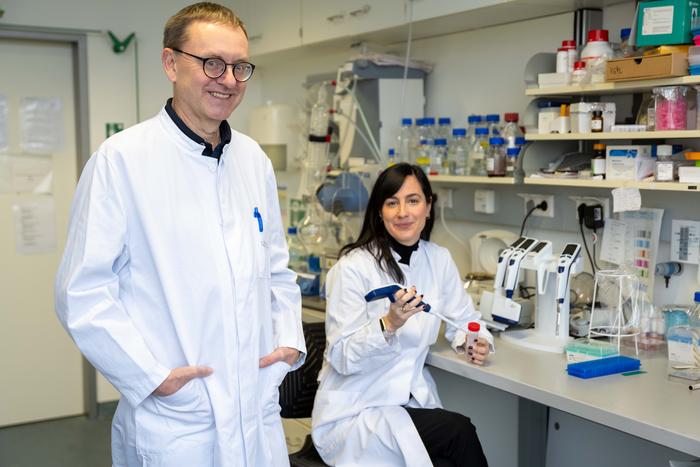
Credit: University Hospital Bonn (UKB) / Alessandro Winkler
Brown fat cells convert energy into heat – a key to eliminating unwanted fat deposits. In addition, they also protect against cardiovascular diseases. Researchers from the University Hospital Bonn (UKB) and the Transdisciplinary Research Area “Life & Health” at the University of Bonn have now identified the protein EPAC1 as a new pharmacological target to increase brown fat mass and activity. The long-term aim is to find medicines that support weight loss. The results of the study have now been published in the renowned journal Nature Cell Biology.
Obesity is defined as a pathological increase in white fat, and has become a major problem worldwide, with a greatly increased risk of cardiovascular diseases such as heart attack and stroke. “Exercise and dieting are not enough to effectively and permanently shed the pounds,” says corresponding author Prof. Alexander Pfeifer, Director of the Institute of Pharmacology and Toxicology at the University Hospital Bonn and member of the Transdisciplinary Research Areas (TRA) “Life & Health” and “Sustainable Futures” at the University of Bonn. “Our energy-dense foods lead to energy being stored in white fat. But losing weight isn´t that easy, as the body saves energy in response to a low-calorie diet. So our goal is to achieve additional energy release.”
Aim are therapies that keep the energy balance in equilibrium
Brown fat cells, on the other hand, act as a biological oven and ensure, for example, that newborn babies can cope with cold exposure after birth. However, adults hardly have any brown fat, and it can be found mainly in young and slim people. “We therefore asked how brown fat mass can be increased while simultaneously reducing bad white fat,” says Bonn postdoctoral researcher and first author Dr. Laia Reverte-Salisa.
Together with researchers from the University Medical Center Hamburg-Eppendorf, Helmholtz Munich and the University of Toulouse-Paul Sabatier, the Bonn team investigated the cAMP signaling pathway in fat metabolism that plays a central role in fat cells. Using a mouse model, they discovered that the relatively unknown protein “exchange proteins directly activated by cAMP” (EPAC1), is responsible for the growth of brown fat. In addition, EPAC1 even increases the formation of brown fat cells in white fat, which are also known as “beige” cells. Prof. Pfeifer’s team also showed that the signaling pathway is also active in human fat cells. In addition, they confirmed the function of EPAC1 in human organoids – organ-like microstructures that serve as a human brown fat model. The Bonn researchers further found that a non-functional human EPAC1 gene variant is associated with an increased body mass index (BMI). “Our study shows that EPAC1 is an attractive target to increase brown fat mass and thus also energy expenditure,” says Prof. Pfeifer. In view of the worldwide increase in obesity, he hopes to develop novel therapies that help those affected to combat metabolic diseases. This study was conducted in the context of the DFG Collaborative Research Center Transregio-SFB 333 “Brown and Beige Fat – Organ Interactions, Signaling Pathways and Energy Balance (BATenergy)”, which is pursuing a better understanding of the different types of adipose tissue and their role in metabolic diseases.
Publication: Laia Reverte-Salisa et al; EPAC1 enhances brown fat growth and beige adipogenesis; Nature Cell Biology; DOI: https://doi.org/10.1038/s41556-023-01311-9
Journal
Nature Cell Biology
DOI
10.1038/s41556-023-01311-9
Article Title
EPAC1 enhances brown fat growth and beige adipogenesis
Article Publication Date
9-Jan-2024