WEST LAFAYETTE, Ind. — Researchers in Purdue University’s College of Pharmacy are leveraging the dual roles played by an enzyme found in both cancer cells and T cells to create a novel cancer immunotherapy compound.
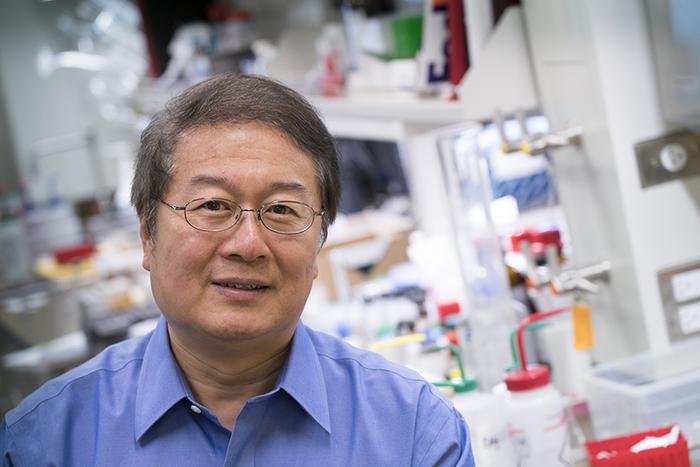
Credit: (Photo provided by Zhong-Yin Zhang)
WEST LAFAYETTE, Ind. — Researchers in Purdue University’s College of Pharmacy are leveraging the dual roles played by an enzyme found in both cancer cells and T cells to create a novel cancer immunotherapy compound.
Zhong-Yin Zhang leads a team that has developed TP1L, a highly potent and selective small-molecule degrader. It targets the enzyme TC-PTP, or T-cell protein tyrosine phosphatase, in cells and deletes it.
He said recent studies have shown that deleting TC-PTP in certain tumor cells promotes antigen presentation, which alerts the immune system to the presence of tumor cells. Other studies have shown that the loss of the enzyme in T cells stimulates the activation and reproduction of T cells, which direct immune cells to fight and destroy tumor cells.
Zhang is head of the Borch Department of Medicinal Chemistry and Molecular Pharmacology, Distinguished Professor of Medicinal Chemistry, the Robert C. and Charlotte P. Anderson Chair in Pharmacology, a member of Purdue Institute for Cancer Research, and director of the Purdue Institute for Drug Discovery. The research has been published in the peer-reviewed journal Chemical Science of the Royal Society of Chemistry.
Expanding immunotherapy options
Cancer immunotherapy is a treatment that uses the body’s immune system to find and destroy tumor cells rather than introducing pharmaceutical compounds that attack the tumor cells themselves.
Zhang said alternatives to current immunotherapy must be developed.
“Current immunotherapy approaches are effective only in 15% of the patient population,” he said. “The potency of current immunotherapy agents can be readily diminished as the cancer metastasizes and the genome alters. Also, current immunotherapy has been associated with substantial expenses and various toxicities, including neurological events.”
Zhang said TC-PTP’s dual roles make it an attractive target for developing novel cancer immunotherapy agents.
“Targeting TC-PTP with the small-molecule degraders represents an alternative approach to increase tumor antigen presentation and alleviate the inhibitory constraints on immune cells in the tumor microenvironment for improved immunotherapy,” he said.
Creating and validating TP1L
Zhang and his team used rational design and systematic screening to discover TP1L, which he called “the first highly potent and selected TC-PTP degrader.”
“TP1L was developed by leveraging the cell’s ubiquitin-proteasome machinery to achieve selective degradation of TC-PTP,” Zhang said. “Through TC-PTP degradation and augmentation of TC-PTP substrate phosphorylation, TP1L can increase interferon signaling in tumor cells and intensify T-cell activation, therefore enhancing tumor-killing efficacy of T cells.”
After T cells kill the tumor cells, TP1L remains intact and can catalyze multiple additional rounds of TC-PTP degradation.
“We surmise that TP1L not only provides a unique opportunity for in-depth interrogation of TC-PTP biology but also serves as an excellent starting point for the development of novel immunotherapeutic agents targeting TC-PTP,” Zhang said.
Further developments
Zhang and his team will continue to develop TP1L at Purdue.
“We will continue to improve the potency and drug properties of the TP1L and expand its utility of the degraders on different cancers,” Zhang said.
Zhang disclosed TP1L to the Purdue Innovates Office of Technology Commercialization, which has applied for a patent to protect the intellectual property. Industry partners interested in developing the compound or commercializing it for the marketplace should contact Joe Kasper, assistant director of business development and licensing — life sciences, at [email protected], about track code 70394.
About Purdue University
Purdue University is a public research institution with excellence at scale. Ranked among top 10 public universities and with two colleges in the top 4 in the United States, Purdue discovers and disseminates knowledge with a quality and at a scale second to none. More than 105,000 students study at Purdue across modalities and locations, with 50,000 in person on the West Lafayette campus. Committed to affordability and accessibility, Purdue’s main campus has frozen tuition 12 years in a row. See how Purdue never stops in the persistent pursuit of the next giant leap, including its first comprehensive urban campus in Indianapolis, the new Mitchell E. Daniels, Jr. School of Business, and Purdue Computes, at https://www.purdue.edu/president/strategic-initiatives.
About Purdue Innovates Office of Technology Commercialization
The Purdue Innovates Office of Technology Commercialization operates one of the most comprehensive technology transfer programs among leading research universities in the U.S. Services provided by this office support the economic development initiatives of Purdue University and benefit the university’s academic activities through commercializing, licensing and protecting Purdue intellectual property. In fiscal year 2022, the office reported 157 deals finalized with 237 technologies signed, 379 disclosures received and 169 issued U.S. patents. The office is managed by the Purdue Research Foundation, which received the 2019 Innovation and Economic Prosperity Universities Award for Place from the Association of Public and Land-grant Universities. In 2020, IPWatchdog Institute ranked Purdue third nationally in startup creation and in the top 20 for patents. The Purdue Research Foundation is a private, nonprofit foundation created to advance the mission of Purdue University. Contact [email protected] for more information.
Writer/Media contact: Steve Martin, [email protected]
Source: Zhong-Yin Zhang, [email protected]
Journal
Chemical Science
DOI
10.1039/D3SC04541B
Article Title
Discovery of a selective TC-PTP degrader for cancer immunotherapy
Article Publication Date
24-Oct-2023