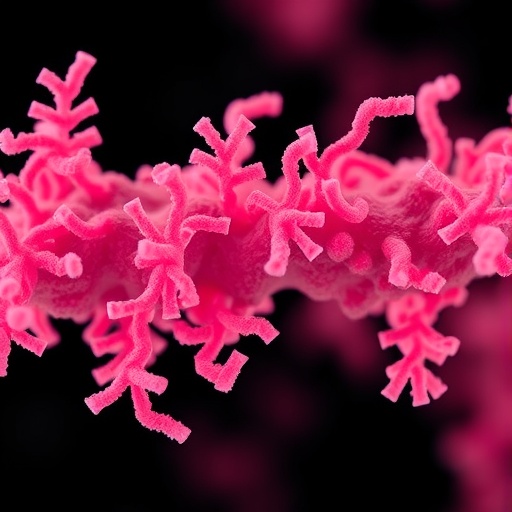
The more diverse species in your gut, the better it is for your health. Now an international team led by the Hudson Institute of Medical Research has found a way to determine which species are important and how they interact to create a healthy microbiome.
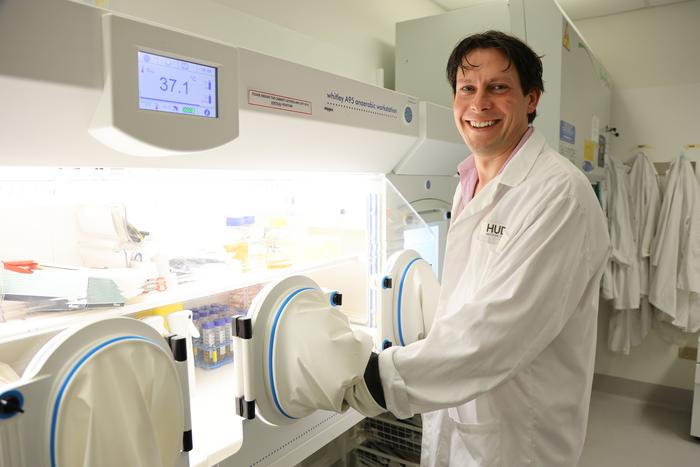
Credit: Hudson Institute of Medical Research
The more diverse species in your gut, the better it is for your health. Now an international team led by the Hudson Institute of Medical Research has found a way to determine which species are important and how they interact to create a healthy microbiome.
Understanding these relationships opens the door to a new world of medical opportunities for conditions from Inflammatory Bowel Disease to infections, autoimmune diseases and cancers.
Associate Professor Samuel Forster and his team at Hudson Institute of Medical Research, working with collaborators from the Institute for Systems Biology in the USA and local collaborators at Monash University and Monash Health, have spent years studying the gut microbiome and working out which species perform which functions.
He says now it’s possible to map not just what’s there but how they interact and how that can affect the whole body.
A microscopic multicultural community
“There are roughly 1000 different bacterial species in a healthy gut – it’s a microscopic multicultural community with over a trillion individual members,” A/Prof Forster said.
“Bacteria in our microbiomes exist as communities that rely on each other to produce and share key nutrients between them,” he said. “We have developed a new computational way to understand these dependencies and their role in shaping our microbiome.”
“This new method unlocks our understanding of the gut microbiome and provides a foundation for new treatment options that selectively remodel microbial communities.”
For example, in Crohn’s Disease, the team confirmed the importance of hydrogen sulphide. They discovered that the most likely cause is loss of bacteria that use hydrogen sulphide, not an increase in species producing it, as was previously believed.
The study is published in Nature Communications, and its lead author, Dr Vanessa Marcelino, says new computational way to study microbial communities was key to establishing these relationships.
“This is a significant step in the development of complex microbial therapies,” Dr Marcelino said.
Rank key interactions between bacteria
“This approach allows us to identify and rank the key interactions between bacteria and use this knowledge to predict targeted ways to change the community.”
A/Prof Forster and his team have a long-standing relationship with Adelaide-based biotechnology company BiomeBank, which is working on new ways to treat and prevent disease by restoring gut microbial ecology.
“Through the partnership between the Hudson Institute of Medical Research and BiomeBank, these insights into community structure will provide the opportunity for targeted intervention with rationally selected combinations of microbes,” he said.
Microbiome Facts
- There are trillions of microbes living inside and on the surface of your body, altogether they are called the microbiome and they are vital to your health and fighting disease.
- Since the microbiome was first recognised in the late 1990s, scientists have identified more than 2,000 microbial species from the largest microbiome, in the gut.
- The skin, bladder and genitals also harbour microbiome populations.
- Your gut microbiome composition is unique to you and effects your metabolism, gastrointestinal tract, brain, and immune system.
- In a healthy person, the symbiotic and pathogenic microbes work in balance.
- Imbalances between symbiotic (benefiting you and the microbes) and pathogenic (disease-causing) microbes, known as dysbiosis, disrupt the microbes, making people more susceptible to conditions such as inflammatory bowel disease (IBD) and Clostridioides difficile infection, which causes severe diarrohea and inflammation of the colon or colitis.
- There is hope that we may soon be on the cusp of a new era of healthcare that nurtures and tweaks the microbiome to optimise human health.
Journal
Nature Communications
DOI
10.1038/s41467-023-42112-w
Method of Research
Experimental study
Subject of Research
People
Article Title
Disease-specific loss of microbial cross-feeding interactions in the human gut
Article Publication Date
20-Oct-2023