• HOME
  • NEWS
  • EXPLORE
    • CAREER
      • Companies
      • Jobs
    • EVENTS
    • iGEM
      • News
      • Team
    • PHOTOS
    • VIDEO
    • WIKI
  • BLOG
  • COMMUNITY
    • FACEBOOK
    • INSTAGRAM
    • TWITTER
Saturday, February 7, 2026
BIOENGINEER.ORG
No Result
View All Result
  • Login
  • HOME
  • NEWS
  • EXPLORE
    • CAREER
      • Companies
      • Jobs
        • Lecturer
        • PhD Studentship
        • Postdoc
        • Research Assistant
    • EVENTS
    • iGEM
      • News
      • Team
    • PHOTOS
    • VIDEO
    • WIKI
  • BLOG
  • COMMUNITY
    • FACEBOOK
    • INSTAGRAM
    • TWITTER
  • HOME
  • NEWS
  • EXPLORE
    • CAREER
      • Companies
      • Jobs
        • Lecturer
        • PhD Studentship
        • Postdoc
        • Research Assistant
    • EVENTS
    • iGEM
      • News
      • Team
    • PHOTOS
    • VIDEO
    • WIKI
  • BLOG
  • COMMUNITY
    • FACEBOOK
    • INSTAGRAM
    • TWITTER
No Result
View All Result
Bioengineer.org
No Result
View All Result
Home NEWS Science News

Splitfin flashlight fish uses bioluminescent light to illuminate plankton

Bioengineer by Bioengineer
February 8, 2017
in Science News
Reading Time: 2 mins read
0
Share on FacebookShare on TwitterShare on LinkedinShare on RedditShare on Telegram
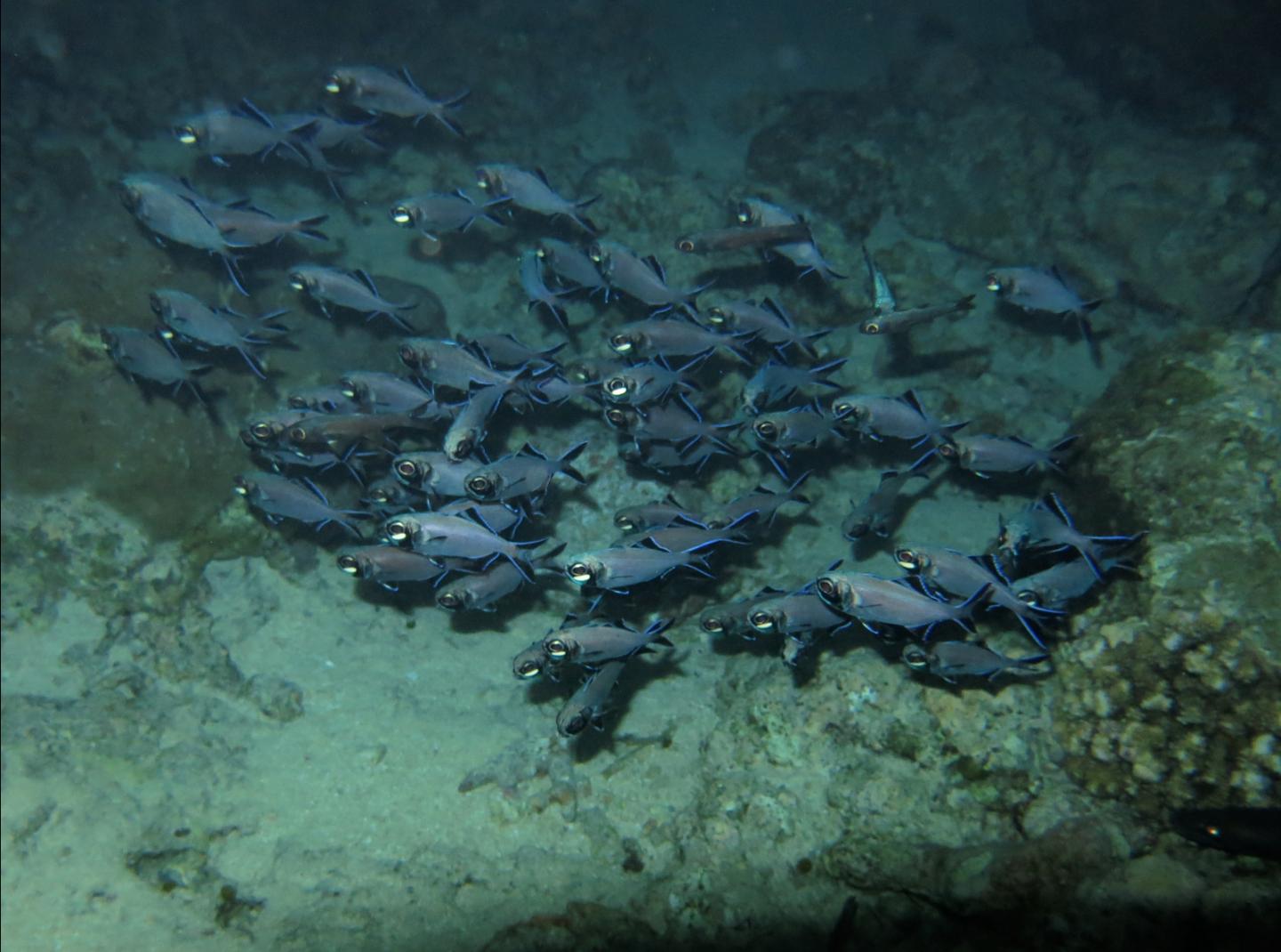
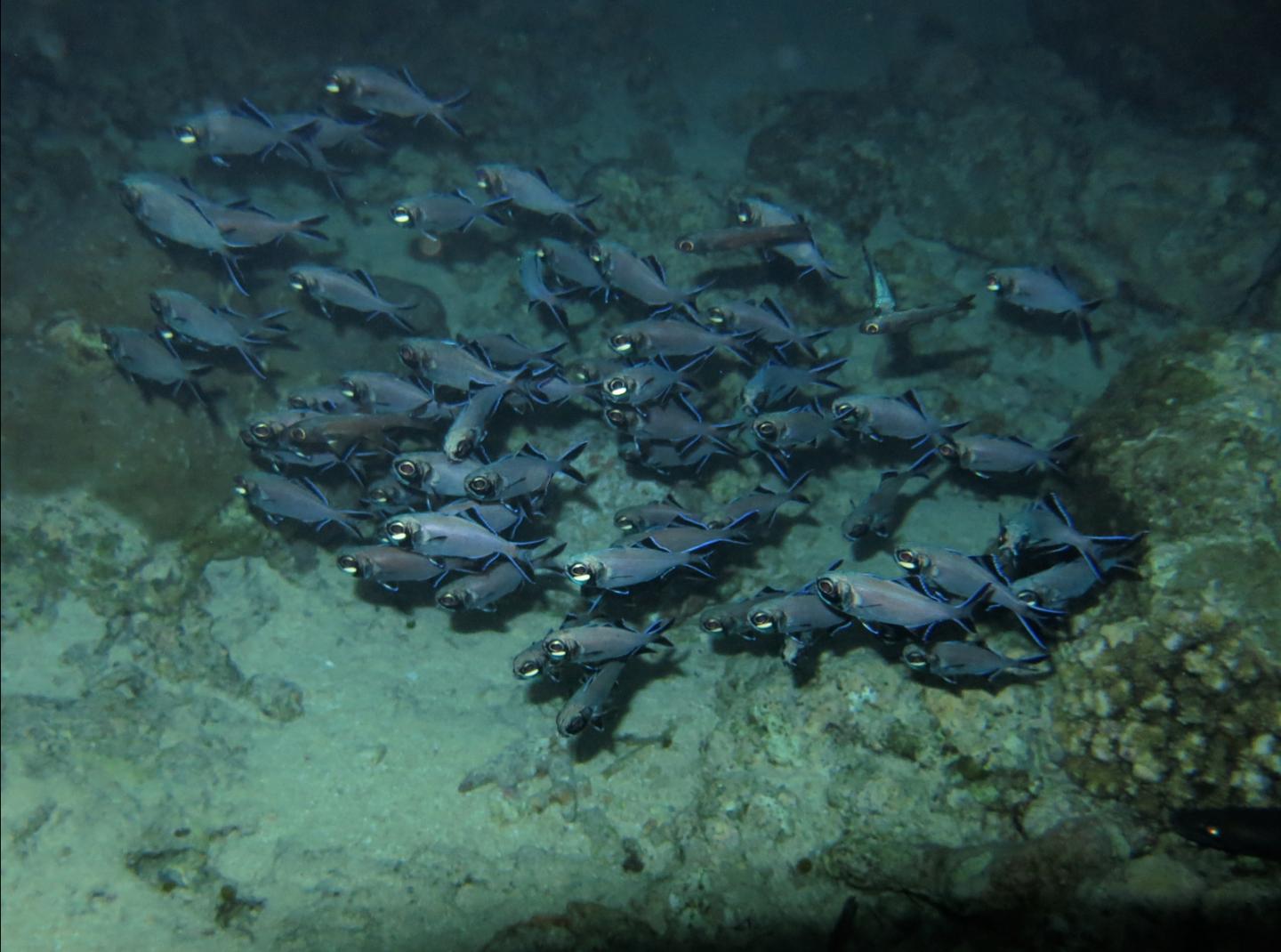
IMAGE

Credit: Hellinger et al (2017)

The flashlight fish uses bioluminescent light to detect and feed on its planktonic prey, according to a study published February 8, 2017 in the open-access journal PLOS ONE by Jens Hellinger from Ruhr-University, Bochum, Germany, and colleagues.

The splitfin flashlight fish, Anomalops katoptron, is one of many ocean-dwelling animals that produces its own bioluminescent light using symbiotic bacteria. The fish has light organs located under its eyes such that the light can be turned on and off by blinking, like a flashlight. Little is known about the function and purpose of the Morse code-like blinking patterns displayed by the fish.

To investigate how the flashlight fish uses bioluminescent illumination, Hellinger and colleagues examined the blink frequency of a school of flashlight fish under different laboratory conditions. They found that during darkness at night time, the flashlight fish blink very frequently, at 90 blinks per minute, with the light being on and off for an approximately equal amount of time. However, when the flashlight fish detected living planktonic prey in the experimental tank at night, their light organs were opened for more time, keeping the light on longer, and they blinked five times less frequently than in the absence of prey.

The authors suggest that the flashlight fish reduce their blinking and keep their light organs open so that they can produce more light to detect and feed on prey. They recommend additional field research to see whether the fish display the same behavior under natural conditions.

"The splitfin flashlight fish Anomalops katoptron use bioluminescent light to detect planktonic prey during the night and adjust the blink frequency in a context dependent manner," says Hellinger. "The loss of luminescence and subsequent light organ degeneration demonstrates the close symbiotic relation between the fish and its luminescent bacterial symbionts."

###

In your coverage please use this URL to provide access to the freely available paper: http://dx.plos.org/10.1371/journal.pone.0170489

Citation: Hellinger J, Jägers P, Donner M, Sutt F, Mark MD, Senen B, et al. (2017) The Flashlight Fish Anomalops katoptron Uses Bioluminescent Light to Detect Prey in the Dark. PLoS ONE 12(2): e0170489. doi:10.1371/journal.pone.0170489

Funding: The work was supported by funds from the Ruhr-University Bochum, Germany.

Competing Interests: The authors have declared that no competing interests exist.

Media Contact

Tessa Gregory
[email protected]

Home

############

Story Source: Materials provided by Scienmag

Share12Tweet8Share2ShareShareShare2

Related Posts

Evaluating Pediatric Emergency Care Quality in Ethiopia

February 7, 2026

TPMT Expression Predictions Linked to Azathioprine Side Effects

February 7, 2026

Improving Dementia Care with Enhanced Activity Kits

February 7, 2026

Decoding Prostate Cancer Origins via snFLARE-seq, mxFRIZNGRND

February 7, 2026
Please login to join discussion

POPULAR NEWS

  • Robotic Ureteral Reconstruction: A Novel Approach

    Robotic Ureteral Reconstruction: A Novel Approach

    82 shares
    Share 33 Tweet 21
  • Digital Privacy: Health Data Control in Incarceration

    63 shares
    Share 25 Tweet 16
  • Study Reveals Lipid Accumulation in ME/CFS Cells

    57 shares
    Share 23 Tweet 14
  • Breakthrough in RNA Research Accelerates Medical Innovations Timeline

    53 shares
    Share 21 Tweet 13

About

We bring you the latest biotechnology news from best research centers and universities around the world. Check our website.

Follow us

Recent News

Evaluating Pediatric Emergency Care Quality in Ethiopia

TPMT Expression Predictions Linked to Azathioprine Side Effects

Improving Dementia Care with Enhanced Activity Kits

Subscribe to Blog via Email

Success! An email was just sent to confirm your subscription. Please find the email now and click 'Confirm' to start subscribing.

Join 73 other subscribers
  • Contact Us

Bioengineer.org © Copyright 2023 All Rights Reserved.

Welcome Back!

Login to your account below

Forgotten Password?

Retrieve your password

Please enter your username or email address to reset your password.

Log In
No Result
View All Result
  • Homepages
    • Home Page 1
    • Home Page 2
  • News
  • National
  • Business
  • Health
  • Lifestyle
  • Science

Bioengineer.org © Copyright 2023 All Rights Reserved.