Nearly 30 million Chinese individuals experience hearing loss (HL), with around 60% of these cases being hereditary. HL is the second most common congenital disability in China, with an estimated 30,000 babies in China born with HL each year and face the challenges of medical expenses and education-related issues.
Credit: BGI Genomics
Nearly 30 million Chinese individuals experience hearing loss (HL), with around 60% of these cases being hereditary. HL is the second most common congenital disability in China, with an estimated 30,000 babies in China born with HL each year and face the challenges of medical expenses and education-related issues.
To understand if concurrent hearing screening and high-throughput genetic screening could improve the effectiveness of newborn HL programs, a new study by Minghong Zhao, Xuemei Luo, Qinfei Zhao, Tong Yang, Wenqian Zhang (BGI Genomics, Senior Manager Clinical Research) et al. was published in the International Journal of Pediatric Otorhinolaryngology.
Method and Findings:
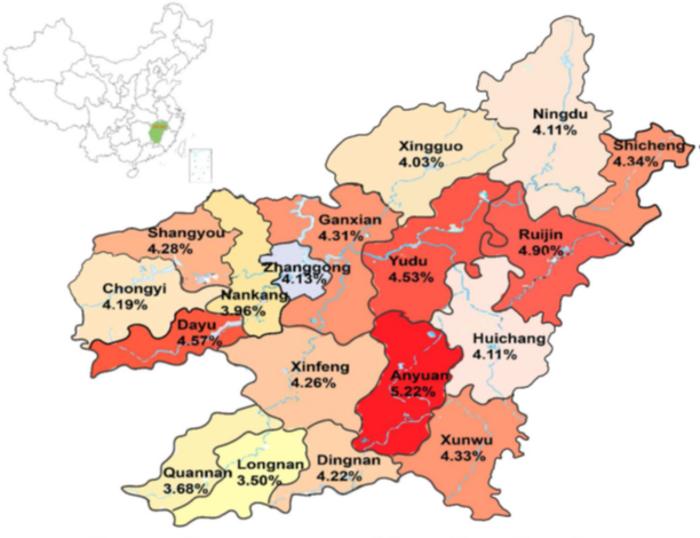
In total, 119,606 newborns from Gannan, Jiangxi province, China, were enrolled in this multi-center study conducted between April 2019 and April 2021. Otoacoustic Emission (OAE) was used for primary hearing screening three days after birth in quiet conditions, and OAE combined with automated auditory brainstem response (AABR) was applied 29–42 days after birth for those who failed or missed the initial screening. Meanwhile, high-throughput sequencing of hotspot HL-associated mutations in GJB2, GJB3, MTRNR1, and SLC26A4 genes were performed.
OAE and AABR are commonly used HL screening methods. OAE is not sufficiently sensitive for detecting posterior cochlear hearing impairment, while AABR is cumbersome and expensive. Neither method can detect or predict delayed or progressive HL in individuals with normal hearing at birth.
Key findings include:
1. Among the 119,606 newborns, 7,796 (6.52%) failed the hearing screening. Genetic screening revealed that 5,092 neonates (4.26%) carried HL-associated mutations, and. among them, 4,612 passed the physiologic screening.
2. The detection rate of GJB2, SLC26A4, MTRNR1 and GJB3 mutations were 2.09%, 1.51%, 0.42% and 0.24%, respectively. The most prevalent variant was GJB2 c.235delC (1.74%). The second most prevalent variant was SLC26A4 c.919-2A > G (0.93%).
3. SLC26A4 gene mutations are common causes of syndromic and non-syndromic hearing loss. The population who failed the hearing screening had a lower proportion (24.64%) of SLC26A4 gene variants compared to the population who passed (37.46%). This suggests that identifying the patients related with SLC26A4 gene mutations solely based on hearing screening may pose a greater challenging, potentially increasing the risk of misdiagnosis.
The results of this study suggest that concurrent hearing screening and high-throughput genetic screening would greatly improve the effectiveness of newborn HL programs. This integration also facilitates the management of congenital HL, and aids in the prevention of aminoglycoside antibiotics-induced HL.
However, it is important to acknowledge this study only involved neonates from Gannan. This round of concurrent screening also considered 21 hot spots of mutations in common deafness-related genes, leaving other potential mutation sites unexplored. Future research could encompass broader parameters to address these limitations.
This project follows relevant regulations related to biological and medical research and has been approved by the Ethics Committee of the participating institutions and the Human Genetic Resources Administration of China
Journal
International Journal of Pediatric Otorhinolaryngology
DOI
10.1016/j.ijporl.2023.111744
Method of Research
Randomized controlled/clinical trial
Subject of Research
People
Article Title
Characteristics of hearing loss-associated gene mutations: A multi-center study of 119,606 neonates in Gannan
Article Publication Date
1-Oct-2023