A study explores the genetic expression of a photosynthetic symbiont that lives inside an abundant marine organism. Marine diatoms are responsible for one-fifth of global photosynthesis. Many are coastal, but diatom-diazotroph associations thrive in open ocean waters that are low in nutrients thanks to a symbiotic relationship between a diatom host and nitrogen-fixing bacteria. Rachel Foster, Enrique Flores, and colleagues collected the diatom Hemiaulus hauckii, along with the cyanobacterium Richelia euintracellularis, which lives inside the diatom’s cells, from multiple locations in the western tropical North Atlantic. Cyanobacteria are bacteria which can perform plant-like photosynthesis. As researchers are currently unable to grow Richelia euintracellularis in the laboratory, the authors explored the function of proteins found in the endosymbiont by expressing the proteins in model organisms, including Escherichia coli and Anabaena sp. One protein was found to split sucrose into glucose and fructose. The presence of a sucrose-specific solute binding protein, which participates in shuttling molecules across the cell membrane, suggests that the sucrose is provided to the bacteria by the diatom hosts. Other solute binding proteins were found that participate in the transport of amino acids (glutamate, phenylalanine) and a polyamine (spermidine). The expression of genes that encode these proteins was verified in wild populations from the Atlantic Ocean. According to the authors, the study paints a picture of a system in which the diatom supplies the bacteria with reduced organic carbon compounds to sustain a high rate of nitrogen fixation.
Credit: Sepehr Bardi
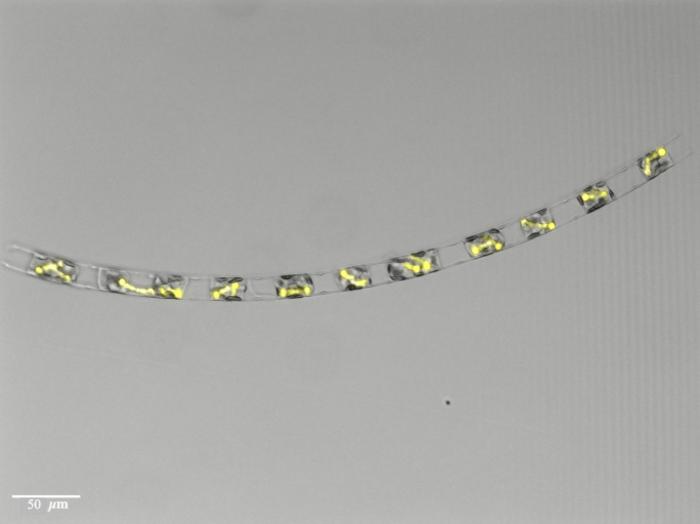
A study explores the genetic expression of a photosynthetic symbiont that lives inside an abundant marine organism. Marine diatoms are responsible for one-fifth of global photosynthesis. Many are coastal, but diatom-diazotroph associations thrive in open ocean waters that are low in nutrients thanks to a symbiotic relationship between a diatom host and nitrogen-fixing bacteria. Rachel Foster, Enrique Flores, and colleagues collected the diatom Hemiaulus hauckii, along with the cyanobacterium Richelia euintracellularis, which lives inside the diatom’s cells, from multiple locations in the western tropical North Atlantic. Cyanobacteria are bacteria which can perform plant-like photosynthesis. As researchers are currently unable to grow Richelia euintracellularis in the laboratory, the authors explored the function of proteins found in the endosymbiont by expressing the proteins in model organisms, including Escherichia coli and Anabaena sp. One protein was found to split sucrose into glucose and fructose. The presence of a sucrose-specific solute binding protein, which participates in shuttling molecules across the cell membrane, suggests that the sucrose is provided to the bacteria by the diatom hosts. Other solute binding proteins were found that participate in the transport of amino acids (glutamate, phenylalanine) and a polyamine (spermidine). The expression of genes that encode these proteins was verified in wild populations from the Atlantic Ocean. According to the authors, the study paints a picture of a system in which the diatom supplies the bacteria with reduced organic carbon compounds to sustain a high rate of nitrogen fixation.
Journal
PNAS Nexus
DOI
10.1093/pnasnexus/pgad194
Article Title
Heterologous expression of genes from a cyanobacterial endosymbiont highlights substrate exchanges with its diatom host
Article Publication Date
27-Jun-2023