Skeletal remains preserve direct evidence of the health issues faced by children born into poverty and forced into labor in 19th century England, according to a study published May 17, 2023 in the open-access journal PLOS ONE by Rebecca Gowland of Durham University and colleagues.
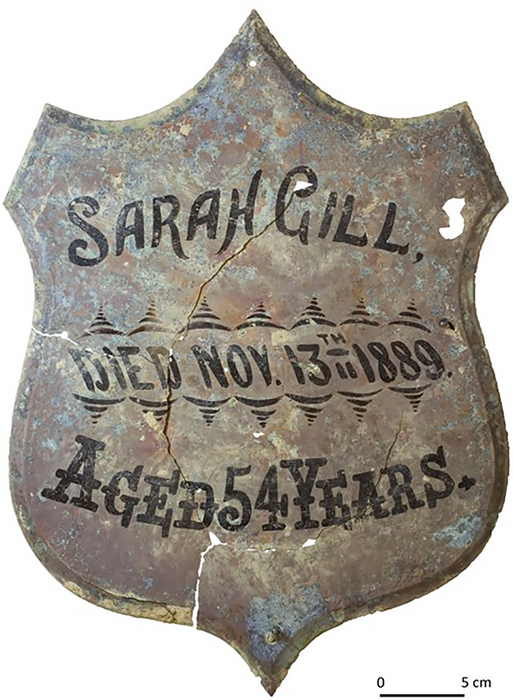
Credit: Gowland et al., 2023, PLOS ONE, CC-BY 4.0 (https://creativecommons.org/licenses/by/4.0/)
Skeletal remains preserve direct evidence of the health issues faced by children born into poverty and forced into labor in 19th century England, according to a study published May 17, 2023 in the open-access journal PLOS ONE by Rebecca Gowland of Durham University and colleagues.
The large-scale employment of children during industrialization in 18th and 19th century England is well-documented. In many cases, pauper children were forcibly moved out of cities and into labor in rural mills and farms. The poor working conditions at these sites are associated with malnutrition, various diseases, and low life expectancy, but there is little direct evidence of the struggles of these children.
In this study, Gowland and colleagues examine skeletal remains of 154 individuals from a rural cemetery in the village of Fewston, North Yorkshire. These remains date mostly to the 19th century and include an unusually high proportion of people aged 8-20. Analysis of strontium and oxygen isotopes suggests many of these children were not born in the North Yorkshire region. Comparing these remains to those of local individuals, the researchers found that the non-local children exhibited higher incidences of skeletal issues related to growth delays, vitamin deficiencies, and respiratory disease. Additionally, carbon and nitrogen isotopic signatures of the non-local children indicate low-protein diets. Combined with historic documentation of child labor in a nearby mill, these results present a convincing case for children born into poverty and transferred to this village to work in dangerous, even fatal, conditions.
This study provides the first direct insights into the harrowing lives of children in forced labor during industrialization in England. Child labor is considered the most common form of child abuse and neglect in the world today. In highlighting the effects of poverty and forced labor on children, this analysis has implications for the past as well as the present.
The authors add: “This is the first bioarcheological evidence for pauper apprentices in the past and it unequivocally highlights the toll placed on their developing bodies. To see direct evidence, written in the bones, of the hardships these children had faced was very moving. It was important to the scientists and the local community that these findings could provide a testimony of their short lives.”
#####
In your coverage please use this URL to provide access to the freely available article in PLOS ONE: https://journals.plos.org/plosone/article?id=10.1371/journal.pone.0284970
Citation: Gowland RL, Caffell AC, Quade L, Levene A, Millard AR, Holst M, et al. (2023) The expendables: Bioarchaeological evidence for pauper apprentices in 19th century England and the health consequences of child labour. PLoS ONE 18(5): e0284970. https://doi.org/10.1371/journal.pone.0284970
Author Countries: Czech Republic, UK
Funding: RG and MA received Heritage Lottery Funds (OH-130-8939) for the osteological and isotopic analysis undertaken, which was formed one element of a broader project led by SR https://www.heritagefund.org.uk/. The funders had no role in study design, data collection and analysis, decision to publish, or preparation of the manuscript.
Journal
PLoS ONE
DOI
10.1371/journal.pone.0284970
Method of Research
Observational study
Subject of Research
People
Article Title
The expendables: Bioarchaeological evidence for pauper apprentices in 19th century England and the health consequences of child labour
Article Publication Date
17-May-2023
COI Statement
The authors have declared that no competing interests exist.