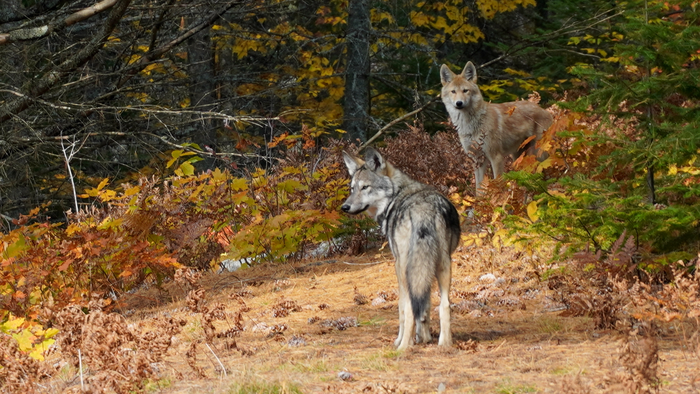
A new paper in Molecular Biology and Evolution, published by Oxford University Press, provides interesting new evidence about the evolution of North American wolves, which has been a subject of debate among conservationists and taxonomists.
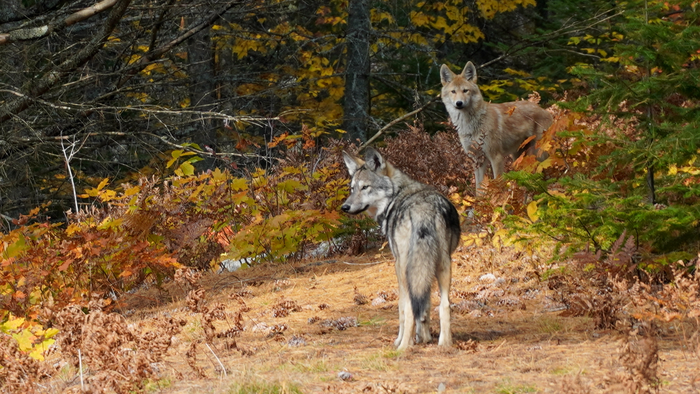
Credit: Dave Ciufo/ Molecular Biology and Evolution
A new paper in Molecular Biology and Evolution, published by Oxford University Press, provides interesting new evidence about the evolution of North American wolves, which has been a subject of debate among conservationists and taxonomists.
Southeastern Canada is home to populations of wolves and coyotes whose origins and genetic relationships have long puzzled scientists. In particular, eastern wolves have been the subject of great dispute, and it remains unknown whether these canids represent a distinct species or if they are the result of recent hybridization between coyotes and grey wolves. The Canidae animal family includes coyotes, foxes, jackals, wolves, and domestic dogs.
In Canada, the eastern wolf (also known as the eastern timber wolf or the Algonquin wolf) has been recognized by some as a distinct species based on genetic and behavioral studies. Eastern wolves are listed as “Special Concern” in Canada under the federal Species at Risk Act and “Threatened” in Ontario under the provincial Endangered Species Act. But whereas previous studies have noted the distinctiveness of eastern wolves from coyotes and grey wolves in Canada, the provincial government currently manages them as a single species across their primary range in central Ontario. This pooling of these three taxonomic entities for management is considered necessary because it is so difficult for humans to visually distinguish between wild canids and their hybrids in central Ontario. This leads to frustration among some hunters, trappers, and farmers, and challenges in enforcing hunting and trapping regulations.
To test hypotheses related to these competing findings for eastern wolves, researchers sequenced whole genomes of 25 animals of known origin and levels of contemporary hybridization, representative of all Canadian wolf-like canid types. The analysis shows that eastern wolves that inhabit the Great Lakes region in southeastern Canada are genetically distinct from other canids in the region. Based on the findings it appears that eastern wolves evolved separately from grey wolves about 67,000 years ago. The scientists here believe that eastern wolves bred with coyotes about 37,000 years ago and continue to mix with both coyotes and grey wolves.
“This manuscript addresses key evolutionary questions among North American wolf-like canids, but also provides data of direct and applied relevance,” said the paper’s lead author, Christopher Kyle. “This work represents a strong international collaboration that culminates from complementary expertise between wolf experts from the Ontario Ministry of Natural Resources and Forestry and scholars from the University of Ferrara in Italy, and Trent University in Ontario, Canada, with a long-standing interest in North American Canis ancestry and genetics.”
The paper, “Tracing eastern wolf origins from whole-genome data in context of extensive hybridization,” is available (at midnight on April 13th ) at: https://academic.oup.com/mbe/article-lookup/doi/10.1093/molbev/msad055.
Direct correspondence to:
Christopher J. Kyle
Professor of Forensic Science
Trent University
1600 West Bank Drive
Peterborough, ON K9L 0G2 CANADA
[email protected]
To request a copy of the study, please contact:
Daniel Luzer
[email protected]
Journal
Molecular Biology and Evolution
DOI
10.1093/molbev/msad055
Method of Research
Systematic review
Subject of Research
Animals
Article Title
Tracing eastern wolf origins from whole-genome data in context of extensive hybridization
Article Publication Date
13-Apr-2023
COI Statement
N/A