The first brains in the world of animals marked a decisive step in evolution. Living beings could now process information and identify opportunities as well as dangers. But how did the first brains evolve and what form did they take? Pawel Burkhardt from the Michael Sars Centre at the University of Bergen, Norway, and Fred Wolf from the Max Planck Institute for Dynamics and Self-Organization at the University of Göttingen, Germany, will receive one of the 25 Human Frontier Science Program Research Grants awarded for 2023 to get to the bottom of these questions.

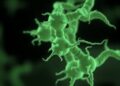
Credit: Joan J. Soto-Àngel.
The first brains in the world of animals marked a decisive step in evolution. Living beings could now process information and identify opportunities as well as dangers. But how did the first brains evolve and what form did they take? Pawel Burkhardt from the Michael Sars Centre at the University of Bergen, Norway, and Fred Wolf from the Max Planck Institute for Dynamics and Self-Organization at the University of Göttingen, Germany, will receive one of the 25 Human Frontier Science Program Research Grants awarded for 2023 to get to the bottom of these questions.
The funded project, “Decoding the gelatinous origins of brain evolution”, aims to understand the computations of the very simple nervous system of the marine organism ctenophore Mnemopsis leidyi, also known as sea walnut, in tight interaction between experiment and theory. The researchers hope to reveal the neural network of ctenophores, planktonic predators that can disturb intact marine ecosystems and harbor possibly the most alien brain of any predatory animal on the planet.
“We are thrilled to have been awarded with an HFSP grant for studying the nervous system of ctenophores. This grant will allow us to work together on a truly exciting and ground-breaking project applying several novel, cutting-edge methodologies that will shed light on the evolutionary origins of nervous systems in general,” said Pawel Burkhardt from the Michael Sars Centre in Bergen.
Using the model ctenophore Mnemiopis leidyi, the interdisciplinary team will build on recent breakthroughs in organismal biology, molecular neuroscience, connectomics, neural circuit inference and neurotechnology to establish a data-driven account of Mnemiopsis’ brain neural network and behavior, to allow for the visualization of brain activity and to test and validate computational models of its neuronal processing by cellular-resolution whole-brain imaging. Detailed video recording of free-ranging ctenophores will be used to construct data-driven quantitative models of 3D animal postural and movement dynamics during hunting, propulsion, and steering. “Our work will allow us to better understand the brain and behavior of the ctenophore Mnemiopsis, one of the first animal lineages on the planet, and will shed light on the neuronal algorithms employed by the first animal brains”, explains Fred Wolf from Göttingen.
The scientists from Göttingen and Bergen will start their work on the project during 2023. HFSP will fund the project with 900,000 USD.
The international interdisciplinary project will be coordinated by Fred Wolf, professor of Dynamics and Biological Physics at the University of Göttingen, head of the research group Neurophysics at the Max Planck Institute for Dynamics and Self-Organization and founding director of the Göttingen Campus Institute for Dynamics of Biological Networks (CIDBN). It is the third time that HFSPO is awarding Fred Wolf with one of its highly competitive grants.
Co-applicant Pawel Burkhardt is the first to receive the prestigious grant since Norway officially rejoined the International Human Frontier Science Program Organization as a Member country in February 2023. “We are thrilled to see Norway as a full member of HFSP and look forward to quickly engaging with their extraordinary scientific talent to pioneer the best in frontier life science,” said HFSP Secretary-General Pavel Kabat. “Norway has played a vital role in important research particularly in the areas of neuroscience and pharmacology in the past, and we look forward to the full range of their creative investigations going forward.”
The Human Frontier Science Program is an international program of research support implemented by the International Human Frontier Science Program Organization (HFSPO) based in Strasbourg, France. Its aims are to promote intercontinental collaboration and training in cutting-edge, interdisciplinary research focused on the life sciences. HFSPO receives financial support from the governments or research councils of Australia, Canada, France, Germany, India, Israel, Italy, Japan, Republic of Korea, New Zealand, Norway, Singapore, South Africa, Switzerland, UK, USA, as well as from the European Union.
The Michael Sars Centre at the University of Bergen, Norway is an international community of scientists using advanced technologies to study the unique molecular and cellular biology of marine organisms in a changing environment for broad societal impact. As one of the first EMBL partners, the Michael Sars Centre is rooted in the Bergen academic community and serves as a national strategical asset for Norwegian marine life sciences. The Centre aims to establish, strengthen, and leverage local, national, and international networks through specific activities, including collaborative research, joint training, and scientific exchange.