• HOME
  • NEWS
  • EXPLORE
    • CAREER
      • Companies
      • Jobs
    • EVENTS
    • iGEM
      • News
      • Team
    • PHOTOS
    • VIDEO
    • WIKI
  • BLOG
  • COMMUNITY
    • FACEBOOK
    • INSTAGRAM
    • TWITTER
Saturday, February 7, 2026
BIOENGINEER.ORG
No Result
View All Result
  • Login
  • HOME
  • NEWS
  • EXPLORE
    • CAREER
      • Companies
      • Jobs
        • Lecturer
        • PhD Studentship
        • Postdoc
        • Research Assistant
    • EVENTS
    • iGEM
      • News
      • Team
    • PHOTOS
    • VIDEO
    • WIKI
  • BLOG
  • COMMUNITY
    • FACEBOOK
    • INSTAGRAM
    • TWITTER
  • HOME
  • NEWS
  • EXPLORE
    • CAREER
      • Companies
      • Jobs
        • Lecturer
        • PhD Studentship
        • Postdoc
        • Research Assistant
    • EVENTS
    • iGEM
      • News
      • Team
    • PHOTOS
    • VIDEO
    • WIKI
  • BLOG
  • COMMUNITY
    • FACEBOOK
    • INSTAGRAM
    • TWITTER
No Result
View All Result
Bioengineer.org
No Result
View All Result
Home NEWS Science News

Dry forests and savannas vital for Brazil’s climate goals

Bioengineer by Bioengineer
March 15, 2023
in Science News
Reading Time: 2 mins read
0
Cerrado savanna
Share on FacebookShare on TwitterShare on LinkedinShare on RedditShare on Telegram

Brazil must protect and restore its dry forests and savannas to achieve its climate goals, new research shows.
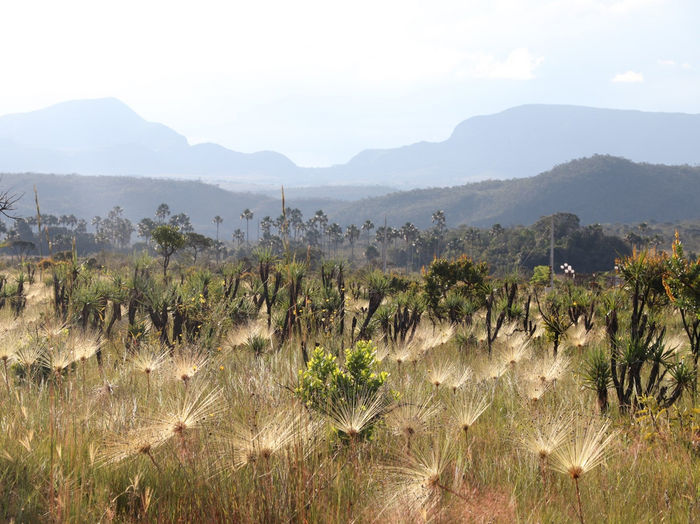
Cerrado savanna

Credit: Tim Hill

Brazil must protect and restore its dry forests and savannas to achieve its climate goals, new research shows.

Attention in Brazil and worldwide often focusses on the Amazon rainforest – ignoring damage and destruction of these seasonally dry biomes, which contain vast biodiversity and carbon stores.

The new study, led by the universities of Exeter and Campinas, says cost-effective restoration of savannas and dry forests could lock in 1.5 billion tonnes of carbon.

But restoration takes time, and the researchers say protecting existing ecosystems is the best option for Brazil to reach its 2030 climate goals.

“Ongoing land-use change – especially the destruction of ecosystems to create agricultural land – makes Brazil the world’s fifth-biggest greenhouse gas emitting country,” said Dr Lucy Rowland, from Global Systems Institute at the University of Exeter.

“But Brazil also has huge potential for ecosystem restoration.

“Focus on the Amazon is understandable, but this has often simply displaced the problem of ecosystem destruction to the Cerrado (savanna) and the Caatinga (dry forest).

“This has been done on the assumption that these ecosystems are worthless – when in fact they have plant species diversity that rivals the Amazon.

“There is huge potential to restore these areas without negative impacts of food production or people’s livelihoods.”

Global carbon markets provide a financially viable way to fund large-scale restoration.

The study combined carbon prices with information such as land availability and carbon storage for 5,475 Brazilian municipalities to assess the potential costs and benefits of restoration.

“We argue that even with a sole focus on carbon, we must restore other tropical biomes – not just rainforests,” said Dr Fernanda de Vasconcellos Barros, also from the University of Exeter.

“Adding dry forests and savannas doubles the area which could be restored in a financially viable manner.

“Importantly, we show that conservation will be essential for Brazil to achieve it’s 2030 climate goal, because it can sequester up to 1.1 billion tonnes of carbon.

“Restoration takes longer, and so can have less impact by 2030, but in the long term restoration of the Cerrado and the Caatinga can draw down 1.5 billion tonnes of carbon, while restoration of the Amazon and Atlantic rainforests can sequester another 2.1 billion tonnes.”

The new study was funded by the Natural Environment Research Council (NERC) and the São Paulo Research Foundation (FAPESP).

The paper, published in the journal Science of The Total Environment, is entitled: “Cost-effective restoration for carbon sequestration across Brazil’s biomes.”


Journal

Science of The Total Environment

DOI

10.1016/j.scitotenv.2023.162600

Article Title

Cost-effective restoration for carbon sequestration across Brazil’s biomes

Article Publication Date

5-Mar-2023

Share12Tweet8Share2ShareShareShare2

Related Posts

Decoding Prostate Cancer Origins via snFLARE-seq, mxFRIZNGRND

February 7, 2026

Digital Health Perspectives from Baltic Sea Experts

February 7, 2026

Florida Cane Toad: Complex Spread and Selective Evolution

February 7, 2026

Exploring Decision-Making in Dementia Caregivers’ Mobility

February 7, 2026

POPULAR NEWS

  • Robotic Ureteral Reconstruction: A Novel Approach

    Robotic Ureteral Reconstruction: A Novel Approach

    82 shares
    Share 33 Tweet 21
  • Digital Privacy: Health Data Control in Incarceration

    63 shares
    Share 25 Tweet 16
  • Study Reveals Lipid Accumulation in ME/CFS Cells

    57 shares
    Share 23 Tweet 14
  • Breakthrough in RNA Research Accelerates Medical Innovations Timeline

    53 shares
    Share 21 Tweet 13

About

We bring you the latest biotechnology news from best research centers and universities around the world. Check our website.

Follow us

Recent News

Decoding Prostate Cancer Origins via snFLARE-seq, mxFRIZNGRND

Digital Health Perspectives from Baltic Sea Experts

Florida Cane Toad: Complex Spread and Selective Evolution

Subscribe to Blog via Email

Enter your email address to subscribe to this blog and receive notifications of new posts by email.

Join 73 other subscribers
  • Contact Us

Bioengineer.org © Copyright 2023 All Rights Reserved.

Welcome Back!

Login to your account below

Forgotten Password?

Retrieve your password

Please enter your username or email address to reset your password.

Log In
No Result
View All Result
  • Homepages
    • Home Page 1
    • Home Page 2
  • News
  • National
  • Business
  • Health
  • Lifestyle
  • Science

Bioengineer.org © Copyright 2023 All Rights Reserved.