Researchers at Ghent University in Belgium report abnormalities in functional neural networks of dogs diagnosed with anxiety. Led by Yangfeng Xu (Ghent Experimental Psychiatry Lab, GHEP; ORSAMI), and Emma Christiaen (Medical Image and Signal Processing, MEDISIP), the study shows that compared with healthy dogs, those with anxiety exhibit stronger connections between the amygdala and other regions of the anxiety network. Published in PLOS ONE on March 15, the findings might also help reveal how functional connections between anxiety-related regions of the brain are altered in cases of human anxiety disorders.
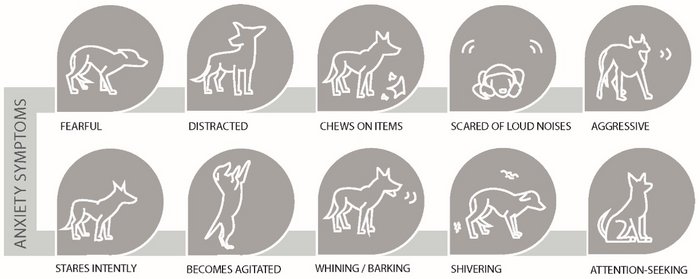
Credit: Xu et al., 2023, PLOS ONE, CC-BY 4.0 (https://creativecommons.org/licenses/by/4.0/)
Researchers at Ghent University in Belgium report abnormalities in functional neural networks of dogs diagnosed with anxiety. Led by Yangfeng Xu (Ghent Experimental Psychiatry Lab, GHEP; ORSAMI), and Emma Christiaen (Medical Image and Signal Processing, MEDISIP), the study shows that compared with healthy dogs, those with anxiety exhibit stronger connections between the amygdala and other regions of the anxiety network. Published in PLOS ONE on March 15, the findings might also help reveal how functional connections between anxiety-related regions of the brain are altered in cases of human anxiety disorders.
Animal models of anxiety are an important tool for studying anxiety disorders, and results can benefit both veterinary and human medicine. However, the many different aspects of anxiety cannot all be studied effectively in the same animal model. While rodents are often studied, this new study takes advantage of the larger brains and bigger cortex found in dogs to characterize neural networks associated with anxiety. 25 healthy and 13 anxious dogs were volunteered by their owners and examined via non-invasive functional MRI (fMRI). The dogs were treated in accordance with all necessary welfare guidelines, ensuring that they suffered no negative consequences of the study. The researchers studied the resting-state of dogs with and without anxiety, comparing network metrics and connectivity between groups, and determining their associations with anxiety symptoms.
Resting-state fMRI indicated that functional connections between the amygdala and other parts of the anxiety circuit, particularly the hippocampus, were stronger than normal in anxious dogs. Within the anxiety circuit, network metrics including global and local efficiency were higher in the amygdala of anxious dogs. Dogs which exhibited fear and anxiety towards strangers, as well as excitability, were more likely to have brains showing abnormal network metrics in the amygdala.
The researchers believe their findings show that resting-state fMRI is a good tool for studying dog-models of anxiety, and that future studies like this could increase our understanding of how anxiety-related circuitry in the brain is altered in anxiety-disordered animals, and possibly even humans with the condition.
The authors add: “In this manuscript, we constructed functional brain networks using graph theory metrics to compare the differences between anxious and healthy dog groups. Our findings could provide more insight into the topological organization of the functional brain connectome in anxiety disorder, thus lead to a better understanding of the pathophysiological mechanisms and illness course of anxiety in both animals and humans and help the development of more personalized and effective therapies.”
#####
In your coverage please use this URL to provide access to the freely available article in PLOS ONE: https://journals.plos.org/plosone/article?id=10.1371/journal.pone.0282087
Citation: Xu Y, Christiaen E, De Witte S, Chen Q, Peremans K, Saunders JH, et al. (2023) Network analysis reveals abnormal functional brain circuitry in anxious dogs. PLoS ONE 18(3): e0282087. https://doi.org/10.1371/journal.pone.0282087
Author Countries: Belgium, The Netherlands
Funding: This study is funded by Belgium governmental FWO institution (Project number G011018N). Emma Christiaen is an SB PhD fellow at Research Foundation – Flanders (Project number 1S90218N) The funders had no role in study design, data collection and analysis, decision to publish, or preparation of the manuscript.
Journal
PLoS ONE
DOI
10.1371/journal.pone.0282087
Method of Research
Observational study
Subject of Research
Animals
Article Title
Network analysis reveals abnormal functional brain circuitry in anxious dogs
Article Publication Date
15-Mar-2023
COI Statement
The authors have declared that no competing interests exist.