• HOME
  • NEWS
  • EXPLORE
    • CAREER
      • Companies
      • Jobs
    • EVENTS
    • iGEM
      • News
      • Team
    • PHOTOS
    • VIDEO
    • WIKI
  • BLOG
  • COMMUNITY
    • FACEBOOK
    • INSTAGRAM
    • TWITTER
Saturday, February 7, 2026
BIOENGINEER.ORG
No Result
View All Result
  • Login
  • HOME
  • NEWS
  • EXPLORE
    • CAREER
      • Companies
      • Jobs
        • Lecturer
        • PhD Studentship
        • Postdoc
        • Research Assistant
    • EVENTS
    • iGEM
      • News
      • Team
    • PHOTOS
    • VIDEO
    • WIKI
  • BLOG
  • COMMUNITY
    • FACEBOOK
    • INSTAGRAM
    • TWITTER
  • HOME
  • NEWS
  • EXPLORE
    • CAREER
      • Companies
      • Jobs
        • Lecturer
        • PhD Studentship
        • Postdoc
        • Research Assistant
    • EVENTS
    • iGEM
      • News
      • Team
    • PHOTOS
    • VIDEO
    • WIKI
  • BLOG
  • COMMUNITY
    • FACEBOOK
    • INSTAGRAM
    • TWITTER
No Result
View All Result
Bioengineer.org
No Result
View All Result
Home NEWS Science News Biology

Organosulfur content of vegetables quantified

Bioengineer by Bioengineer
March 13, 2023
in Biology
Reading Time: 2 mins read
0
Methods developed for measuring reactive polysulfides in vegetables
Share on FacebookShare on TwitterShare on LinkedinShare on RedditShare on Telegram

Osaka, Japan – The health-promoting effects of sulfur-rich vegetables such as onions and garlic have been known for a long time. How food containing sulfur compounds promotes health has not been easy to explore, as the levels—and types—of reactive polysulfides found in different vegetables had not been accurately measured.
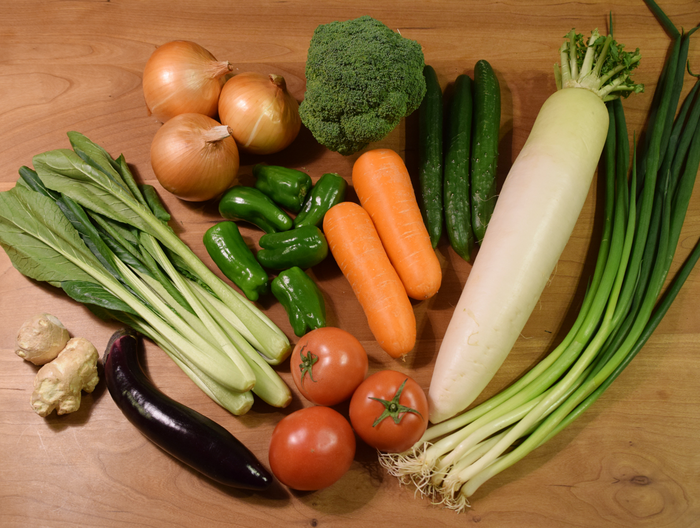
Methods developed for measuring reactive polysulfides in vegetables

Credit: Osaka Metropolitan University

Osaka, Japan – The health-promoting effects of sulfur-rich vegetables such as onions and garlic have been known for a long time. How food containing sulfur compounds promotes health has not been easy to explore, as the levels—and types—of reactive polysulfides found in different vegetables had not been accurately measured.

A research team, led by Assistant Professor Shingo Kasamatsu from the Osaka Metropolitan University Graduate School of Science, has established a method for selective and sensitive detection of reactive polysulfides—which can act as potent antioxidants. By using mass spectrometry with a stable-isotope dilution method, the team successfully quantified the total reactive polysulfide content of 22 vegetables, including onions and garlic. Their findings were published in Food Chemistry.

The team also measured the polysulfide content in vegetables to analyze the overall characteristics of the reactive polysulfide. As a result, they were the first to reveal that high levels of reactive polysulfides could be found, not only in vegetables of the leek genus (Allium), such as onions and garlic but also in cruciferous vegetables (Brassicaceae), such as broccoli and cabbage.

“The results of this study will provide a basis for research on reactive polysulfides in food, whose detailed properties and endogeous production mechanisms have not yet been clarified. This will significantly contribute to the development of the research field,” stated Dr. Kasamatsu. “In the future, we expect that this research will be helpful for developing foods and supplements rich in reactive polysulfide that exhibit superior antioxidant activity.”

###

About OMU 

Osaka Metropolitan University is a new public university established by a merger between Osaka City University and Osaka Prefecture University in April 2022. For more science news, see https://www.omu.ac.jp/en/, and follow @OsakaMetUniv_en, or search #OMUScience. 


Journal

Food Chemistry

DOI

10.1016/j.foodchem.2023.135610

Method of Research

Experimental study

Subject of Research

Not applicable

Article Title

Development of methods for quantitative determination of the total and reactive polysulfides: Reactive polysulfide profiling in vegetables

Article Publication Date

3-Feb-2023

Share12Tweet8Share2ShareShareShare2

Related Posts

Florida Cane Toad: Complex Spread and Selective Evolution

Florida Cane Toad: Complex Spread and Selective Evolution

February 7, 2026
New Study Uncovers Mechanism Behind Burn Pit Particulate Matter–Induced Lung Inflammation

New Study Uncovers Mechanism Behind Burn Pit Particulate Matter–Induced Lung Inflammation

February 6, 2026

DeepBlastoid: Advancing Automated and Efficient Evaluation of Human Blastoids with Deep Learning

February 6, 2026

Navigating the Gut: The Role of Formic Acid in the Microbiome

February 6, 2026

POPULAR NEWS

  • Robotic Ureteral Reconstruction: A Novel Approach

    Robotic Ureteral Reconstruction: A Novel Approach

    82 shares
    Share 33 Tweet 21
  • Digital Privacy: Health Data Control in Incarceration

    63 shares
    Share 25 Tweet 16
  • Study Reveals Lipid Accumulation in ME/CFS Cells

    57 shares
    Share 23 Tweet 14
  • Breakthrough in RNA Research Accelerates Medical Innovations Timeline

    53 shares
    Share 21 Tweet 13

About

We bring you the latest biotechnology news from best research centers and universities around the world. Check our website.

Follow us

Recent News

Inflammasome Protein ASC Drives Pancreatic Cancer Metabolism

Phage-Antibiotic Combo Beats Resistant Peritoneal Infection

Boosting Remote Healthcare: Stepped-Wedge Trial Insights

Subscribe to Blog via Email

Enter your email address to subscribe to this blog and receive notifications of new posts by email.

Join 73 other subscribers
  • Contact Us

Bioengineer.org © Copyright 2023 All Rights Reserved.

Welcome Back!

Login to your account below

Forgotten Password?

Retrieve your password

Please enter your username or email address to reset your password.

Log In
No Result
View All Result
  • Homepages
    • Home Page 1
    • Home Page 2
  • News
  • National
  • Business
  • Health
  • Lifestyle
  • Science

Bioengineer.org © Copyright 2023 All Rights Reserved.