Hokkaido University researchers have developed a novel method to design and develop peptide antibiotics in large numbers, which will prove critical to controlling antibiotic resistance.
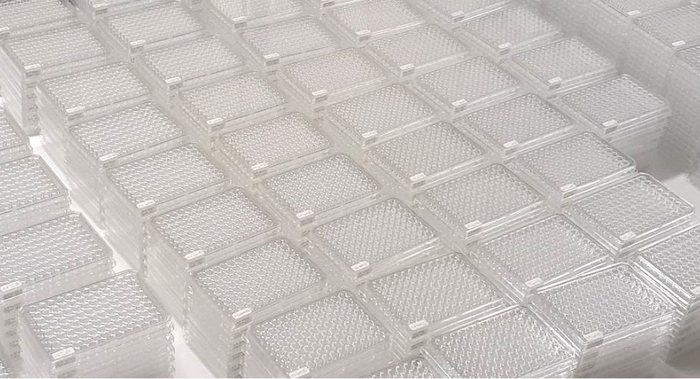
Credit: Akira Katsuyama
Hokkaido University researchers have developed a novel method to design and develop peptide antibiotics in large numbers, which will prove critical to controlling antibiotic resistance.
Applications of new molecules as drugs are expected to be effective in treating diseases that are difficult to cure with currently used conventional drugs. Peptides are one such type of molecule. They are well studied, and several drugs have been developed by the modification of different peptides. Modifying and testing new peptide structures is a time-consuming process, so any method that could reduce the time required for this process would rapidly accelerate drug development.
Researchers at Hokkaido University led by Assistant Professor Akira Katsuyama and Professor Satoshi Ichikawa at the Faculty of Pharmaceutical Sciences have developed a “scanning and direct derivatization” method for targeted modification of polymyxin, an antibiotic of last resort. Their work was published in the Journal of the American Chemical Society.
“Peptides are small molecules composed of amino acids, and are involved in many natural processes,” explains Katsuyama. “Due to how easy it is to modify them, peptides have great potential as drugs to treat diseases—modified peptides currently in use include drugs to treat diabetes, cancer, and other diseases.”
While the modification of peptides to enhance and alter their properties and biological effects is quite common, the process of making these changes in a targeted and deliberate manner is still very difficult. The research team approached this problem by modifying a technique known as peptide scanning, which is used to determine the role and importance of each amino acid in a peptide, to modify specific amino acids in polymyxin by the addition of different chemical groups.
The team first designed a series of 12 scanning derivatives, and tested their antibiotic activity against 9 bacteria, including six highly virulent and antibiotic resistant bacterial pathogens. Based on their results, they chose three scanning derivatives for the further development for new antibiotic candidates that targets polymyxin-resistant Escherichia coli; and another four scanning derivatives to develop new narrow- and broad-spectrum antibiotic candidates.
The selected scanning derivatives were then subjected to direct derivatization. From the three selected to target E. coli, 324 derivatives were generated and tested for antibacterial activity; just four derivatives showed antibiotic activity comparable to polymyxin. In the assay of the narrow-spectrum derivatives, 10 out of 54 showed antibiotic activity against Pseudomonas aeruginosa comparable to polymyxin. Finally, for the broad-spectrum derivatives, just one out of 162 derivatives exhibited an antibiotic activity comparable to or stronger than that of polymyxin against all nine strains.
“We have shown that the technique we developed, the ‘scanning and direct derivatization’ protocol, can be used to generate and evaluate hundreds of peptide derivatives,” concluded Ichikawa. “We have also proven that it can be used to simultaneously develop derivatives with different effects. This method is widely applicable for the optimization of peptides.”
Journal
Journal of the American Chemical Society
DOI
10.1021/jacs.2c12971
Method of Research
Experimental study
Subject of Research
Not applicable
Article Title
Discovery of biologically optimized polymyxin derivatives facilitated by peptide scanning and in situ screening chemistry
Article Publication Date
28-Jan-2023