• HOME
  • NEWS
  • EXPLORE
    • CAREER
      • Companies
      • Jobs
    • EVENTS
    • iGEM
      • News
      • Team
    • PHOTOS
    • VIDEO
    • WIKI
  • BLOG
  • COMMUNITY
    • FACEBOOK
    • INSTAGRAM
    • TWITTER
Saturday, February 7, 2026
BIOENGINEER.ORG
No Result
View All Result
  • Login
  • HOME
  • NEWS
  • EXPLORE
    • CAREER
      • Companies
      • Jobs
        • Lecturer
        • PhD Studentship
        • Postdoc
        • Research Assistant
    • EVENTS
    • iGEM
      • News
      • Team
    • PHOTOS
    • VIDEO
    • WIKI
  • BLOG
  • COMMUNITY
    • FACEBOOK
    • INSTAGRAM
    • TWITTER
  • HOME
  • NEWS
  • EXPLORE
    • CAREER
      • Companies
      • Jobs
        • Lecturer
        • PhD Studentship
        • Postdoc
        • Research Assistant
    • EVENTS
    • iGEM
      • News
      • Team
    • PHOTOS
    • VIDEO
    • WIKI
  • BLOG
  • COMMUNITY
    • FACEBOOK
    • INSTAGRAM
    • TWITTER
No Result
View All Result
Bioengineer.org
No Result
View All Result
Home NEWS Science News Health

Expanding gene therapy for rare disease that causes blindness

Bioengineer by Bioengineer
January 19, 2023
in Health
Reading Time: 2 mins read
0
Muna Naash, University of Houston John S. Dunn Endowed Professor of biomedical engineering
Share on FacebookShare on TwitterShare on LinkedinShare on RedditShare on Telegram

A University of Houston researcher is expanding a method of gene therapy with the hopes it will restore vision loss in Usher Syndrome Type 2A (USH2A), a rare genetic disease. The National Eye Institute has awarded Muna Naash, John S. Dunn Endowed Professor of biomedical engineering, $1.6 million to support her work. 
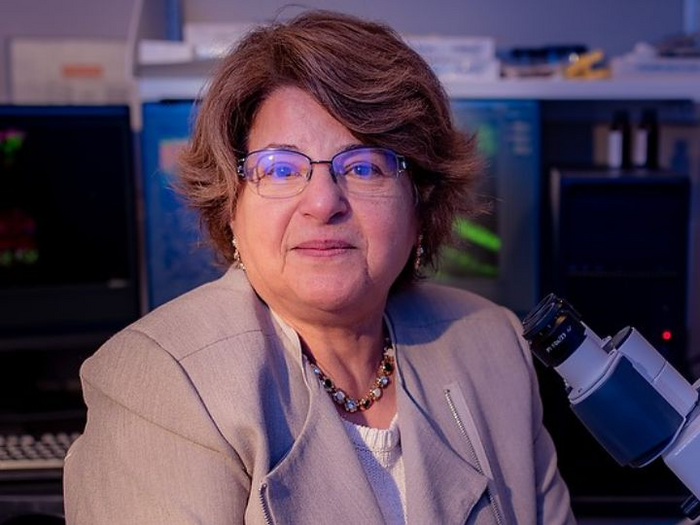
Muna Naash, University of Houston John S. Dunn Endowed Professor of biomedical engineering

Credit: University of Houston

A University of Houston researcher is expanding a method of gene therapy with the hopes it will restore vision loss in Usher Syndrome Type 2A (USH2A), a rare genetic disease. The National Eye Institute has awarded Muna Naash, John S. Dunn Endowed Professor of biomedical engineering, $1.6 million to support her work. 

Usher Syndrome Type 2A, caused by mutations of the USH2A gene, can include hearing loss from birth and progressive loss of vision, prompting retinitis pigmentosa (RP). RP affects the retina, the eye’s light-sensitive layer, leading to a breakdown of cells in the retina which causes blindness. Currently no treatment exists for USH2A. 

“Our goal is to advance our current intravitreal gene therapy platform consisting of DNA nanoparticles/hyaluronic acid nanospheres to deliver large genes in order to develop safe and effective therapies for visual loss in Usher Syndrome Type 2A,” said Naash. Gene therapy is the introduction of a normal gene into cells to correct genetic disorders. Intravitreal treatment consists of injections directly into the vitreal chamber of the eye.  

“Developing an effective treatment for USH2A has been challenging due to its large coding sequence (15.8 kb) that has precluded its delivery using standard approaches and the presence of multiple isoforms with functions that are not fully understood,” said Naash, who will also evaluate the long-term efficacy of the best therapeutic platform for future translation to the clinic. 

To rescue vision loss, Naash’s non-viral therapy targets the mutation in usherin, the protein product that causes Usher Syndrome Type 2A. Naash has already cloned two usherin isoforms to be tested with her innovative platform to safely advance gene therapy for USH2A. 

“Understanding which isoforms of usherin are expressed in the retina and the cochlea and what role they play (in contrast to mutant pathogenic forms) is essential in developing an effective gene therapy construct,” said Naash.  

The work will provide a solid foundation for understanding the function of each usherin isoform and developing an effective gene therapy platform to treat USH2A associated visual defects, she said. 



Share12Tweet8Share2ShareShareShare2

Related Posts

Evaluating Pediatric Emergency Care Quality in Ethiopia

February 7, 2026

TPMT Expression Predictions Linked to Azathioprine Side Effects

February 7, 2026

Improving Dementia Care with Enhanced Activity Kits

February 7, 2026

Decoding Prostate Cancer Origins via snFLARE-seq, mxFRIZNGRND

February 7, 2026

POPULAR NEWS

  • Robotic Ureteral Reconstruction: A Novel Approach

    Robotic Ureteral Reconstruction: A Novel Approach

    82 shares
    Share 33 Tweet 21
  • Digital Privacy: Health Data Control in Incarceration

    63 shares
    Share 25 Tweet 16
  • Study Reveals Lipid Accumulation in ME/CFS Cells

    57 shares
    Share 23 Tweet 14
  • Breakthrough in RNA Research Accelerates Medical Innovations Timeline

    53 shares
    Share 21 Tweet 13

About

We bring you the latest biotechnology news from best research centers and universities around the world. Check our website.

Follow us

Recent News

Evaluating Pediatric Emergency Care Quality in Ethiopia

TPMT Expression Predictions Linked to Azathioprine Side Effects

Improving Dementia Care with Enhanced Activity Kits

Subscribe to Blog via Email

Success! An email was just sent to confirm your subscription. Please find the email now and click 'Confirm' to start subscribing.

Join 73 other subscribers
  • Contact Us

Bioengineer.org © Copyright 2023 All Rights Reserved.

Welcome Back!

Login to your account below

Forgotten Password?

Retrieve your password

Please enter your username or email address to reset your password.

Log In
No Result
View All Result
  • Homepages
    • Home Page 1
    • Home Page 2
  • News
  • National
  • Business
  • Health
  • Lifestyle
  • Science

Bioengineer.org © Copyright 2023 All Rights Reserved.