Credit: The American Phytopathological Society
An important new research paper, titled "Response of Sediment Bacterial Communities to Sudden Vegetation Dieback in a Coastal Wetland," examines the consequences of plant disappearance and changes in salt marsh soil communities following Sudden Vegetation Dieback (SVD).
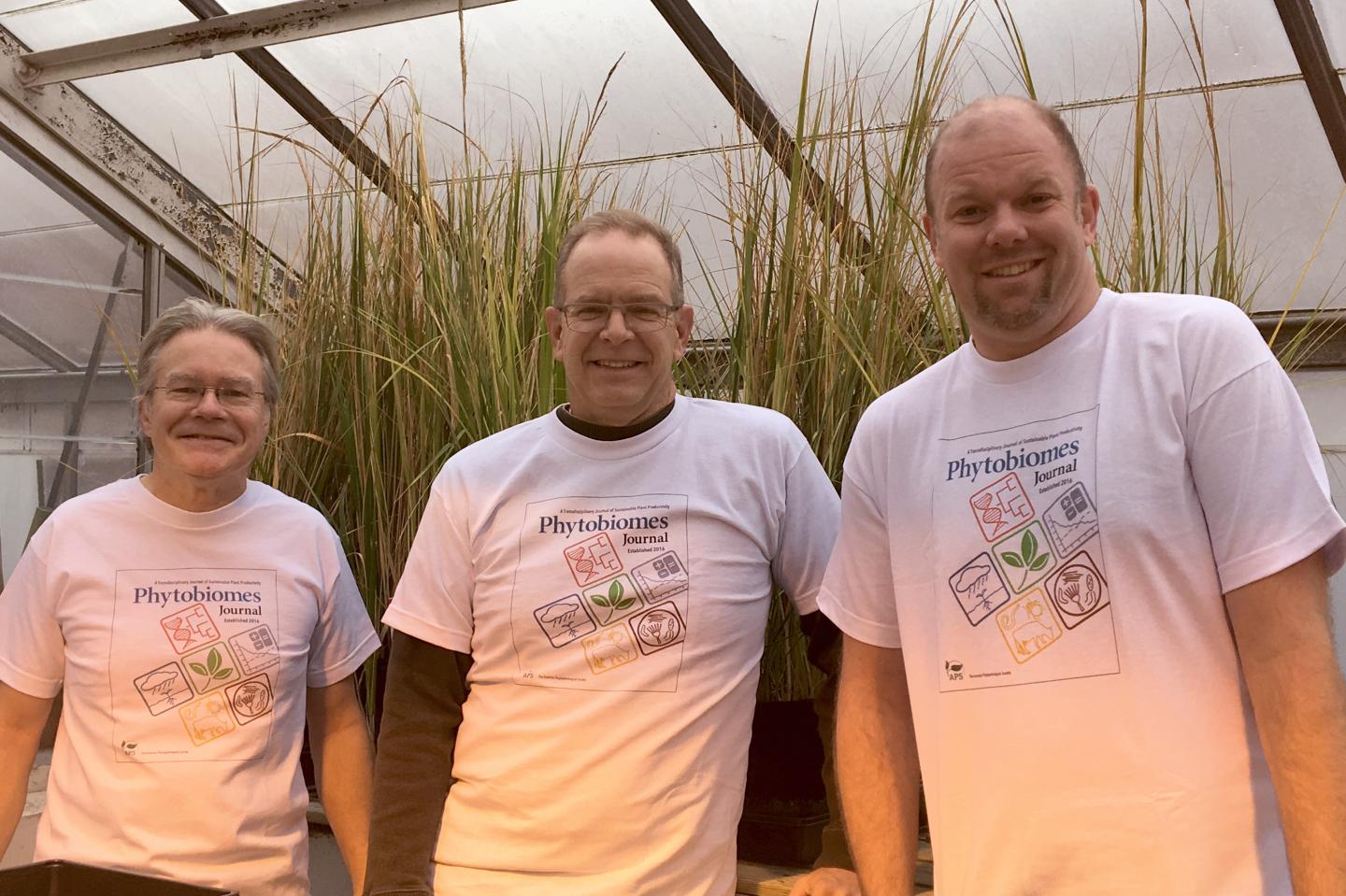
The paper, published in Phytobiomes, an open-access journal of The American Phytopathological Society, is written by Wade Elmer, Peter Thiel, and Blaire Steven, scientists at the Connecticut Agricultural Experiment Station in New Haven. The setting for this study was the marshes of Connecticut's Hammonasset Beach State Park.
These marshes, which produce large amounts of plant biomass, have been beneficial to Connecticut's coastal ecosystems by providing protection from erosion, habitats for native birds and fish, and absorption of fertilizer runoff.
Recently and with no clear cause, these marshes and others on the Atlantic coast were severely affected by SVD. The issue: a rapid death of the dominant marshgrass, Spartina alterniflora.
In this study, the three scientists investigated the effects of SVD on soil carbon flux and microbial composition. They found SVD was associated with a substantial reduction in Bacteroidetes-related bacteria and an enrichment of sulfate-reducing bacteria.
The results reported in the article suggest that Bacteriodetes play a significant role in processing the carbon fixed by S. alterniflora in wetlands, which serve as important sinks of atmospheric carbon, storing it in a stable form.
"This research will lead to better conservation and management strategies that account for the role of wetlands as natural carbon sinks," said Dr. Steven, principal investigator in the study. "This research also highlights the importance of wetlands in maintaining healthy coastal ecosystems and mitigating future climate change."
###
This article is the inaugural research paper published in The American Phytopathological Society's all-new, fully open access Phytobiomes journal. View it at apsjournals.apsnet.org/doi/full/10.1094/PBIOMES-09-16-0006-R
Visit http://www.phytobiomesjournal.org to learn more about the scope, intended readership, and other aspects of this groundbreaking new journal.
About Phytobiomes
Phytobiomes is a fully open access, transdisciplinary journal of sustainable plant productivity, published by The American Phytopathological Society. Phytobiomes publishes original research about organisms and communities and their interaction with plants in any ecosystem. It also provides an international platform for fundamental, translational, and integrated research that accomplishes the overarching objective of offering a new vision for agriculture in which sustainable crop productivity is achieved through a systems-level understanding of the diverse interacting components of the phytobiome. These components include plant pathogens, insects, soil, microbes, weeds, biochemistry, climate, and many others. Follow us on Twitter @PhytobiomesJ
Media Contact
Phil Bogdan
[email protected]
651-994-3859
http://www.apsnet.org
############
Story Source: Materials provided by Scienmag