A clinical research team from the Department of Paediatrics and Adolescent Medicine and the Department of Obstetrics and Gynaecology, School of Clinical Medicine, LKS Faculty of Medicine, The University of Hong Kong (HKUMed) leads the discovery of applying amniotic fluid cells obtained during 16-24 weeks of pregnancy as a novel sample type for RNA-sequencing in prenatal diagnosis to help more families with tailored clinical management. It is the first proof-of-concept study to demonstrate the potential clinical utility of amniotic fluid cells RNA-sequencing in the literature. The ground-breaking findings have been published in the leading academic journal, npj Genomic Medicine [Link to the publication].
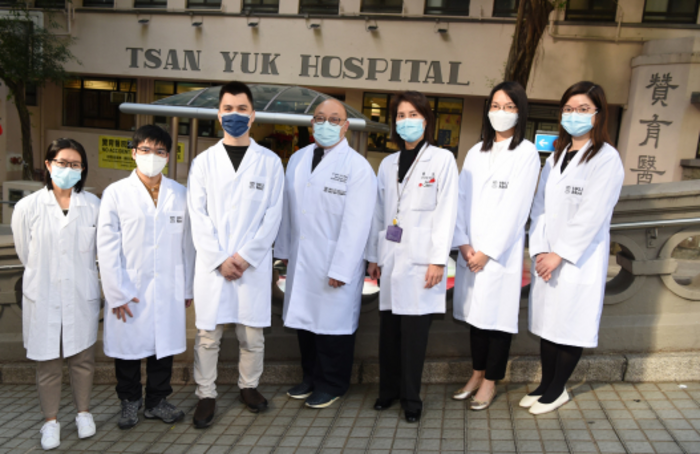
Credit: The University of Hong Kong
A clinical research team from the Department of Paediatrics and Adolescent Medicine and the Department of Obstetrics and Gynaecology, School of Clinical Medicine, LKS Faculty of Medicine, The University of Hong Kong (HKUMed) leads the discovery of applying amniotic fluid cells obtained during 16-24 weeks of pregnancy as a novel sample type for RNA-sequencing in prenatal diagnosis to help more families with tailored clinical management. It is the first proof-of-concept study to demonstrate the potential clinical utility of amniotic fluid cells RNA-sequencing in the literature. The ground-breaking findings have been published in the leading academic journal, npj Genomic Medicine [Link to the publication].
Background
Rare diseases are usually genetic in origin. Although individually rare, collectively rare diseases were found to be 1 in 67 in the Hong Kong population, based on the team’s previous study.[1] The identification of genetic cause in rare diseases can provide accurate counselling for better clinical management and future pregnancy planning, which is essential to support the patients. Current technologies for prenatal diagnosis are largely DNA-based, with a large proportion (60-70%) remains undiagnosed, leading to clinical uncertainty and parental anxiety. Recently, RNA-sequencing has been found to increase diagnostic yield by 10% to 36%,[2] however, none of these studies focused on prenatal diagnosis. In addition, in spite of the availability of well-established large database cataloging the gene expression profile of different tissues for adult, similar publicly-available dataset for amniotic fluid cells reflecting the embryological and fetal stage is lacking. Further study and research on RNA-sequencing in prenatal setting is thus necessary.
Research findings
The research team demonstrated the potential clinical utility of amniotic fluid cells RNA-sequencing. A baseline for gene expression profile of amniotic fluid cells is established by performing RNA-sequencing on over 50 amniotic fluid samples. Establishment of gene expression profile is an essential step in applying RNA-sequencing to the current selected clinical diagnosis workflow. They found that the number of well-expressed genes in amniotic fluid cells was comparable to other clinically accessible tissues commonly used for genetic diagnosis across different disease categories. The research team also compared RNA-sequencing data of four affected fetuses with structural congenital anomalies with the established baseline to detect potential outliers. In collaboration with the Technical University of Munich in Germany, a bioinformatics pipeline was adapted to enhance the detection of outliers for subsequent analysis. Further in-depth curation showed that outliers can be identified in genes associated with the corresponding structural congenital anomalies in all four affected fetuses. Identifying the outliers provide more evidence at the RNA level to help diagnosis.
Significance of the study
The findings of this study have significant implications in solving undiagnosed rare diseases in Hong Kong. It is the first time that amniotic fluid cells RNA-sequencing is reported to provide potential clinical utility in prenatal diagnosis in literature. With the identification of the genetic cause, precision medicine such as tailored clinical management and preimplantation genetic diagnosis for families with family history is possible.
This study was selected as the ‘Reviewers’ Choice Abstract’ (top 10% of poster abstract) at the American Society of Human Genetics (ASHG) Annual Meeting 2022, one of the largest conferences of its kind, in which scientists from around the world are selected to present their cutting-edge research findings collaboratively [Link to the abstract]. ‘It is an honour for HKUMed poster to be selected and scored as the top 10% of poster abstracts in this prestigious international conference. RNA-sequencing has great potential in solving unexplained genetic disorders. We will continue to strengthen ties and collaborations with institutions in Hong Kong and abroad, contribute to international scientific research and bring benefits back to our local patients,’ said Dr Brian Chung Hon-yin, Clinical Geneticist, Clinical Associate Professor, Department of Paediatrics and Adolescent Medicine, School of Clinical Medicine, HKUMed.
Dr Anita Kan Sik-yau, Honorary Clinical Associate Professor, Department of Obstetrics and Gynaecology, School of Clinical Medicine, HKUMed cum Deputy Laboratory Director of the Prenatal Diagnostic Laboratory at Tsan Yuk Hospital added, ‘On the memorable occasion of Tsan Yuk Hospital (TYH)’s 100th Anniversary, this study demonstrated TYH’s exceptional service for Hong Kong over the past century, and continuous effort to contribute to all those in need, alongside innovative research.’
About the research team
This research was led by Dr Brian Chung Hon-yin, Clinical Associate Professor, Department of Paediatrics and Adolescent Medicine, School of Clinical Medicine, HKUMed; Dr Anita Kan Sik-yau, Honorary Clinical Associate Professor, Department of Obstetrics and Gynaecology, School of Clinical Medicine, HKUMed. Mianne Lee, MPhil candidate, and Dr Anna Kwong Ka-yee, Assistant Research Officer, Department of Paediatrics and Adolescent Medicine, School of Clinical Medicine, HKUMed are the first authors.
Other contributors included Dr Christopher Mak Chun-yu, Martin Chui Man-chun, Jeffrey Chau Fong-ting, Department of Paediatrics and Adolescent Medicine, School of Clinical Medicine, HKUMed; Dr Kelvin Chan Yuen-kwong, Dr Sandy Au Leung-kuen and Lo Hei-man, Department of Obstetrics and Gynaecology, School of Clinical Medicine, HKUMed. International collaborators were Professor Julien Gagneur and Dr Vicente A Yépez from Department of Informatics, Technical University of Munich, Garching, Germany.
Acknowledgement
This study was supported by The Society for the Relief of Disabled Children, Health and Medical Research Fund of the Health Bureau, the Government of the Hong Kong Special Administrative Region and the Mr and Mrs Edward CM Wong Foundation.
Media enquiries
Please contact LKS Faculty of Medicine of The University of Hong Kong by email ([email protected]).
[1] Chung, C. C. Y., Hong Kong Genome, P., Chu, A. T. W. & Chung, B. H. Y. Rare disease emerging as a global public health priority. Front Public Health 10, 1028545, doi:10.3389/fpubh.2022.1028545 (2022).
[2] Gonorazky, H. D. et al. Expanding the Boundaries of RNA Sequencing as a Diagnostic Tool for Rare Mendelian Disease. Am J Hum Genet 104, 466-483, doi:10.1016/j.ajhg.2019.01.012 (2019).
Kremer, L. S. et al. Genetic diagnosis of Mendelian disorders via RNA sequencing. Nat Commun 8, 15824, doi:10.1038/ncomms15824 (2017).
Journal
Genomic Medicine
DOI
10.1038/s41525-022-00347-4
Method of Research
Experimental study
Subject of Research
Cells
Article Title
Diagnostic potential of the amniotic fluid cells transcriptome in deciphering mendelian disease: a proof-of-concept
Article Publication Date
28-Dec-2022