A microbiologist at the University of Massachusetts Amherst has received a National Institutes of Health (NIH) grant to support research aimed ultimately at developing new, more effective treatments for tuberculosis (TB).
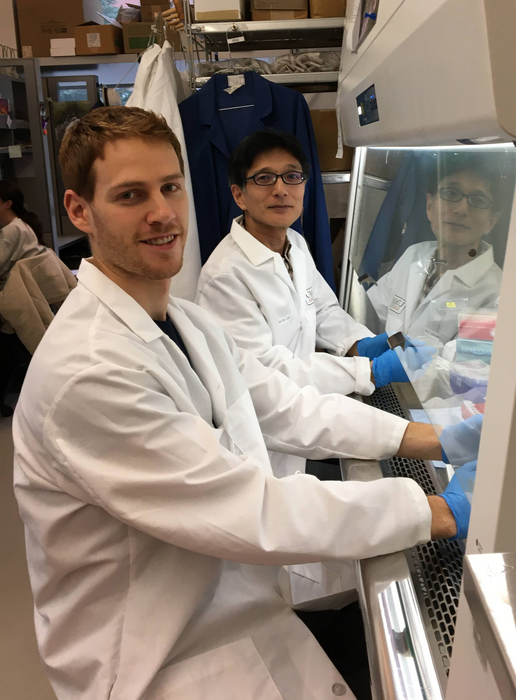
Credit: UMass Amherst
A microbiologist at the University of Massachusetts Amherst has received a National Institutes of Health (NIH) grant to support research aimed ultimately at developing new, more effective treatments for tuberculosis (TB).
“The TB pathogen is a pretty amazing organism,” says Yasu Morita, associate professor of microbiology, who was awarded a two-year, $420,000 grant. “Two billion people, more than a quarter of the world population, carry TB, yet only a small fraction of them develop the disease, and a majority never know they have it.”
Morita studies mycobacteria, a group of bacteria that’s omnipresent in the soil and environment. Several species of mycobacteria cause disease, the most well-known of which is TB.
Most of the time, TB pathogen stays dormant in the body. But in some cases, it causes serious illness, usually attacking the lungs, and can lead to death when not properly treated. In 2021 worldwide, 1.6 million people died from TB and 10.6 million people fell ill with the disease, according to the World Health Organization.
“So how do mycobacteria remain in the host for decades without being killed or dying, but without killing the host either?” says Morita, whose lab is focused on investigating the mycobacterial cell envelope, or the cell’s protective surface.
“We work on a nonpathogenic model organism primarily to figure out what features of bacteria are needed for them to survive and grow. We’re particularly interested in the surface structure of bacteria because it’s very important to protect them from outside attack, like the immune system or antibiotics or any toxic agents that have to go through the surface layer and penetrate to the inside.
“Understanding how this surface is created is very important,” Morita says. “It is a very rigid, protective armor, and at the same time it has to be flexible enough to elongate and then divide.”
The goal of Morita’s research is to develop a drug that interrupts homeostasis of the mycobacterial cell envelope, making the mycobacteria unable to grow or vulnerable to attack. After years of study spearheaded by the senior graduate student Ian Sparks, Morita and his team have focused in on the glycolipids located on the cell surface, which help to maintain the stability of the cell membrane.
“Ian made a mutant cell which cannot make glycolipid, and the bacteria was unable to grow and lost its shape,” Morita explains. “So it must be doing something very important, somehow helping to fortify the cell wall layer and maintain the cell shape.”
In the new research, Morita will work with pathogenic TB mutants to confirm their findings from the model mycobacterium. Glycolipids also appear to have an important role in the capsule layer of the cell, located outside the cell wall. “Antibiotic sensitivity goes up when we make these mutant bacteria, and we want to understand the exact role of these glycolipids and investigate that in pathogenic mycobacteria,” he says.
Targeting glycolipids may be one way to strengthen the effectiveness of preexisting antibiotics that are not adequate for treating TB. For example, the TB pathogen is resistant to common antibiotics like penicillin. “Penicillin has been revolutionary for many bacterial diseases, but it cannot penetrate the mycobacterial surface layer, and mycobacteria also have an enzyme which can break down penicillin,” Morita says. “But if we break down the cell surface structure, they become a lot more sensitive to antibiotics related to penicillin.”
Morita’s lab at the Institute for Applied Life Sciences’ Models to Medicine Center includes biosafety level 3 facilities necessary to work with pathogens like TB.
“It’s a lot more demanding and time-consuming to work with real TB pathogen but that’s what you have to do when you get to the point where you have a good target and need to test if what we see in model organisms is the same in the pathogen,” he says.