• HOME
  • NEWS
  • EXPLORE
    • CAREER
      • Companies
      • Jobs
    • EVENTS
    • iGEM
      • News
      • Team
    • PHOTOS
    • VIDEO
    • WIKI
  • BLOG
  • COMMUNITY
    • FACEBOOK
    • INSTAGRAM
    • TWITTER
Saturday, February 7, 2026
BIOENGINEER.ORG
No Result
View All Result
  • Login
  • HOME
  • NEWS
  • EXPLORE
    • CAREER
      • Companies
      • Jobs
        • Lecturer
        • PhD Studentship
        • Postdoc
        • Research Assistant
    • EVENTS
    • iGEM
      • News
      • Team
    • PHOTOS
    • VIDEO
    • WIKI
  • BLOG
  • COMMUNITY
    • FACEBOOK
    • INSTAGRAM
    • TWITTER
  • HOME
  • NEWS
  • EXPLORE
    • CAREER
      • Companies
      • Jobs
        • Lecturer
        • PhD Studentship
        • Postdoc
        • Research Assistant
    • EVENTS
    • iGEM
      • News
      • Team
    • PHOTOS
    • VIDEO
    • WIKI
  • BLOG
  • COMMUNITY
    • FACEBOOK
    • INSTAGRAM
    • TWITTER
No Result
View All Result
Bioengineer.org
No Result
View All Result
Home NEWS Science News Biology

Newly discovered scorpionfly genus with bizarre appearance

Bioengineer by Bioengineer
December 12, 2022
in Biology
Reading Time: 2 mins read
0
large scorpionfly from Nepal named Lulilan obscurus
Share on FacebookShare on TwitterShare on LinkedinShare on RedditShare on Telegram

Zoologist Professor Rainer Willmann, former Director of the Zoological Museum at the University of Göttingen, has described and classified previously unknown species of scorpionflies from Nepal. These species belong to a completely new genus, for which Willmann has introduced the name “Lulilan”. His paper was published in the journal Contributions to Entomology.
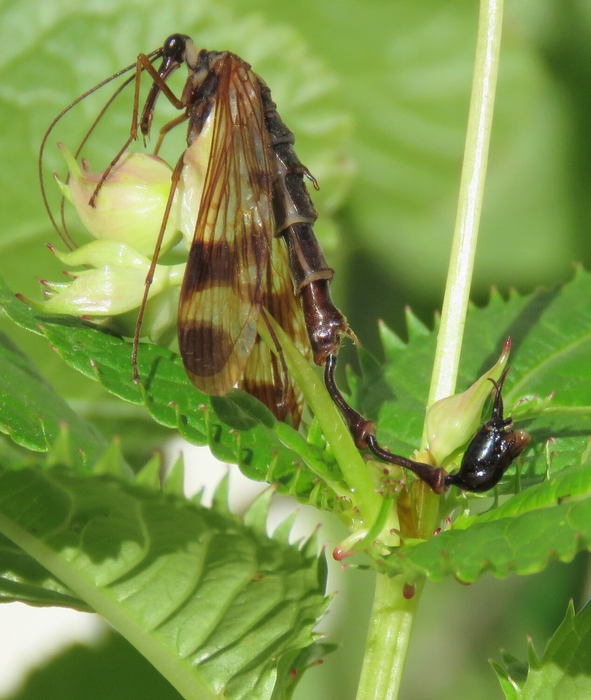
large scorpionfly from Nepal named Lulilan obscurus

Credit: University of Göttingen/R Willmann

Zoologist Professor Rainer Willmann, former Director of the Zoological Museum at the University of Göttingen, has described and classified previously unknown species of scorpionflies from Nepal. These species belong to a completely new genus, for which Willmann has introduced the name “Lulilan”. His paper was published in the journal Contributions to Entomology.


“The appearance of the newly discovered scorpionflies could hardly be more bizarre,” says Willmann. The males have a spindly, extremely elongated abdomen, at the end of which is a large organ – with long, grasping pincers – for mating. The insects have a body length of more than three centimetres, meaning they are particularly large. The insects were captured by the Mainz zoologist Professor Jochen Martens and his colleague from Stuttgart Dr Wolfgang Schawaller. Until now, only one such species was known and that was discovered exactly 200 years ago.


“Despite their dangerous-sounding name, scorpionflies are completely harmless to humans,” says Willmann. Their name comes from their spherical genital segment, which looks like the sting of a scorpion. They also have a distinctive, elongated head. In Europe, there are only a few species of scorpionflies. “More species of Lulilan probably exist in Nepal and the surrounding regions,” Willmann says. So far, only the females of some types are known. Unlike the males, however, the females have none of these characteristic features, meaning that classification is more difficult.


From the scorpionflies that have already been described, only the genus Leptopanorpa, which is native to Sumatra, Java and Bali, has developed such a distinctive abdomen. However, it is not closely related to Lulilan. “This is an amazing example where similar characteristics emerge independently, perhaps in response to similar evolutionary pressures,” says Willmann.


Original publication: Willmann, R. (2022): Neue Skorpionsfliegen (Mecoptera, Panorpidae) aus Nepal. Contributions to Entomology 72: 309-320. DoI: 10.3897/contrib.entomol.72.e97277 


Contact:
Emeritus Professor Rainer Willmann

University of Göttingen
Email: [email protected] 


Journal

Contributions to Entomology

DOI

10.3897/contrib.entomol.72.e97277

Method of Research

Observational study

Subject of Research

Animals

Article Title

Neue Skorpionsfliegen (Mecoptera, Panorpidae) aus Nepal

Article Publication Date

5-Dec-2022

Share12Tweet8Share2ShareShareShare2

Related Posts

Florida Cane Toad: Complex Spread and Selective Evolution

Florida Cane Toad: Complex Spread and Selective Evolution

February 7, 2026
New Study Uncovers Mechanism Behind Burn Pit Particulate Matter–Induced Lung Inflammation

New Study Uncovers Mechanism Behind Burn Pit Particulate Matter–Induced Lung Inflammation

February 6, 2026

DeepBlastoid: Advancing Automated and Efficient Evaluation of Human Blastoids with Deep Learning

February 6, 2026

Navigating the Gut: The Role of Formic Acid in the Microbiome

February 6, 2026

POPULAR NEWS

  • Robotic Ureteral Reconstruction: A Novel Approach

    Robotic Ureteral Reconstruction: A Novel Approach

    82 shares
    Share 33 Tweet 21
  • Digital Privacy: Health Data Control in Incarceration

    63 shares
    Share 25 Tweet 16
  • Study Reveals Lipid Accumulation in ME/CFS Cells

    57 shares
    Share 23 Tweet 14
  • Breakthrough in RNA Research Accelerates Medical Innovations Timeline

    53 shares
    Share 21 Tweet 13

About

We bring you the latest biotechnology news from best research centers and universities around the world. Check our website.

Follow us

Recent News

Phage-Antibiotic Combo Beats Resistant Peritoneal Infection

Boosting Remote Healthcare: Stepped-Wedge Trial Insights

Barriers and Boosters of Seniors’ Physical Activity in Karachi

Subscribe to Blog via Email

Enter your email address to subscribe to this blog and receive notifications of new posts by email.

Join 73 other subscribers
  • Contact Us

Bioengineer.org © Copyright 2023 All Rights Reserved.

Welcome Back!

Login to your account below

Forgotten Password?

Retrieve your password

Please enter your username or email address to reset your password.

Log In
No Result
View All Result
  • Homepages
    • Home Page 1
    • Home Page 2
  • News
  • National
  • Business
  • Health
  • Lifestyle
  • Science

Bioengineer.org © Copyright 2023 All Rights Reserved.