AUGUSTA, Ga. (Dec. 8, 2022) – Antibodies produced against the commonly used antibiotic, gentamicin, appear to increase the risk of type 1 diabetes in children already genetically at risk, scientists say.
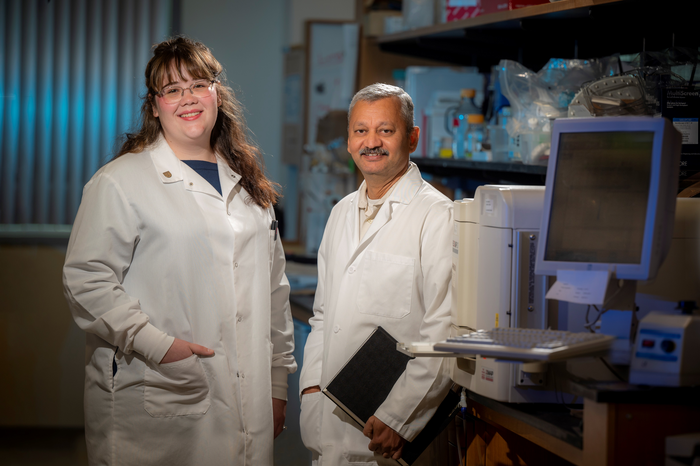
Credit: Michael Holahan, Augusta University
AUGUSTA, Ga. (Dec. 8, 2022) – Antibodies produced against the commonly used antibiotic, gentamicin, appear to increase the risk of type 1 diabetes in children already genetically at risk, scientists say.
When Medical College of Georgia scientists compared the blood of nearly 300 individuals with type 1 diabetes to healthy controls, they found that a higher level of antibodies against gentamicin was associated with increased risk of progression to type 1 diabetes. G418 and sisomicin, analogs of gentamicin, also showed a similar association.
Their study analyzed samples from the Diabetes Autoimmunity Study in the Young (DAISY) and Phenome and Genome of Diabetic Autoantibody (PAGODA). The databases studied did not state whether study participants had been given gentamicin. However, anywhere between 5-10% of newborns receive the broad-spectrum antibiotic to treat potentially lethal sepsis.
They report in the journal Nature Communications that a similar percentage, 5.3% of the participants, had high levels of these antibodies and a high percentage of this group later developed type 1 diabetes, says Sharad Purohit, PhD, a biochemist in the MCG Center for Biotechnology and Genomic Medicine.
To compound the scenario, it’s known that premature babies are considered at higher risk for both sepsis and type 1 diabetes. The current standard of care for newborns with sepsis is giving gentamicin, per World Health Organization guidelines.
“These infections are common, and the babies need the antibiotic,” says corresponding author Purohit, noting that their own immune systems are not well developed at that juncture, and the drug may be a lifesaving therapy.
It’s not uncommon for antibiotics to prompt production of antibodies because the body views them as foreign. In this study, scientists looked at antibodies to glycans, which are found on the surface our cells as well as the cells of microorganisms like bacteria and are known to be a ready target for this immune response.
Gentamicin and other similar antibiotics are a class of compounds called aminoglycosides, which are commonly used to treat serious infections, and are also broadly classified as glycans because of their sugar content.
When the MCG scientists did “profiling” of all the antibodies, they clustered the glycans two ways. The first was by glycans with similar function and secondly, by antibody levels in patients. They also found an association between the multitasking FUT2 gene and the antibodies against both gentamicin and the islet cells of the pancreas. “I think based on our data, they are compounding risks,” Purohit says.
The FUT2 gene is involved in many of the key factors involved in the progression to type 1 diabetes. Its functions include the contents of glycans on the surface of cells in our body and what the glycans do; the risk of major infection, or sepsis, in newborns; type 1 diabetes and other autoimmune diseases; as well as controlling blood type.
The scientists looked at antibodies against 202 glycans in the blood of 278 individuals with type 1 diabetes, compared with 298 healthy individuals considered controls. For some of the individuals, they were able to look at antibody levels across the course of years.
They saw in these cohorts what others have seen: varying levels of antibodies against several classes of glycans, which may have an indirect role in the control of the immune response.
Specific antibodies to glycans in the blood already have been associated with cancer and other autoimmune diseases. Those associations have generated interest in pursuing the potential of glycan antibodies as biomarkers to help diagnose and potentially act as targets to help treat some of these conditions. The new study indicates the anti-carbohydrate antibodies (ACAs) may have a similar potential in type 1 diabetes, Purohit says.
“ACA profiling can help identify environmental exposures associated with disease and are potentially useful biomarkers for disease prediction,” says first author Paul Tran, MD/PhD.
The scientists note that the relationships they are seeing need further exploration to better understand how — and if — the pieces fit together to increase a child’s risk of type 1 diabetes.
They plan to pursue the emerging relationships in a larger population of children and other young people known to be at risk for type 1 diabetes, enrolled in TEDDY, The Environmental Determinants of Diabetes in the Young study. TEDDY offers a lot of detailed, longitudinal data, including any sicknesses and treatments, and even what they eat. MCG is one of six centers internationally for TEDDY, which is following about 9,000 children with one of more genes known to increase the risk for type 1 diabetes from birth to age 15.
The role of glycans is being explored in a variety of disease states, including cancer and other autoimmune diseases.
Purohit is a faculty member in the College of Allied Health Sciences at Augusta University. Tran, a 2022 graduate of MCG and AU, is currently an internal medicine resident at Yale University who has plans to become an endocrinologist.
The research was supported by the National Institutes of Health.
Read the full study.
Journal
Nature Communications
Article Title
Use of a glycomics array to establish the anti-carbohydrate antibody repertoire in type 1 diabetes
Article Publication Date
1-Nov-2022