• HOME
  • NEWS
  • EXPLORE
    • CAREER
      • Companies
      • Jobs
    • EVENTS
    • iGEM
      • News
      • Team
    • PHOTOS
    • VIDEO
    • WIKI
  • BLOG
  • COMMUNITY
    • FACEBOOK
    • INSTAGRAM
    • TWITTER
Monday, May 4, 2026
BIOENGINEER.ORG
No Result
View All Result
  • Login
  • HOME
  • NEWS
  • EXPLORE
    • CAREER
      • Companies
      • Jobs
        • Lecturer
        • PhD Studentship
        • Postdoc
        • Research Assistant
    • EVENTS
    • iGEM
      • News
      • Team
    • PHOTOS
    • VIDEO
    • WIKI
  • BLOG
  • COMMUNITY
    • FACEBOOK
    • INSTAGRAM
    • TWITTER
  • HOME
  • NEWS
  • EXPLORE
    • CAREER
      • Companies
      • Jobs
        • Lecturer
        • PhD Studentship
        • Postdoc
        • Research Assistant
    • EVENTS
    • iGEM
      • News
      • Team
    • PHOTOS
    • VIDEO
    • WIKI
  • BLOG
  • COMMUNITY
    • FACEBOOK
    • INSTAGRAM
    • TWITTER
No Result
View All Result
Bioengineer.org
No Result
View All Result
Home NEWS Science News Biology

Charcoal and cattle correlate with Madagascar’s megafaunal extinctions

Bioengineer by Bioengineer
November 22, 2022
in Biology
Reading Time: 3 mins read
0
Excavation site
Share on FacebookShare on TwitterShare on LinkedinShare on RedditShare on Telegram

The demise of the dodo epitomizes humanity’s record as a destructive force on delicate island life.  Likewise, on the island of Madagascar, gorilla-sized lemurs, 3-meter tall elephant birds, and pygmy hippos went the way of the dodo following the arrival of humans within the last millennia.
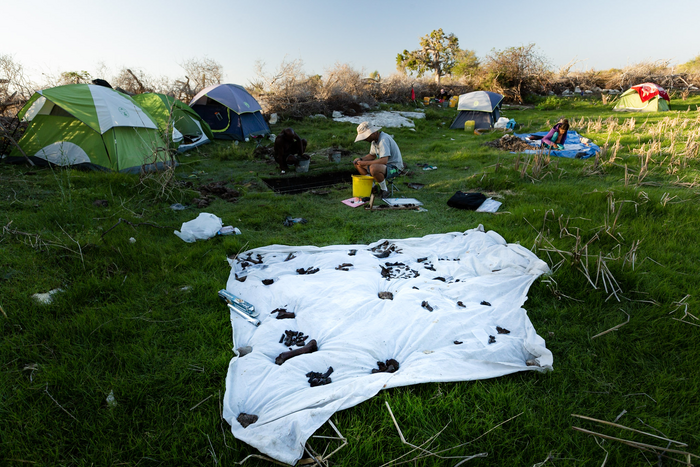
Excavation site

Credit: Garth Cripps, 2018

The demise of the dodo epitomizes humanity’s record as a destructive force on delicate island life.  Likewise, on the island of Madagascar, gorilla-sized lemurs, 3-meter tall elephant birds, and pygmy hippos went the way of the dodo following the arrival of humans within the last millennia.

But the factors behind the disappearance of these animals are not as well-known as in the case of the dodo, and there is intense debate about what caused the extinction of megafauna the world over.

Now, a new study in Scientific Reports suggests that, while humans had a hand in the extinction of these creatures, hunting alone wasn’t the main cause. While past studies have reported the butchery of endemic animals at least 2,000 years ago, the present study correlates the disappearance of endemic megafauna around 1,000 years ago with a sharp increase in introduced species and human-driven landscape change.

To understand the disappearance of Madagascar’s large animals, Hixon et al. excavated three coastal ponds and a cave from the southwest of the island and radiocarbon dated the remains of extinct megafauna, introduced animals, and other signs of human activity.

The researchers found that Madagascar’s megafauna had endured several dry periods over the last 6,000 years, relocating as needed when local water resources were scarce. Signs of human activity, including modified bones and shells, began appearing within the past 2,000 years.

At around 1,000 years ago, however, the researchers identified a drastic increase in charcoal and the bones of domesticated species, such as zebu cattle and dogs. The timing of these human-caused changes corresponds with the disappearance of megafauna.

 “Our results suggest that occupation and alteration of space, through the burning of forests for introduced grazing species, drove the extinction of large animals on the island, rather than the mere presence of hunters,” says Sean Hixon, lead author of the paper.

In recent years, the debate over the causes of megafauna extinctions have largely focused on past climate change and overhunting by recent human arrivals.  The new study suggests that while both of these may have been stress factors in Madagascar, they weren’t the ultimate cause of megafauna extinctions.

The article underscores that hunting isn’t the only way, or perhaps even the main way, that humans impact other species. In order to protect biodiversity, it is equally important to consider how human activities affect animal habitats and mobility.

The researchers hope that future studies will explore paleontological and archaeological deposits in other areas of the island to form a better understanding of when humans first arrived on Madagascar and how they interacted with their environment.


Journal

Scientific Reports

DOI

10.1038/s41598-022-22980-w

Article Title

Cutmarked Bone of Drought-Tolerant Extinct Megafauna Deposited with Traces of Fire, Human Foraging, and Introduced Animals in SW Madagascar

Article Publication Date

22-Nov-2022

Share12Tweet8Share2ShareShareShare2

Related Posts

Biological Aging Marker Connected to Cognitive Symptoms in Depression — Biology

Biological Aging Marker Connected to Cognitive Symptoms in Depression

May 4, 2026
What the Latest Science Really Says About Creatine’s Benefits for Body and Mind — Biology

What the Latest Science Really Says About Creatine’s Benefits for Body and Mind

May 4, 2026

Successful Birth Following Uterus Transplant Marks Medical Breakthrough

May 1, 2026

Cockatoos Mimic Peers to Sharpen Adaptation Skills, Study Finds

May 1, 2026

POPULAR NEWS

  • Research Indicates Potential Connection Between Prenatal Medication Exposure and Elevated Autism Risk

    834 shares
    Share 334 Tweet 209
  • New Study Reveals Plants Can Detect the Sound of Rain

    717 shares
    Share 286 Tweet 179
  • Scientists Investigate Possible Connection Between COVID-19 and Increased Lung Cancer Risk

    67 shares
    Share 27 Tweet 17
  • Salmonella Haem Blocks Macrophages, Boosts Infection

    61 shares
    Share 24 Tweet 15

About

We bring you the latest biotechnology news from best research centers and universities around the world. Check our website.

Follow us

Recent News

High-Intensity Interval Training Delivers Greatest Vascular Benefits for Cardiovascular Patients, Study Finds

Researchers Pioneer Innovative Technique to Design Next-Generation Glass

New Study Finds Renewable Energy More Cost-Effective Than Direct Air Capture for Carbon Reduction

Subscribe to Blog via Email

Enter your email address to subscribe to this blog and receive notifications of new posts by email.

Join 82 other subscribers
  • Contact Us

Bioengineer.org © Copyright 2023 All Rights Reserved.

Welcome Back!

Login to your account below

Forgotten Password?

Retrieve your password

Please enter your username or email address to reset your password.

Log In
No Result
View All Result
  • Homepages
    • Home Page 1
    • Home Page 2
  • News
  • National
  • Business
  • Health
  • Lifestyle
  • Science

Bioengineer.org © Copyright 2023 All Rights Reserved.