Barcelona, Spain: The risk of breast cancer is almost doubled in women diagnosed with benign breast disease through screening, according to research presented at the 13th European Breast Cancer Conference today (Thursday).
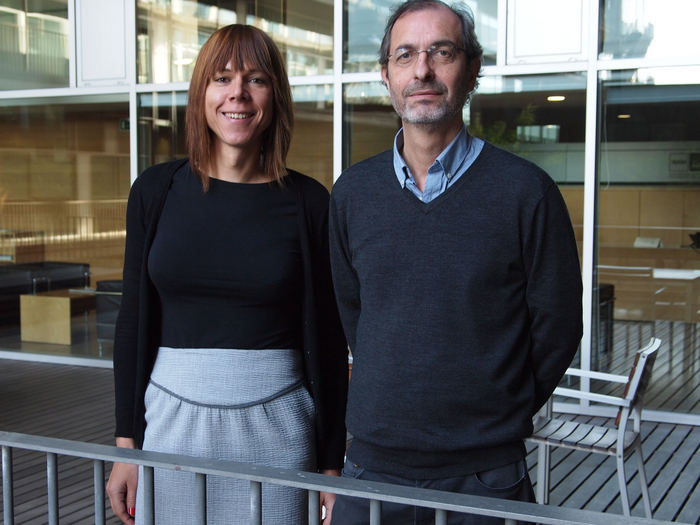
Credit: Marta Roman / EORTC
Barcelona, Spain: The risk of breast cancer is almost doubled in women diagnosed with benign breast disease through screening, according to research presented at the 13th European Breast Cancer Conference today (Thursday).
The study of more than 700,000 Spanish women taking part in breast screening compared women who were diagnosed with any benign breast disease, including fibroadenomas and cysts, with women who were not diagnosed with any breast disease.
The increased risk of breast cancer persisted for at least two decades and researchers say that this group of women could benefit from more frequent screening to ensure those who develop cancer are diagnosed early when survival chances are best.
The research was presented to the Conference by Dr Marta Román from the Hospital del Mar, Barcelona, Spain, and published in the International Journal of Environmental Research and Public Health. It included 778,306 women aged between 50 and 69 years who took part in breast screening at least once between 1996 and 2015 at one of 20 centres in Spain. In Spain all women in this age group are offered a breast screening mammogram, every two years.
Researchers followed the women up until 2017 and, during that time, 17,827 women were diagnosed with benign breast disease while 11,708 women were diagnosed with breast cancer.
The data showed that among women with benign breast disease, around 25 out every 1,000 were subsequently diagnosed with breast cancer. Among women without benign breast disease, around 15 out of every 1,000 were diagnosed with breast cancer. The increased risk was found in women with benign breast disease regardless of their age and the risk persisted for at least 20 years; women followed up for less than four years were 99% more likely to be diagnosed with breast cancer and women followed up for 12 to 20 years were 96% more likely to be diagnosed with breast cancer.
“This is important,” Dr Román explained. “It suggests that benign breast disease is a key indicator that a woman has a higher risk of breast cancer, rather than simply being something that could develop into a cancer. In fact, we often find the benign disease in one breast and then cancer develops in the other breast.
“We can use this knowledge, alongside what we know about other risk factors, to help optimise the breast screening that we offer to women. For example, if a woman is diagnosed with a benign breast disease, and she has other high risk factors, such as a family history of breast cancer, she could benefit from more frequent screening.”
President of the European Breast Cancer Council, Professor David Cameron, from the University of Edinburgh Cancer Research Centre, UK, represents the Council at EBCC13 and was not involved with the research. He said: “Screening can help diagnose breast cancer at an earlier stage when the chances of survival are greater. This large study shows that women in a screening programme who are diagnosed with a benign breast disease appear to be at a higher risk of being diagnosed with breast cancer in the long term and they may therefore benefit from enhanced screening.
“Mammograms quite often pick up signs of breast disease that are not cancer, such as cysts and fibroadenomas, and it’s important to remember that the majority of women with these conditions will not go on to develop breast cancer.”
Journal
International Journal of Environmental Research and Public Health
DOI
10.3390/ijerph19052625
Method of Research
Observational study
Subject of Research
People
Article Title
Long-Term Risk of Breast Cancer after Diagnosis of Benign Breast Disease by Screening Mammography
Article Publication Date
24-Feb-2022
COI Statement
No conflict of interest