SARS-CoV-2 continues to circulate among us. Although some governments have moved on, a new study published today in the journal Nature says that specific efforts and resources are still required to save lives. This is one of six main themes for action identified by a large panel of experts from different disciplines and over 100 countries to recommend actions to end COVID-19 as a public health threat. Worldwide, over 180 organizations from 72 countries have already endorsed the findings of the consensus study, which was led by the Barcelona Institute for Global Health (ISGlobal), an institution supported by “la Caixa” Foundation.
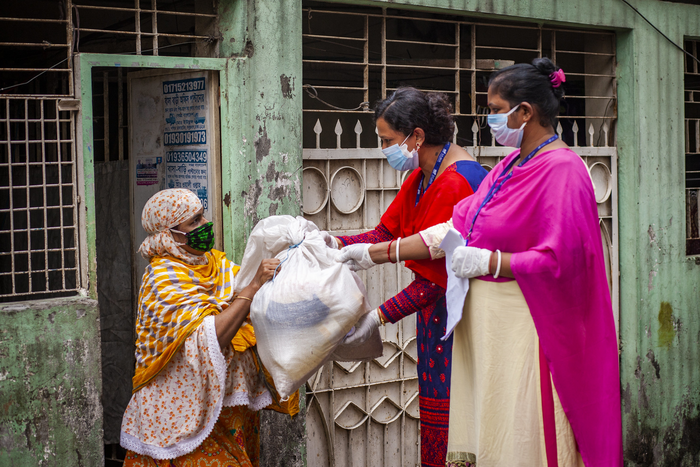
Credit: UN Women/Fahad Abdullah Kaizer
SARS-CoV-2 continues to circulate among us. Although some governments have moved on, a new study published today in the journal Nature says that specific efforts and resources are still required to save lives. This is one of six main themes for action identified by a large panel of experts from different disciplines and over 100 countries to recommend actions to end COVID-19 as a public health threat. Worldwide, over 180 organizations from 72 countries have already endorsed the findings of the consensus study, which was led by the Barcelona Institute for Global Health (ISGlobal), an institution supported by “la Caixa” Foundation.
As of October 2022, more than 630 million COVID-19 cases and over 6.5 million deaths were reported (although the real death toll has been estimated to be upwards of 20 million). In addition, millions of patients with cancer and chronic disease have experienced dangerous healthcare delays, and Long COVID continues to elude definitive treatment, posing an ongoing threat to survivors. In addition, the virus also continues to accumulate mutations that can make it better at evading previous immunity. This is why many public health leaders, including the authors of this study, continue to regard COVID-19 as a persistent and dangerous global health threat.
Despite notable scientific and medical advances, the world’s response to COVID-19 has been hindered by broader political, social, and behavioural factors such as false information, vaccine hesitancy, inconsistent global coordination, and the inequitable distribution of equipment, vaccines and treatments. “Each country has responded differently, and often inadequately, which is partly due to a serious lack of coordination and clear goals,” says Jeffrey V Lazarus, head of the Health Systems Research Group and co-director of the Viral and Bacterial Infections Programme at ISGlobal, Associate Professor at the University of Barcelona, and coordinator of the study.
To develop global consensus on how to address these issues going forward, Lazarus and colleagues carried out a Delphi study, a well-established research methodology that challenges experts to garner consensus on answers to complex research questions. A multidisciplinary panel of 386 academic, health, NGO, government and other experts from 112 countries and territories took part in three rounds of structured consultation. The result is a set of 41 statements and 57 recommendations across six major areas: communication; health systems; vaccination; prevention; treatment and care; and inequities.
Three of the highest-ranked recommendations are: i) adopt a whole-of-society strategy that involves multiple disciplines, sectors and actors to avoid fragmented efforts; ii) whole-of-government approaches (e.g. coordination between ministries) to identify, review, and address resilience in health systems and make them more responsive to people’s needs; and iii) maintain a vaccines-plus approach, which includes a combination of COVID-19 vaccination, other structural and behavioural prevention measures, treatment, and financial support measures. The panellists also prioritised recommendations for developing technologies (vaccines, therapies and services) that can reach target populations.
Other recommendations with at least 99% agreement were: communicating effectively with the public, rebuilding public trust, and engaging communities in managing the pandemic response.
Only six recommendations had more than 5% disagreement, including that which considers further economic incentives to address vaccine hesitancy or a symptoms approach to diagnose COVID-19 in settings with low access to testing.
The 57 recommendations are directed at governments, health systems, industry, and other key stakeholders. “To the greatest degree possible, our results place emphasis on health and social policy recommendations that can be implemented in months, not years, to help bring this public health threat to an end,” says Quique Bassat, ICREA professor at ISGlobal, co-author of the study and member of the University of Barcelona.
“Our study does echo some earlier recommendations, such as the Independent Panel for Pandemic Preparedness and Response and WHO’s 2022 plan on Strategic Preparedness,” says Lazarus, “but what makes this work unique is the very large number of experts consulted, the wide geographical representation, and the study design, which emphasises consensus building and identifies areas of disagreement. It may prove to be a model for developing responses to future global health emergencies.”
Reference
Lazarus JV, Romero D, Kopka CJ, Karim SA, Abu Raddad LJ, Almeida G et al. A multinational Delphi consensus to end the COVID-19 public health threat. Nature, 2022. DOI: 10.1038/s41586-022-05398-2
Press Briefing
Nature will be holding a press briefing (under embargo) on November 1 at 15.00 UK time, https://press.springernature.com/
Journal
Nature
DOI
10.1038/s41586-022-05398-2
Method of Research
Survey
Subject of Research
Not applicable
Article Title
A multinational Delphi consensus to end the COVID-19 public health threat
Article Publication Date
3-Nov-2022
COI Statement
No conflict of interest