Climate change could trigger the Congo peatlands to release billions of tonnes of carbon
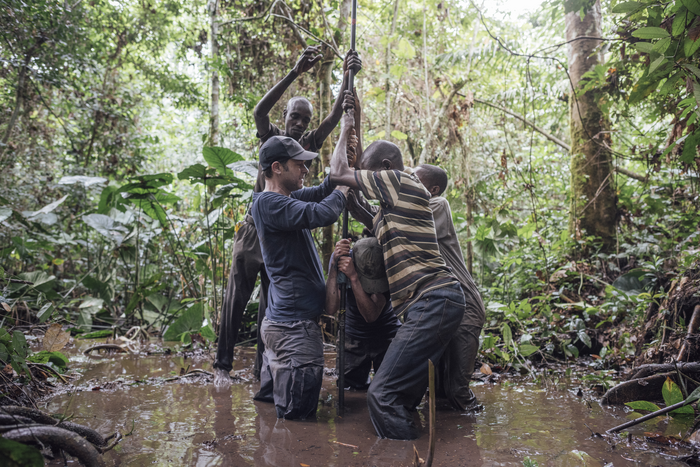
Credit: Greenpeace/Kevin McElvaney
Climate change could trigger the Congo peatlands to release billions of tonnes of carbon
-
New research finds the peatlands are fragile and vulnerable to drought
-
As the peatlands dry, the peat decomposes and releases carbon dioxide which accelerates global warming
-
Study says this process has already happened once in the peatlands history – and could happen again
New research published in Nature today (Wed, Nov 2) reveals that the world’s largest tropical peatland turned from being a major store of carbon to a source of damaging carbon dioxide emissions as a result of climate change thousands of years ago.
Around the time that Stonehenge was built, 5,000 years ago, the climate of central Congo began to dry leading to the peatlands emitting carbon dioxide. The peatlands only stopped releasing carbon and reverted back to taking carbon out of the atmosphere when the climate got wetter again in the past 2,000 years, according to a major international study co-coordinated by the University of Leeds.
Scientists involved in the study are warning that if modern-day global heating produces droughts in the Congo region, history could repeat itself, dangerously accelerating climate change.
If that were to happen, up to 30 billion tonnes of carbon could be released from the peatlands into the atmosphere as carbon dioxide, a potent greenhouse gas. That is equivalent to the global emissions from fossil fuel burning over a three-year period.
Professor Simon Lewis, from the University of Leeds and University College London, a senior author of the study, said: “Our study brings a brutal warning from the past. If the peatlands dry beyond a certain threshold they will release colossal quantities of carbon to the atmosphere, further accelerating climate change.
“There is some evidence that dry seasons are lengthening in the Congo Basin, but it is unclear if these will continue. But evidence from our study shows that drier conditions have existed in the past and did trigger a breakdown of the peatlands as a store of carbon.
“This is an important message for world leaders gathering at the COP27 climate talks next week. If greenhouse gas emissions drive the central Congo peatlands to become too dry, then the peatlands will contribute to the climate crisis rather than protect us.”
Warnings from the past
The Congo peatlands in central Africa are the world’s largest tropical peatlands complex, occupying an area of 16.7 million hectares, bigger than England and Wales combined.
Congolese and European scientists took peat samples from beneath the remote swamp forests of central Congo. By analysing plant remains, the researchers were able to build a record of the vegetation and rainfall in the central Congo basin over the last 17,500 years when the peat began to form.
Waxes from plant leaves, which were preserved in the peat, were used to calculate rainfall levels at the time the plant was living.
The findings – Hydroclimatic vulnerability of peat carbon in the central Congo Basin – paint a picture of a drier climate developing in central Africa, which began around 5,000 years ago.
At the most intense period of drought, rainfall was reduced by at least 800 mm a year. This caused the water table in the Congo peatlands to drop, exposing older layers of peat to the air, causing oxidation and release of carbon dioxide.
Ghost interval in the peat record
Between 7,500 and 2,000 years ago, the peat layers either decomposed or never accumulated. The researchers described this as the “ghost interval”. This same ghost interval was found in peat samples from hundreds of kilometres away in the Democratic Republic of the Congo (DRC) indicating it happened across the whole peatland region.
Dr Yannick Garcin, from the National Research Institute for Sustainable Development of France and lead author of the study, said: “The peat samples show us that there was a period of around 5,000 years when there was almost no build-up of peat, less than 0.1 mm per year.
“The samples also reveal what the rainfall and vegetation was like when the peat was formed. Together they give a picture of a drying climate that got progressively drier until about 2,000 years ago.
“This drought led to a huge loss of peat, at least 2 metres. The drought flipped the peatland to a huge carbon source as the peat decomposed. This decomposition only stopped when the drought stopped allowing peat to start accumulating again.”
Peatlands are ‘vulnerable’
The scientists warn that while the peatlands are currently largely intact and managed sustainably by local people, they are vulnerable.
Apart from the threat of the peatlands getting drier from climate change, the region is subject to additional pressures which could cause damage to the fragile peatland ecosystem, from draining the peatland for industrial-scale agriculture, logging, and oil exploration.
Professor Corneille Ewango, from the University of Kisangani in the Democratic Republic of the Congo and who led the expeditions to collect the peat samples from the DRC, said: “This is another astonishing finding about the peatlands. They are more vulnerable than we thought, and everyone must play their role in protecting them.
“Polluting countries must cut their carbon emissions fast, to limit the possibility of droughts pushing the peatlands past their tipping point. The DRC will also need to strengthen protection of the peatlands. At stake is one of the most wildlife and carbon-rich ecosystems on Earth.”
END
Journal
Nature
Method of Research
Case study
Subject of Research
Not applicable
Article Title
Hydroclimatic vulnerability of peat carbon in the central Congo Basin
Article Publication Date
2-Nov-2022