• HOME
  • NEWS
  • EXPLORE
    • CAREER
      • Companies
      • Jobs
    • EVENTS
    • iGEM
      • News
      • Team
    • PHOTOS
    • VIDEO
    • WIKI
  • BLOG
  • COMMUNITY
    • FACEBOOK
    • INSTAGRAM
    • TWITTER
Saturday, February 7, 2026
BIOENGINEER.ORG
No Result
View All Result
  • Login
  • HOME
  • NEWS
  • EXPLORE
    • CAREER
      • Companies
      • Jobs
        • Lecturer
        • PhD Studentship
        • Postdoc
        • Research Assistant
    • EVENTS
    • iGEM
      • News
      • Team
    • PHOTOS
    • VIDEO
    • WIKI
  • BLOG
  • COMMUNITY
    • FACEBOOK
    • INSTAGRAM
    • TWITTER
  • HOME
  • NEWS
  • EXPLORE
    • CAREER
      • Companies
      • Jobs
        • Lecturer
        • PhD Studentship
        • Postdoc
        • Research Assistant
    • EVENTS
    • iGEM
      • News
      • Team
    • PHOTOS
    • VIDEO
    • WIKI
  • BLOG
  • COMMUNITY
    • FACEBOOK
    • INSTAGRAM
    • TWITTER
No Result
View All Result
Bioengineer.org
No Result
View All Result
Home NEWS Science News

Virginia Tech researcher receives $1.9 million NIH grant to develop novel approaches to diagnose and treat sepsis

Bioengineer by Bioengineer
November 2, 2022
in Science News
Reading Time: 2 mins read
0
Juhong Chen
Share on FacebookShare on TwitterShare on LinkedinShare on RedditShare on Telegram

Sepsis is a severe and life-threatening condition caused by bacterial infection and is one of the most common causes of death in hospitalized patients.
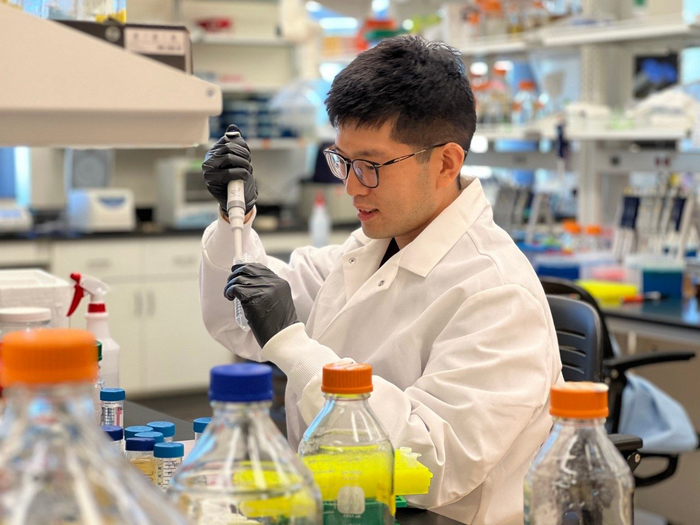
Juhong Chen

Credit: Juhong Chen with Virginia Tech

Sepsis is a severe and life-threatening condition caused by bacterial infection and is one of the most common causes of death in hospitalized patients.

Nearly 1.7 million adults in the U.S. develop sepsis, and a quarter of that number die from the infection, according to the National Institute of General Medical Sciences. Some infections cannot be resolved by general antibiotics because of strains of bacteria mutating, making it a challenge to provide adequate treatment.

Juhong Chen, assistant professor of biological systems engineering in the College of Agriculture and Life Sciences and College of Engineering, recently received a National Institutes of Health (NIH) grant to develop novel phage- and CRISPR-based approaches to detect and treat sepsis, including hybrid bio-inorganic nanobots, CRISPR-based devices, and CRISPR-quipped engineered phages. Chen and his research group also aim to address challenges for the detection of sepsis-related pathogens in blood samples. Chen’s research could lead to formulating a revolutionary strategy to diagnose sepsis in blood samples in the future.

Due to the dynamic and acute nature of sepsis, it requires immediate medical treatment. If sepsis is not diagnosed and treated quickly, septic shock will occur, thus resulting in failing blood pressure and loss of sufficient oxygen to organs of the body. Current diagnosing methods either are rapid but fail to offer the necessary sensitivity and accuracy or they rely on culture-based colony counting which does not meet the speed required.

“Our study will lay down the foundation for better understanding, diagnosing, and treating sepsis in hospitalized patients,” Chen said. “Providing reliable, sensitive, and timely detection of sepsis-related bacteria is crucial for improving patient survival rate.”

The five-year, $1.9 million award is part of the NIH’s Maximizing Investigators’ Research Award for Early State Investigators program. This is given to faculty researchers who have demonstrated foundational biomedical technologies, such as prototype devices and applications, that could advance important medical breakthroughs. One of the many areas under review by the NIH is sepsis — specifically toward effective treatment options, better diagnosis technologies, and to further clarify key risk factors.

Since joining the Department of Biological Systems Engineering at Virginia Tech in 2019, Chen has established an interdisciplinary and productive research group, applying biological engineering to detect emerging pathogens in food, water, environmental, and clinical samples in his Bioengineering and Biosensor Lab. 


Share12Tweet8Share2ShareShareShare2

Related Posts

Phage-Antibiotic Combo Beats Resistant Peritoneal Infection

February 7, 2026

Boosting Remote Healthcare: Stepped-Wedge Trial Insights

February 7, 2026

Barriers and Boosters of Seniors’ Physical Activity in Karachi

February 7, 2026

Evaluating Pediatric Emergency Care Quality in Ethiopia

February 7, 2026

POPULAR NEWS

  • Robotic Ureteral Reconstruction: A Novel Approach

    Robotic Ureteral Reconstruction: A Novel Approach

    82 shares
    Share 33 Tweet 21
  • Digital Privacy: Health Data Control in Incarceration

    63 shares
    Share 25 Tweet 16
  • Study Reveals Lipid Accumulation in ME/CFS Cells

    57 shares
    Share 23 Tweet 14
  • Breakthrough in RNA Research Accelerates Medical Innovations Timeline

    53 shares
    Share 21 Tweet 13

About

We bring you the latest biotechnology news from best research centers and universities around the world. Check our website.

Follow us

Recent News

Phage-Antibiotic Combo Beats Resistant Peritoneal Infection

Boosting Remote Healthcare: Stepped-Wedge Trial Insights

Barriers and Boosters of Seniors’ Physical Activity in Karachi

Subscribe to Blog via Email

Enter your email address to subscribe to this blog and receive notifications of new posts by email.

Join 73 other subscribers
  • Contact Us

Bioengineer.org © Copyright 2023 All Rights Reserved.

Welcome Back!

Login to your account below

Forgotten Password?

Retrieve your password

Please enter your username or email address to reset your password.

Log In
No Result
View All Result
  • Homepages
    • Home Page 1
    • Home Page 2
  • News
  • National
  • Business
  • Health
  • Lifestyle
  • Science

Bioengineer.org © Copyright 2023 All Rights Reserved.