

• HOME
  • NEWS
  • EXPLORE
    • CAREER
      • Companies
      • Jobs
    • EVENTS
    • iGEM
      • News
      • Team
    • PHOTOS
    • VIDEO
    • WIKI
  • BLOG
  • COMMUNITY
    • FACEBOOK
    • INSTAGRAM
    • TWITTER
Sunday, October 4, 2026
BIOENGINEER.ORG
No Result
View All Result
  • Login
  • HOME
  • NEWS
  • EXPLORE
    • CAREER
      • Companies
      • Jobs
        • Lecturer
        • PhD Studentship
        • Postdoc
        • Research Assistant
    • EVENTS
    • iGEM
      • News
      • Team
    • PHOTOS
    • VIDEO
    • WIKI
  • BLOG
  • COMMUNITY
    • FACEBOOK
    • INSTAGRAM
    • TWITTER
  • HOME
  • NEWS
  • EXPLORE
    • CAREER
      • Companies
      • Jobs
        • Lecturer
        • PhD Studentship
        • Postdoc
        • Research Assistant
    • EVENTS
    • iGEM
      • News
      • Team
    • PHOTOS
    • VIDEO
    • WIKI
  • BLOG
  • COMMUNITY
    • FACEBOOK
    • INSTAGRAM
    • TWITTER
No Result
View All Result
Bioengineer.org
No Result
View All Result
Home NEWS Science News Chemistry

Speeding up DNA computation with liquid droplets

Bioengineer by Bioengineer
October 21, 2022
in Chemistry
Reading Time: 2 mins read
0
picture
Share on FacebookShare on TwitterShare on LinkedinShare on RedditShare on Telegram

□ Recent studies have shown that liquid-liquid phase separation – akin to how oil droplets form in water – leads to formation of diverse types of membraneless organelles, such as stress granules and nucleoli, in living cells. These organelles, also called biomolecular condensates, are liquid droplets performing specific cellular functions including gene regulation and stress response.
picture

Credit: SEOUL NATIONAL UNIVERSITY

□ Recent studies have shown that liquid-liquid phase separation – akin to how oil droplets form in water – leads to formation of diverse types of membraneless organelles, such as stress granules and nucleoli, in living cells. These organelles, also called biomolecular condensates, are liquid droplets performing specific cellular functions including gene regulation and stress response.


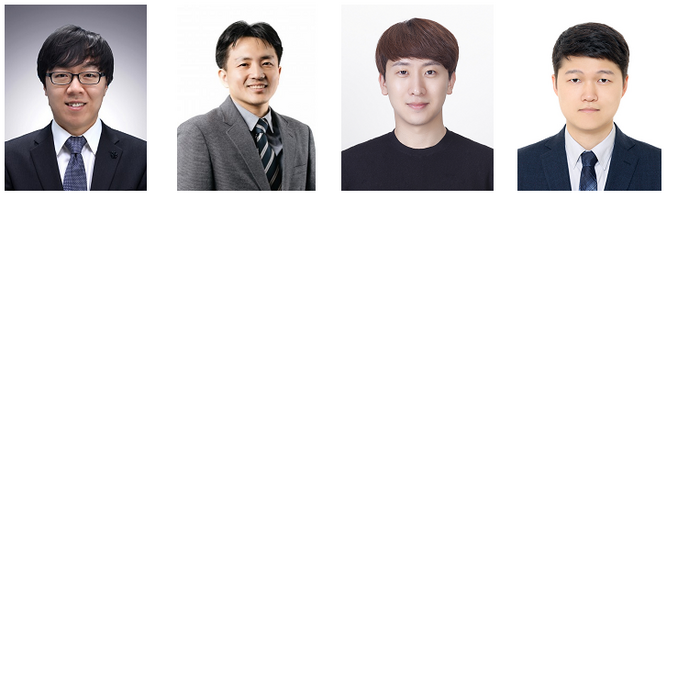
□ Now, a joint research team led by Professor Yongdae Shin and Do-Nyun Kim at Seoul National University announced that they harnessed the unique properties of the self-assembling DNA molecules to build synthetic condensates with programmable compositions and functionalities.


□ The researchers designed DNA scaffolds with motifs for self-association as well as specific recruitment of DNA targets. In a proper range of salt concentration and temperature, the engineered DNA scaffolds underwent liquid-liquid phase separation to form dense condensates, organized in a highly similar manner to those in living cells. The synthetic DNA condensates can recruit specific target DNA molecules, and the researchers demonstrated that the degree of recruitment can be precisely defined at the DNA sequence level.


□ They then endowed the synthetic condensates with functionalities by using DNA computation components as targets. DNA computing has been widely implemented for various bioengineering and medical applications, due to its intrinsic capacity of parallel computation. However, the slow speed of individual computation process has been a major drawback. With the synthetic DNA condensates, Shin and his team showed that DNA computation including logic gate operations were drastically sped up, by more than tenfold, when coupled to the condensates.


□ The architecture of DNA scaffolds also allowed selective recruitment of specific computing operations among many others running in parallel, which enabled a novel kinetics-based gating mechanism. The researchers expected that their system could be widely applied to diverse DNA circuits for disease diagnostics, biosensing, and other advanced molecular computations.


□ The results of this study were published in Science Advances.


Journal

Science Advances

Article Title

Engineering DNA-based synthetic condensates with programmable material properties, compositions, and functionalities


Share12Tweet8Share2ShareShareShare2

Related Posts

Banana Peels Turn Into Catalysts That Boost Bio-Oil From Sewage Sludge

Banana Peels Turn Into Catalysts That Boost Bio-Oil From Sewage Sludge

October 4, 2026
Squeezing Polypropylene Flips Its Insulation From Rubbery to Glassy Conduction

Squeezing Polypropylene Flips Its Insulation From Rubbery to Glassy Conduction

October 4, 2026

Sulfated Seaweed Polymer Helps Gels Protect Anthocyanins Until the Gut

October 4, 2026

Nickel and Lithium Doping Face Off in Zinc Oxide Films for Supercapacitors

October 4, 2026

POPULAR NEWS

  • Alloys That Shrink Their Own Grains: New PIX Mechanism Refines Metals With Heat Alone

    Alloys That Shrink Their Own Grains: New PIX Mechanism Refines Metals With Heat Alone

    29 shares
    Share 12 Tweet 7
  • Endurance Exercise Reshapes the Liver in Males and Females Through Distinct Molecular Routes

    29 shares
    Share 12 Tweet 7
  • Single Transcription Factor PU.1 Rapidly Converts Fibroblasts into Macrophage-Lineage Cells

    29 shares
    Share 12 Tweet 7
  • New Scale Measures How Ready Nurse Educators Really Are for the AI Era

    29 shares
    Share 12 Tweet 7

About

We bring you the latest biotechnology news from best research centers and universities around the world. Check our website.

Follow us

Recent News

Alloys That Shrink Their Own Grains: New PIX Mechanism Refines Metals With Heat Alone

Endurance Exercise Reshapes the Liver in Males and Females Through Distinct Molecular Routes

Single Transcription Factor PU.1 Rapidly Converts Fibroblasts into Macrophage-Lineage Cells

Subscribe to Blog via Email

Success! An email was just sent to confirm your subscription. Please find the email now and click 'Confirm' to start subscribing.

Join 85 other subscribers
  • Contact Us

Bioengineer.org © Copyright 2023 All Rights Reserved.

Welcome Back!

Login to your account below

Forgotten Password?

Retrieve your password

Please enter your username or email address to reset your password.

Log In
No Result
View All Result
  • Homepages
    • Home Page 1
    • Home Page 2
  • News
  • National
  • Business
  • Health
  • Lifestyle
  • Science

Bioengineer.org © Copyright 2023 All Rights Reserved.
