WHAT:
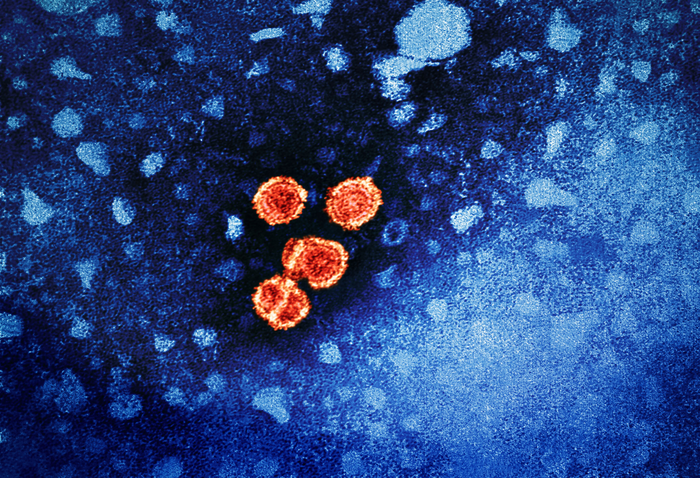
Credit: CDC/NIAID
WHAT:
A three-dose course of the hepatitis B vaccine HEPLISAV-B fully protected adults living with HIV who had never been vaccinated against or infected with the hepatitis B virus (HBV), according to study findings presented today at the IDWeek conference in Washington, D.C. The National Institute of Allergy and Infectious Diseases (NIAID), part of the National Institutes of Health, sponsors the ongoing Phase 3 ACTG A5379 clinical study.
HBV is spread primarily through sexual contact and sharing of contaminated needles. It causes chronic hepatitis B infection and can lead to progressive liver disease. People living with HIV, including those who are taking antiretroviral therapy, are at greater risk of liver-related illness and death when co-infected with HBV. According to the Centers for Disease Control and Prevention, 10% of U.S. adults with HIV also have hepatitis B. People living with HIV are less likely to produce a protective immunological response to HBV vaccination. The HEPLISAV-B vaccine, made by the Dynavax Technologies Corp. based in Emeryville, California, was approved in 2017 by the U.S. Food and Drug Administration as a two-dose vaccine regimen for adults. However, little was known about its protective effects in people living with HIV.
Led by study chairs Kenneth E. Sherman, M.D., Ph.D., of the University of Cincinnati College of Medicine, and Kristen Marks, M.D., of Weill Cornell Medical College, New York City, the researchers tested a three-dose course of HEPLISAV-B among 68 adults living with HIV at 38 sites in the United States, South Africa, and Thailand. None of the participants had received a previous HBV vaccination or had evidence of a previous HBV infection; all were on antiretroviral therapy. Following the initial dose of HEPLISAV-B vaccine 0.5 milliliter (mL) as an intramuscular injection, study participants received additional doses at four weeks and 24 weeks. The objective of this part of the study was to assess anti-HBV surface antibodies (HBsAbs) greater than or equal to 10 milli-international units per milliliter (mIU/mL) at week 28 (defined as seroprotection from HBV) and to assess the vaccine’s safety.
All participants achieved seroprotection with 88% of participants achieving HbsAb levels greater than 1000 mIU/mL, according to findings presented today. High antibody levels are thought to be associated with long-term vaccine durability. At eight weeks after the second dose, 94.4% of participants achieved seroprotection; this percentage increased to 98.5% by week 24 prior to the third dose. The most common side effects related to vaccination were injection site pain, malaise, fatigue, muscle aches and headaches.
The international study will continue to examine the effects of two-dose HEPLISAV-B, as well as a three-dose regimen of another hepatitis B vaccine (ENGERIX-B, manufactured by GSK) among adult participants with HIV who were previously vaccinated against HBV but who did not achieve an adequate immunologic response. The clinical trial is estimated to complete vaccinations in March 2023.
WHEN:
Infectious Disease Society of America’s IDWeek in Washington, D.C. Presentation title, “(LB749) High HbsAb Seroprotection Achieved 4 Weeks after 3 Doses of HepB-CpG Vaccine in People Living with HIV (PLWH) without Prior HBV Vaccination (ACTG A5379 Group B Preliminary Results). Thursday, Oct. 20, 2022, during the “Late-Breaking Vaccine Studies” session from 1:45-3:00 p.m. ET.
WHO:
Carl Dieffenbach, Ph.D., director of NIAID’s Division of AIDS, and Beverly L. Alston-Smith, M.D., chief of the Complications and Co-Infections Research Branch within NIAID’s Division of AIDS, are available to comment on this presentation.
CONTACT:
To schedule interviews, please contact the NIAID News Office at (301) 402-1663 or via e-mail at [email protected].
NIAID conducts and supports research—at NIH, throughout the United States, and worldwide—to study the causes of infectious and immune-mediated diseases, and to develop better means of preventing, diagnosing and treating these illnesses. News releases, fact sheets and other NIAID-related materials are available on the NIAID website.
About the National Institutes of Health (NIH): NIH, the nation’s medical research agency, includes 27 Institutes and Centers and is a component of the U.S. Department of Health and Human Services. NIH is the primary federal agency conducting and supporting basic, clinical, and translational medical research, and is investigating the causes, treatments, and cures for both common and rare diseases. For more information about NIH and its programs, visit https://www.nih.gov/.
###