Berlin, Germany: Pulse oximetry is an unreliable method for spotting people suffering with carbon monoxide poisoning and it should not be used for this purpose, according to a systematic review and meta-analysis presented today (Tuesday) at the European Emergency Medicine Congress [1].
Credit: Mathilde Papin / European Society for Emergency Medicine
Berlin, Germany: Pulse oximetry is an unreliable method for spotting people suffering with carbon monoxide poisoning and it should not be used for this purpose, according to a systematic review and meta-analysis presented today (Tuesday) at the European Emergency Medicine Congress [1].
Carbon monoxide is one of the most common causes of poisoning death in the world [2]. It can be successfully treated with oxygen. However carbon monoxide poisoning can be difficult to diagnose because its symptoms are similar to common infections such as flu.
Researchers say more work is now needed to find a quick and effective method for diagnosing carbon monoxide poisoning.
Carbon monoxide is a colourless, odourless gas that can be produced when fuels burn in a poorly ventilated space, for example in a faulty or poorly maintained boiler or gas cooker. When people are exposed to carbon monoxide, it enters their bloodstream via the lungs. Carbon monoxide attaches to haemoglobin – the molecule that normally transports oxygen around the body and this can result in the body being starved of oxygen.
Carbon monoxide poisoning can be detected with a blood test that measures the proportion of haemoglobin that is bound to carbon monoxide.
The new findings were presented by Dr Mathilde Papin from the emergency department at Nantes University Hospital in France. She said: “If we suspect carbon monoxide poisoning, we want to be able to treat patients quickly with oxygen in the ambulance or in the emergency room, and that means we need a test that can be done immediately onsite. A blood test is reliable, but not practical.”
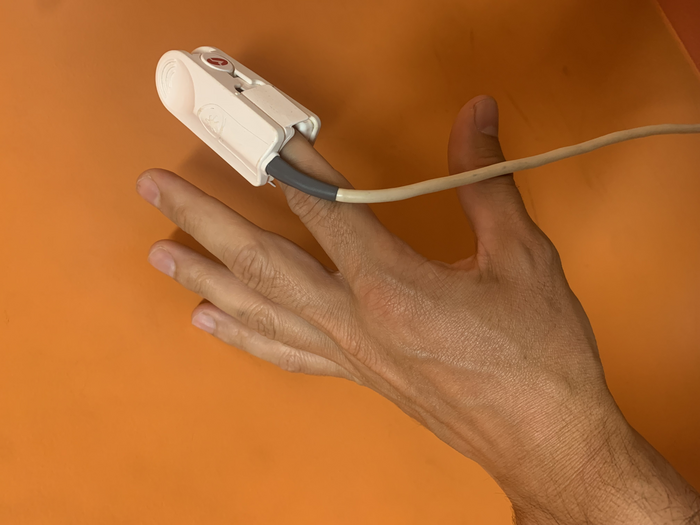
Pulse oximetry is a quick and easy test where a monitor, usually placed on the fingertip, can measure a patient’s pulse and gauge the proportion of their blood that is loaded with oxygen (called oxygen saturation). It is used to monitor patients with lung conditions such as asthma or chest infections.
A lower level of oxygen saturation might also indicate that a patient has been exposed to carbon dioxide, which is displacing the oxygen in their blood. However, Dr Papin added: “The use of pulse oximetry to check for carbon monoxide poisoning in research and in clinical practice has given mixed results.”
To gain a clearer picture, Dr Papin and her colleagues conducted a systematic review and meta-analysis. They searched for all previous medical trials that compared pulse oximetry with blood tests in patients or healthy volunteers, including adults and children, and found 19 such studies. The researchers were able to combine the results from 11 of the studies, including data on more than 2000 people, to compare the accuracy of the two testing approaches.
This showed that pulse oximetry was able to correctly detect positive cases (the true positive rate or “sensitivity”) 77% of the time. It could correctly identify negative cases (the true negative rate or “specificity”) 83% of the time. Its overall accuracy was 86%.
Dr Papin told the Congress: “At 23%, the false negative rate with pulse oximetry is too high for reliably triaging patients with suspected carbon monoxide poisoning. This method is not accurate enough and should not be used in clinical practice.”
The researchers now plan to evaluate an alternative method for more rapid screening of levels of carbon monoxide in the small blood vessels (capillaries).
Professor Youri Yordanov from the St Antoine Hospital emergency department, APHP Paris, France, is Chair of the EUSEM 2022 abstract committee and was not involved in the research. He says: “After systematically assessing all the available evidence on the topic, this research team suggests that using pulse oximetry as a tool for diagnosing carbon monoxide poisoning is not a reliable method for this purpose. Other screening methods need to be developed and evaluated, and in the meantime, we must rely on a combination of symptoms, evaluating the likelihood of exposure to carbon monoxide and blood tests.”
Method of Research
Meta-analysis
Subject of Research
People