With the legalization of hemp cultivation, products containing cannabidiol (CBD) have become popular. Many of these oils and creams claim to alleviate pain and other conditions, and now, new research reported in ACS Applied Materials & Interfaces suggests that CBD could have another function: as a bioplastic. The research team created a CBD-based bioplastic material that could one day be used in medical implants, food wrappers and more.
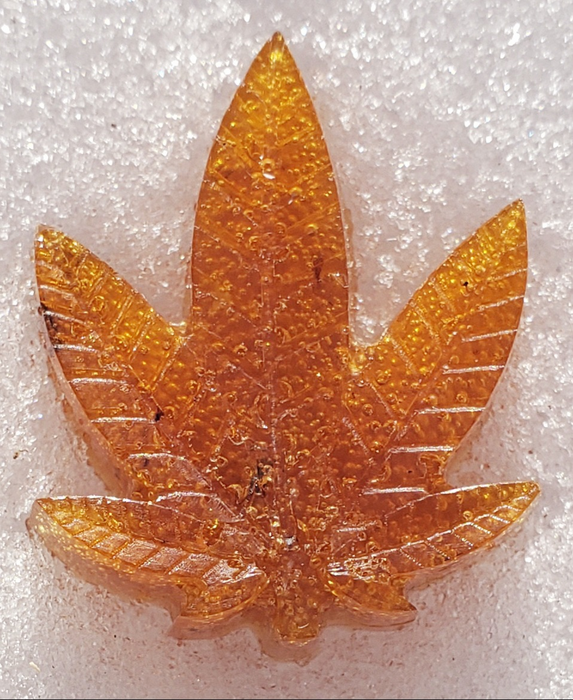
Credit: Adapted from ACS Applied Materials & Interfaces, 2022, DOI: 10.1021/acsami.2c05556
With the legalization of hemp cultivation, products containing cannabidiol (CBD) have become popular. Many of these oils and creams claim to alleviate pain and other conditions, and now, new research reported in ACS Applied Materials & Interfaces suggests that CBD could have another function: as a bioplastic. The research team created a CBD-based bioplastic material that could one day be used in medical implants, food wrappers and more.
Cannabis (Cannabis sativa) is well known for the euphoric “high” it gives users, caused by a chemical called tetrahydrocannabinol (THC). Another component, CBD, is responsible for feelings of relaxation and calmness, but unlike THC, it doesn’t produce a high. In hemp plants bred to contain little-to-no THC, CBD can make up to 20% of the plant’s weight. Because it’s now federally legal in the U.S. to grow hemp, the price of CBD has dropped dramatically, opening up the possibility of using CBD in other applications.
In recent years, the bioplastic called poly(lactic acid), or PLA, has become a popular option for sustainable plastics because it’s made from corn and sugarcane instead of fossil fuels, and can be industrially composted. Many single-use consumer goods, such as utensils and soda bottles, as well as medical devices, such as facial fillers and implants, now contain PLA. Just as lactic acid is a good building block for PLA, CBD’s chemical structure also has the right stuff to be repeated as a polymer. So, Gregory Sotzing, Lakshmi Nair and colleagues wanted to see whether CBD could be used to make a new bioplastic.
To create cannabinoid polymers, the researchers performed a condensation reaction with adipoyl chloride — also used to create nylon — and either CBD or the closely-related cannabigerol (CBG), producing a polyester. Polymeric CBD had a broad melting temperature range and stretchability, and to show its ability to function as a plastic, the researchers formed it into a hemp leaf shape with a mold. Because bioplastics are often used in medical contexts, they also investigated the polymers’ bioactive properties. Neither CBD nor CBG polyesters was cytotoxic. Unlike the conventional bioplastic PLA, the CBD polyester had an antioxidant activity. Although the polymer version of CBD didn’t confer the same therapeutic effects as it does in oil form, Sotzing says that future versions of the plastic could be engineered to have anti-inflammatory and pain-relieving properties, and this is the goal of his start-up company Polycannabinoid Therapeutics Rx.
The authors acknowledge funding from the National Institutes of Health for the biological aspects of this work.
The American Chemical Society (ACS) is a nonprofit organization chartered by the U.S. Congress. ACS’ mission is to advance the broader chemistry enterprise and its practitioners for the benefit of Earth and all its people. The Society is a global leader in promoting excellence in science education and providing access to chemistry-related information and research through its multiple research solutions, peer-reviewed journals, scientific conferences, eBooks and weekly news periodical Chemical & Engineering News. ACS journals are among the most cited, most trusted and most read within the scientific literature; however, ACS itself does not conduct chemical research. As a leader in scientific information solutions, its CAS division partners with global innovators to accelerate breakthroughs by curating, connecting and analyzing the world’s scientific knowledge. ACS’ main offices are in Washington, D.C., and Columbus, Ohio.
To automatically receive news releases from the American Chemical Society, contact [email protected].
Follow us: Twitter | Facebook | LinkedIn | Instagram
Journal
ACS Applied Materials & Interfaces
DOI
10.1021/acsami.2c05556
Article Title
“Poly(cannabinoid)s: Hemp-Derived Biocompatible Thermoplastic Polyesters with Inherent Antioxidant Properties”
Article Publication Date
16-Sep-2022