A meta-analysis comparing differences in the prevalence of hypertension between urban and rural areas in low- and middle-income countries (LMICs) concludes that the prevalence of hypertension increased between 1990 and 2020 in both urban and rural areas, but with a more pronounced trend in rural areas. The study was led by the Barcelona Institute for Global Health (ISGlobal), a centre supported by the “la Caixa” Foundation, and was recently published in the journal Plos Medicine.
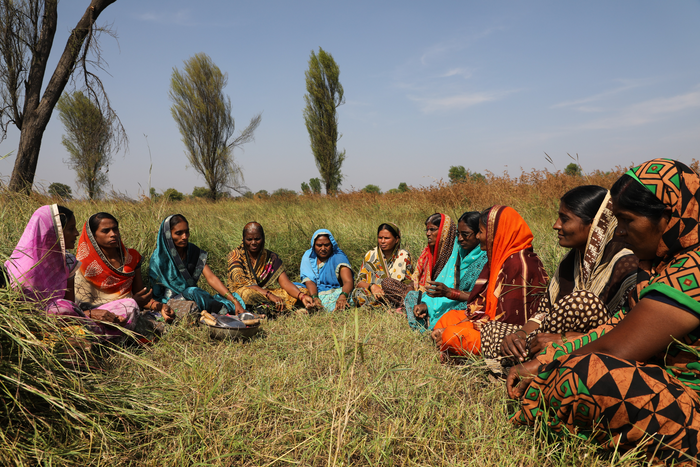
Credit: Photo by Amol Sonar in Unsplash
A meta-analysis comparing differences in the prevalence of hypertension between urban and rural areas in low- and middle-income countries (LMICs) concludes that the prevalence of hypertension increased between 1990 and 2020 in both urban and rural areas, but with a more pronounced trend in rural areas. The study was led by the Barcelona Institute for Global Health (ISGlobal), a centre supported by the “la Caixa” Foundation, and was recently published in the journal Plos Medicine.
The research team analysed nearly 300 studies involving data from more than 19.7 million people in 66 countries (LMICs) and found a slightly higher prevalence of hypertension in urban areas (30.5%) than in rural areas (27.9%). The combined difference was only 2.45%. This difference was smaller for the period 2005-2020 than for the period 1990-2004, and trends suggest that hypertension increased at a faster pace in rural areas than in urban areas. As countries develop socio-economically, the prevalence of hypertension in rural areas converges with or even overtakes that in urban areas.
This faster increase in rural areas could be partly explained by the ageing of the rural population caused by out migration of young people. Increasing levels of outdoor air pollution with socio-economic development on top of air pollution inside rural households due to use of inefficient cooking and lighting fuels could also play a role. Urbanisation is also associated with a shift towards more sedentary habits (less physically demanding occupations) and less healthy diets.
Although urban areas have been the focus of hypertension prevention research, “if the global burden of hypertension is to be reduced, more attention needs to be paid to rural areas, where risk factor reduction and increased awareness and control of hypertension should be addressed”, says Otavio T. Ranzani, ISGlobal researcher and first author of the study.
Although hypertension is one of the world’s leading risk factors for morbidity and mortality, little is known about the influence of urban living. “It is important to better understand how the prevalence of hypertension varies with urbanicity because many LMICs, particularly those in Africa and Asia, are undergoing rapid urbanization with implications for health,” argues Cathryn Tonne, ISGlobal researcher and final author of the study.
Over the past three decades, the increase in non-communicable diseases, including hypertension, has been greater in LMICs than in high-income countries, and ischaemic heart disease and stroke are now among the top four causes of death in these countries.
“Our results have important implications for public health,” adds Tonne. “They reinforce the need for hypertension prevention and control measures in LMICs, with a particular focus on rural areas, where levels of hypertension awareness, treatment and control remain considerably lower than in urban areas.”
However, to support these interventions, further detailed characterisation of urban-rural differences in hypertension prevalence is needed to better understand the underlying mechanisms behind the observed trends.
More information
Total sample size: 19,770,946 participants.
Average age: 45.4 years.
Countries with the most studies analysed: China (66 studies, 22% of the total), India (39 studies, 13%), Iran (17 studies, 6%), Bangladesh (13 studies, 4%) and Nigeria (11 studies, 4%).
Differences by region: The urban-rural gap was highest in the South Asia region (7.50%), followed by Sub-Saharan Africa (4.24%). These regions also showed an overall increase in mean blood pressure over time, in contrast to regions with decreasing (Latin America and the Caribbean, and high-income countries) or stable (Middle East and North Africa) trends.
Studies from Europe and Central Asia showed a higher prevalence of hypertension in rural areas than in urban areas (-6.04%).
Journal
PLoS Medicine
DOI
10.1371/journal.pmed.1004079
Method of Research
Meta-analysis
Subject of Research
People
Article Title
Urban-rural differences in hypertension prevalence in low-income and middle-income countries, 1990-2020: a systematic review and meta-analysis
Article Publication Date
22-Aug-2022