Dog-assisted interventions can lead to significantly lower stress in children both with and without special needs, according to a new study using salivary cortisol levels published this week in the open-access journal PLOS ONE by Kerstin Meints of University of Lincoln, UK, and colleagues.
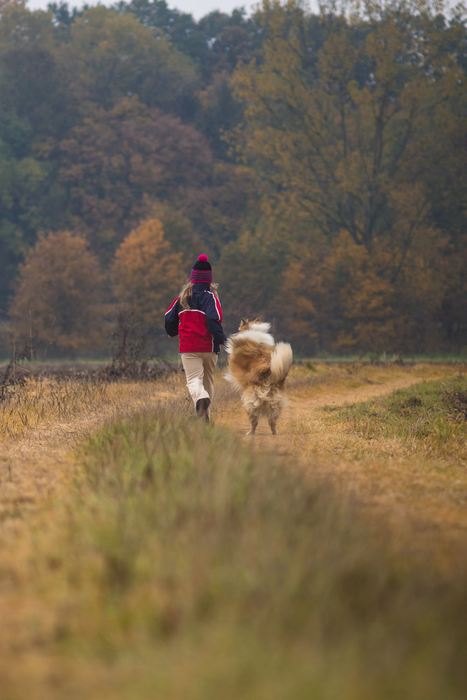
Credit: Kanashi, Unsplash, CC0 (https://creativecommons.org/publicdomain/zero/1.0/)
Dog-assisted interventions can lead to significantly lower stress in children both with and without special needs, according to a new study using salivary cortisol levels published this week in the open-access journal PLOS ONE by Kerstin Meints of University of Lincoln, UK, and colleagues.
Prolonged exposure to stressors can cause adverse effects on learning, behavior, health and wellbeing in children over their lifespan. Several approaches to alleviating stress have been explored in schools including yoga, mindfulness, meditation, physical activity, teaching style interventions and animal-assisted interventions.
In the new study, the researchers tracked levels of the stress hormone cortisol in the saliva of 105 eight- to nine-year-old children in four mainstream schools in the UK as well as 44 similarly aged children from seven special education needs schools in the UK. The children were randomly stratified into three groups: a dog group, relaxation group or control group. In the dog group, participants interacted for 20 minutes with a trained dog and handler; the meditation group involved a 20-minute relaxation session. Sessions were carried out twice a week for four weeks.
Dog interventions lead to significantly lower cortisol levels in children in both mainstream and special needs schools. In mainstream schools, children in the control and relaxation groups had increases in mean salivary cortisol over the course of the school term. However, children who participated in either group or individual sessions with dogs had no statistically significant increase in cortisol. In addition, their cortisol levels were, on average, lower immediately after each dog session. For children with special educational needs, similar patterns were seen, with decreases in cortisol after dog group interventions. The authors conclude that dog interventions can successfully attenuate stress levels in school children but point out that additional research into the ideal amounts of time and contact with dogs for optimal effect is needed.
The authors add: “Dog-assisted interventions can lead to lower stress levels in school children with and without special educational needs”
#####
In your coverage please use this URL to provide access to the freely available article in PLOS ONE: https://journals.plos.org/plosone/article?id=10.1371/journal.pone.0269333
Citation: Meints K, Brelsford VL, Dimolareva M, Maréchal L, Pennington K, Rowan E, et al. (2022) Can dogs reduce stress levels in school children? effects of dog-assisted interventions on salivary cortisol in children with and without special educational needs using randomized controlled trials. PLoS ONE 17(6): e0269333. https://doi.org/10.1371/journal.pone.0269333
Author Countries: U.K., U.S.A.
Funding: The author KM received funding from 2015-2018 for this project from WALTHAM™ Centre for Pet Nutrition, Leicestershire, U.K. https://www.waltham.com/. The funders had no role in study design, data collection and analysis, decision to publish, or preparation of the manuscript.
Journal
PLoS ONE
DOI
10.1371/journal.pone.0269333
Method of Research
Randomized controlled/clinical trial
Subject of Research
People
Article Title
Can dogs reduce stress levels in school children? effects of dog-assisted interventions on salivary cortisol in children with and without special educational needs using randomized controlled trials
Article Publication Date
15-Jun-2022
COI Statement
The authors have declared that no competing interests exist.