LEXINGTON, Ky. (May 31, 2022) — According to a new University of Kentucky College of Medicine study, asymptomatic COVID-19 infection during pregnancy could still have potential long-term consequences for a developing baby.
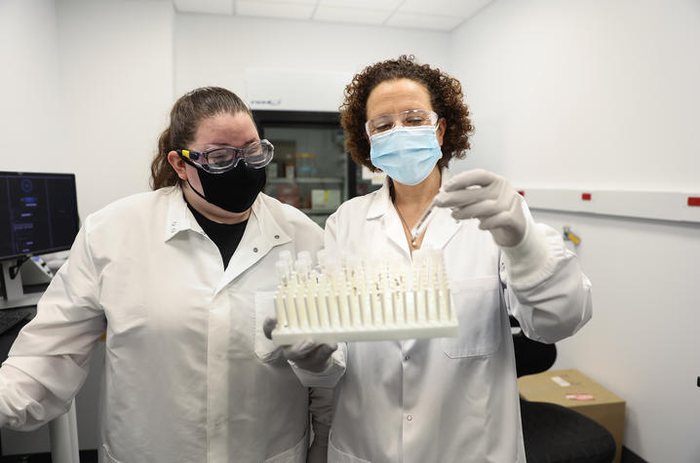
Credit: Mark Cornelison | University of Kentucky Photo
LEXINGTON, Ky. (May 31, 2022) — According to a new University of Kentucky College of Medicine study, asymptomatic COVID-19 infection during pregnancy could still have potential long-term consequences for a developing baby.
The study led by Ilhem Messoudi, Ph.D., chair of the Department of Microbiology, Immunology and Molecular Genetics, was published in Cell Reports May 25.
The research shows that COVID-19 infection in pregnant mothers who were asymptomatic or had mild symptoms still triggered immune responses causing inflammation in the placenta.
“Prior to this study, this response was only thought to occur in severe COVID-19 cases,” said Messaoudi. “We now know that even a mild infection that doesn’t even register with a patient is still being registered by the maternal immune system. The placenta had very clear signs of having sensed that there was an infection.”
Because the placenta protects a developing fetus from many pathogens including SARS-CoV-2, transmission of the virus between mother and baby is extremely rare, but the greatest risk for a fetus is how the mother’s immune system responds to the virus.
Immune responses triggering inflammation of the placenta can be linked to adverse pregnancy outcomes including preterm labor and preeclampsia, as well as neonatal complications due to reduced immune function of the baby, Messaoudi says.
Using single-cell RNA-sequencing and multicolor flow cytometry, Messaoudi’s team analyzed immune cells in placenta tissue and blood from pregnant mothers who tested positive for SARS-CoV-2 prior to delivery. Samples from women with asymptomatic/mild COVID-19 were then compared to those without infection.
Results show that while patients testing positive had activated T-cells, they had reduced levels of specialized macrophage cells that regulate the tissue. The immune cells in the placenta were “rewired” in a way that made the tissue more prone to inflammation.
The findings add to scientists’ growing understanding of the maternal immune system and SARS-CoV-2 and will help lead to future studies on potential long-term impacts for mothers and babies.
“This tells us how capable the maternal immune system is … while at the same time shows how detrimental COVID-19 can be even when the infection is not severe,” Messaoudi said. “These are all reasons why it’s so important that pregnant mothers get vaccinated.”
Research reported in this publication was supported by the National Center for Advancing Translational Sciences of the National Institutes of Health under Award Numbers UL1TR001414, R01AI142841 and R01AI145910. The content is solely the responsibility of the authors and does not necessarily represent the official views of the National Institutes of Health.
The University of Kentucky is increasingly the first choice for students, faculty and staff to pursue their passions and their professional goals. In the last two years, Forbes has named UK among the best employers for diversity, and INSIGHT into Diversity recognized us as a Diversity Champion four years running. UK is ranked among the top 30 campuses in the nation for LGBTQ* inclusion and safety. UK has been judged a “Great College to Work for” three years in a row, and UK is among only 22 universities in the country on Forbes’ list of “America’s Best Employers.” We are ranked among the top 10 percent of public institutions for research expenditures — a tangible symbol of our breadth and depth as a university focused on discovery that changes lives and communities. And our patients know and appreciate the fact that UK HealthCare has been named the state’s top hospital for five straight years. Accolades and honors are great. But they are more important for what they represent: the idea that creating a community of belonging and commitment to excellence is how we honor our mission to be not simply the University of Kentucky, but the University for Kentucky.
Journal
Cell Reports
Article Publication Date
25-May-2022