“Oats are not only a very popular cereal, but also a very complicated one, genetically” says Manuel Spannagl from Helmholtz Munich. As part of an international research project, he spent six years decoding and investigating the oat genome, and identified the entire set of genes contained in this important cereal. The complexity of the oat genome is a result of its size and structure: oats have six sets of chromosomes with more than 80,000 genes in total, while humans have only two sets of chromosomes with about 20,000 genes. Moreover, the order of genes along the chromosomes is substantially less “sorted” than in other cereals with a considerable amount of genes having been relocated between the chromosomes, resulting in a mosaic-like genome architecture.
Tracking down the health benefits of oats
Knowing the genome sequence allows us to better understand which genes are responsible for which traits. In the case of oats, the researchers were particularly interested in finding out why they trigger fewer allergies and intolerances compared to cereals such as wheat or rye. They discovered that oats have fewer of the proteins that correspond to gluten in wheat. Since these proteins are directly related to celiac disease and wheat intolerances, oats lead to fewer intolerances in humans. “This allowed us to confirm on a genomic level that oats in their pure form are suitable for a gluten-free diet,” says Nadia Kamal of Helmholtz Munich. Compared to other cereals, oats also contain a much higher proportion of so-called beta-glucans. These dietary fibers reduce cholesterol in the blood and have a positive influence on people with metabolic diseases such as type 2 diabetes. Thanks to their sequencing effort, the researchers now know which genes are responsible for the health-promoting beta-glucans.
New potential for breeding
Oats are not only interesting because of their health benefits; their cultivation also requires fewer treatments with insecticides, fungicides or fertilizers compared to other cereals. Thanks to the new insights into the oat genome, breeding and cultivation of more nutritious and sustainable oats can now be accelerated. “We have created the potential for targeted breeding,” says Nick Sirijovski from the Lund University and ScanOats, “since we are now able to tell which oat varieties are compatible with another. At this point, we can combine traits for an even more favorable health profile, higher yields, better resistance to parasites and drought, and most importantly, in preparation for climate change.” Since oats produce high yields even on marginal soils and have an overall smaller environmental footprint than wheat, these aspects are particularly exciting for researchers in light of future challenges in providing nutritious plant-based alternative foods for a growing global population in a sustainable way.
About the people
Dr. Manuel Spannagl is a scientist at the Environmental Health Center at Helmholtz Munich and head of the study on the German side. In his team, Dr. Nadia Kamal collaborated on the study as first author. Dr. Nick Sirijovski from the Lund University and the ScanOats network led the sequencing project in Sweden.
Original publication
Kamal et al., 2022: The mosaic oat genome gives insights into a uniquely healthy cereal crop. Nature, DOI: 10.1038/s41586-022-04732-y.
About Helmholtz Munich
Helmholtz Munich is a leading biomedical research center. Its mission is to develop breakthrough solutions for better health in a rapidly changing world. Interdisciplinary research teams focus on environmentally triggered diseases, especially the therapy and prevention of diabetes, obesity, allergies, and chronic lung diseases. With the power of artificial intelligence and bioengineering, researchers accelerate the translation to patients. Helmholtz Munich has more than 2,500 employees and is headquartered in Munich/Neuherberg. It is a member of the Helmholtz Association, with more than 43,000 employees and 18 research centers the largest scientific organization in Germany. More about Helmholtz Munich (Helmholtz Zentrum München Deutsches Forschungszentrum für Gesundheit und Umwelt (GmbH)): www.helmholtz-munich.de/en
Credit: Olof Olsson
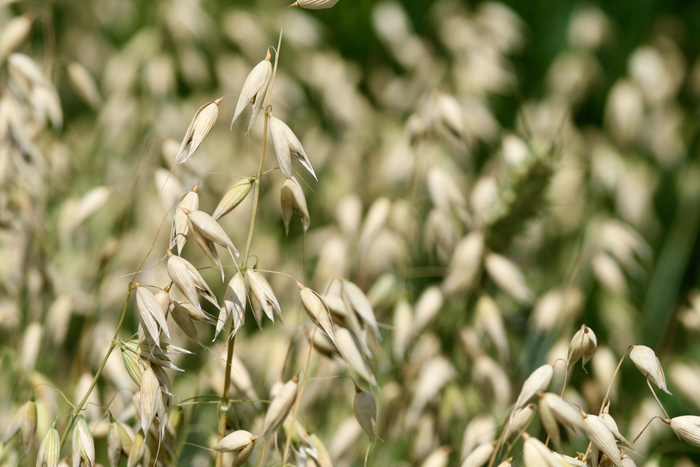
“Oats are not only a very popular cereal, but also a very complicated one, genetically” says Manuel Spannagl from Helmholtz Munich. As part of an international research project, he spent six years decoding and investigating the oat genome, and identified the entire set of genes contained in this important cereal. The complexity of the oat genome is a result of its size and structure: oats have six sets of chromosomes with more than 80,000 genes in total, while humans have only two sets of chromosomes with about 20,000 genes. Moreover, the order of genes along the chromosomes is substantially less “sorted” than in other cereals with a considerable amount of genes having been relocated between the chromosomes, resulting in a mosaic-like genome architecture.
Tracking down the health benefits of oats
Knowing the genome sequence allows us to better understand which genes are responsible for which traits. In the case of oats, the researchers were particularly interested in finding out why they trigger fewer allergies and intolerances compared to cereals such as wheat or rye. They discovered that oats have fewer of the proteins that correspond to gluten in wheat. Since these proteins are directly related to celiac disease and wheat intolerances, oats lead to fewer intolerances in humans. “This allowed us to confirm on a genomic level that oats in their pure form are suitable for a gluten-free diet,” says Nadia Kamal of Helmholtz Munich. Compared to other cereals, oats also contain a much higher proportion of so-called beta-glucans. These dietary fibers reduce cholesterol in the blood and have a positive influence on people with metabolic diseases such as type 2 diabetes. Thanks to their sequencing effort, the researchers now know which genes are responsible for the health-promoting beta-glucans.
New potential for breeding
Oats are not only interesting because of their health benefits; their cultivation also requires fewer treatments with insecticides, fungicides or fertilizers compared to other cereals. Thanks to the new insights into the oat genome, breeding and cultivation of more nutritious and sustainable oats can now be accelerated. “We have created the potential for targeted breeding,” says Nick Sirijovski from the Lund University and ScanOats, “since we are now able to tell which oat varieties are compatible with another. At this point, we can combine traits for an even more favorable health profile, higher yields, better resistance to parasites and drought, and most importantly, in preparation for climate change.” Since oats produce high yields even on marginal soils and have an overall smaller environmental footprint than wheat, these aspects are particularly exciting for researchers in light of future challenges in providing nutritious plant-based alternative foods for a growing global population in a sustainable way.
About the people
Dr. Manuel Spannagl is a scientist at the Environmental Health Center at Helmholtz Munich and head of the study on the German side. In his team, Dr. Nadia Kamal collaborated on the study as first author. Dr. Nick Sirijovski from the Lund University and the ScanOats network led the sequencing project in Sweden.
Original publication
Kamal et al., 2022: The mosaic oat genome gives insights into a uniquely healthy cereal crop. Nature, DOI: 10.1038/s41586-022-04732-y.
About Helmholtz Munich
Helmholtz Munich is a leading biomedical research center. Its mission is to develop breakthrough solutions for better health in a rapidly changing world. Interdisciplinary research teams focus on environmentally triggered diseases, especially the therapy and prevention of diabetes, obesity, allergies, and chronic lung diseases. With the power of artificial intelligence and bioengineering, researchers accelerate the translation to patients. Helmholtz Munich has more than 2,500 employees and is headquartered in Munich/Neuherberg. It is a member of the Helmholtz Association, with more than 43,000 employees and 18 research centers the largest scientific organization in Germany. More about Helmholtz Munich (Helmholtz Zentrum München Deutsches Forschungszentrum für Gesundheit und Umwelt (GmbH)): www.helmholtz-munich.de/en
Journal
Nature
DOI
10.1038/s41586-022-04732-y
Article Publication Date
18-May-2022