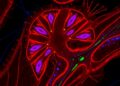
As sessile organisms, plants have to continually adapt their growth and architecture to the ever-changing environment. To do so, plants have evolved distinct molecular mechanisms to sense and respond to the environment and integrate the signals from outside with endogenous developmental programs.

Credit: Nitzan Shabek/UC Davis
As sessile organisms, plants have to continually adapt their growth and architecture to the ever-changing environment. To do so, plants have evolved distinct molecular mechanisms to sense and respond to the environment and integrate the signals from outside with endogenous developmental programs.
New research from Nitzan Shabek’s laboratory at the UC Davis College of Biological Sciences, published in Nature Plants, unravels the underlying mechanism of protein targeting and destruction in a specific plant hormone signaling pathway.
“Our lab aims at deciphering sensing mechanisms in plants and understanding how specific enzymes function can be regulated at the molecular levels” said Shabek, assistant professor of biochemistry and structural biology in the Department of Plant Biology. “We have been studying a new plant hormone signal, strigolactone, that governs numerous processes of growth and development including branching and root architecture.”
The work stems from a study by Shabek, published in Nature in 2018, unravelling molecular and structural changes in an enzyme, MAX2 (or D3) ubiquitin ligase. MAX2 was found in locked or unlocked forms that can recruit a strigolactone sensor, D14, and target for destruction a DNA transcriptional repressor complex, D53. Ubiquitins are small proteins, found in all eukaryotes, that “tag” other proteins for destruction within a cell.
To find the key to unlock MAX2 and to better understand its molecular dynamics in plants, postdoctoral fellows Lior Tal and Malathy Palayam, with junior specialist Aleczander Young, used an approach that integrated advanced structural biology, biochemistry, and plant genetics.
“We leveraged structure-guided approaches to systemically mutate MAX2 enzyme in Arabidopsis and created a MAX2 stuck in an unlocked form”, said Shabek, “some of these mutations were made by guiding CRISPR/Cas9 genome editing thus providing us a discovery platform to study and analyze the different signaling outputs and illuminate the role of MAX2 dynamics.”
Regulating a massive gene network
They found that in the unlocked conformation, MAX2 can target the repressor proteins and biochemically decorate them with small ubiquitin proteins, tagging them for destruction. Removing these repressors allows other genes to be expressed – activating a massive gene network that governs shoot branching, root architecture, leaf senescence, and symbiosis with fungi, Shabek said.
Sending these repressors to the proteasome disposal complexes requires the enzyme to relock again. The team also showed that MAX2 not only target the repressors proteins, but once it is locked the strigolactone sensor itself gets destroyed, returning the system to its original state.
Finally, the study uncovered the key to the lock, an organic acid metabolite that can directly trigger the conformational switch.
“Beyond the implication in plants signaling, this is the first work that placed a primary metabolite as a direct new regulator of this type of ubiquitin ligase enzymes and will open new avenues of study in this direction,” Shabek said.
Additional coauthors on the paper are specialist Mily Ron and Professor Anne Britt, Department of Plant Biology. The study was supported by NSF CAREER and EAGER grants to Shabek. X-ray crystallography data was obtained at the Advanced Light Source, Lawrence Berkeley National Laboratory, a U.S. Department of Energy user facility.
Journal
Nature Plants
DOI
10.1038/s41477-022-01145-7
Method of Research
Experimental study
Subject of Research
Not applicable
Article Title
A conformational switch in the SCF-D3/MAX2 ubiquitin ligase facilitates strigolactone signalling
Article Publication Date
28-Apr-2022
COI Statement
N.S. has an equity interest in Oerth Bio and serves on the company’s Scientific Advisory Board. The work and data submitted here have no competing interests, nor other interests that might be perceived to influence the results and/or discussion reported in this paper. The remaining authors declare no competing interests.