• HOME
  • NEWS
  • EXPLORE
    • CAREER
      • Companies
      • Jobs
    • EVENTS
    • iGEM
      • News
      • Team
    • PHOTOS
    • VIDEO
    • WIKI
  • BLOG
  • COMMUNITY
    • FACEBOOK
    • INSTAGRAM
    • TWITTER
Saturday, February 7, 2026
BIOENGINEER.ORG
No Result
View All Result
  • Login
  • HOME
  • NEWS
  • EXPLORE
    • CAREER
      • Companies
      • Jobs
        • Lecturer
        • PhD Studentship
        • Postdoc
        • Research Assistant
    • EVENTS
    • iGEM
      • News
      • Team
    • PHOTOS
    • VIDEO
    • WIKI
  • BLOG
  • COMMUNITY
    • FACEBOOK
    • INSTAGRAM
    • TWITTER
  • HOME
  • NEWS
  • EXPLORE
    • CAREER
      • Companies
      • Jobs
        • Lecturer
        • PhD Studentship
        • Postdoc
        • Research Assistant
    • EVENTS
    • iGEM
      • News
      • Team
    • PHOTOS
    • VIDEO
    • WIKI
  • BLOG
  • COMMUNITY
    • FACEBOOK
    • INSTAGRAM
    • TWITTER
No Result
View All Result
Bioengineer.org
No Result
View All Result
Home NEWS Science News Biology

Tulane University study shows COVID-19’s lingering impacts on the brain

Bioengineer by Bioengineer
April 1, 2022
in Biology
Reading Time: 3 mins read
0
Tracy Fischer
Share on FacebookShare on TwitterShare on LinkedinShare on RedditShare on Telegram

COVID-19 patients commonly report having headaches, confusion and other neurological symptoms, but doctors don’t fully understand how the disease targets the brain during infection. 
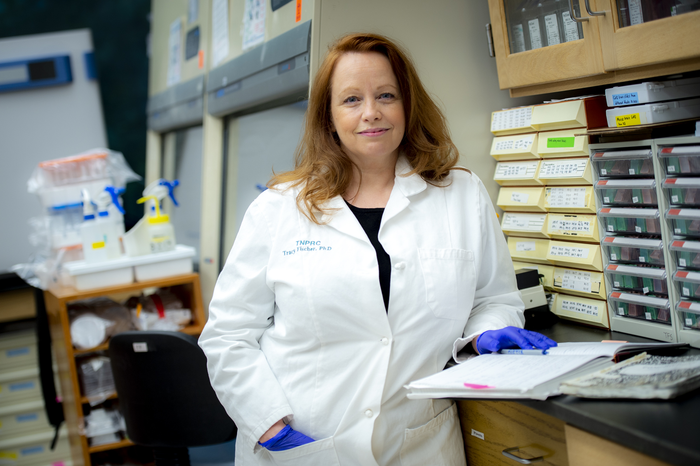
Tracy Fischer

Credit: Tulane University, Paula Burch-Celentano

COVID-19 patients commonly report having headaches, confusion and other neurological symptoms, but doctors don’t fully understand how the disease targets the brain during infection. 

Now, researchers at Tulane University have shown in detail how COVID-19 affects the central nervous system, according to a new study published in Nature Communications.

The findings are the first comprehensive assessment of neuropathology associated with SARS-CoV-2 infection in a nonhuman primate model.

The team of researchers found severe brain inflammation and injury consistent with reduced blood flow or oxygen to the brain, including neuron damage and death. They also found small bleeds in the brain. 

Surprisingly, these findings were present in subjects that did not experience severe respiratory disease from the virus. 

Tracy Fischer, PhD, lead investigator and associate professor of microbiology and immunology at the Tulane National Primate Research Center, has been studying brains for decades. Soon after the primate center launched its COVID-19 pilot program in the spring of 2020, she began studying the brain tissue of several subjects that had been infected. 

Fischer’s initial findings documenting the extent of damage seen in the brain due to SARS-CoV-2 infection were so striking that she spent the next year further refining the study controls to ensure that the results were clearly attributable to the infection. 

“Because the subjects didn’t experience significant respiratory symptoms, no one expected them to have the severity of disease that we found in the brain,” Fischer said. “But the findings were distinct and profound, and undeniably a result of the infection.”

The findings are also consistent with autopsy studies of people who have died of COVID-19, suggesting that nonhuman primates may serve as an appropriate model, or proxy, for how humans experience the disease. 

Neurological complications are often among the first symptoms of SARS-CoV-2 infection and can be the most severe and persistent. They also affect people indiscriminately —all ages, with and without comorbidities, and with varying degrees of disease severity. 

Fischer hopes that this and future studies that investigate how SARS-CoV-2 affects the brain will contribute to the understanding and treatment of patients suffering from the neurological consequences of COVID-19 and long COVID.

The COVID-19 pilot research program at the Tulane National Primate Research Center was supported by funds made possible by the National Institutes of Health Office of Research Infrastructure Program, Tulane University and Fast Grants. 


Journal

Nature Communications

DOI

10.1038/s41467-022-29440-z

Method of Research

Experimental study

Subject of Research

Animals

Article Title

Neuropathology and virus in brain of SARS-CoV-2 infected non-human primates

Article Publication Date

1-Apr-2022

COI Statement

The authors declare no competing interests.

Share12Tweet8Share2ShareShareShare2

Related Posts

Florida Cane Toad: Complex Spread and Selective Evolution

Florida Cane Toad: Complex Spread and Selective Evolution

February 7, 2026
New Study Uncovers Mechanism Behind Burn Pit Particulate Matter–Induced Lung Inflammation

New Study Uncovers Mechanism Behind Burn Pit Particulate Matter–Induced Lung Inflammation

February 6, 2026

DeepBlastoid: Advancing Automated and Efficient Evaluation of Human Blastoids with Deep Learning

February 6, 2026

Navigating the Gut: The Role of Formic Acid in the Microbiome

February 6, 2026

POPULAR NEWS

  • Robotic Ureteral Reconstruction: A Novel Approach

    Robotic Ureteral Reconstruction: A Novel Approach

    82 shares
    Share 33 Tweet 21
  • Digital Privacy: Health Data Control in Incarceration

    63 shares
    Share 25 Tweet 16
  • Study Reveals Lipid Accumulation in ME/CFS Cells

    57 shares
    Share 23 Tweet 14
  • Breakthrough in RNA Research Accelerates Medical Innovations Timeline

    53 shares
    Share 21 Tweet 13

About

We bring you the latest biotechnology news from best research centers and universities around the world. Check our website.

Follow us

Recent News

Barriers and Boosters of Seniors’ Physical Activity in Karachi

Evaluating Pediatric Emergency Care Quality in Ethiopia

TPMT Expression Predictions Linked to Azathioprine Side Effects

Subscribe to Blog via Email

Enter your email address to subscribe to this blog and receive notifications of new posts by email.

Join 73 other subscribers
  • Contact Us

Bioengineer.org © Copyright 2023 All Rights Reserved.

Welcome Back!

Login to your account below

Forgotten Password?

Retrieve your password

Please enter your username or email address to reset your password.

Log In
No Result
View All Result
  • Homepages
    • Home Page 1
    • Home Page 2
  • News
  • National
  • Business
  • Health
  • Lifestyle
  • Science

Bioengineer.org © Copyright 2023 All Rights Reserved.