• HOME
  • NEWS
  • EXPLORE
    • CAREER
      • Companies
      • Jobs
    • EVENTS
    • iGEM
      • News
      • Team
    • PHOTOS
    • VIDEO
    • WIKI
  • BLOG
  • COMMUNITY
    • FACEBOOK
    • INSTAGRAM
    • TWITTER
Saturday, February 7, 2026
BIOENGINEER.ORG
No Result
View All Result
  • Login
  • HOME
  • NEWS
  • EXPLORE
    • CAREER
      • Companies
      • Jobs
        • Lecturer
        • PhD Studentship
        • Postdoc
        • Research Assistant
    • EVENTS
    • iGEM
      • News
      • Team
    • PHOTOS
    • VIDEO
    • WIKI
  • BLOG
  • COMMUNITY
    • FACEBOOK
    • INSTAGRAM
    • TWITTER
  • HOME
  • NEWS
  • EXPLORE
    • CAREER
      • Companies
      • Jobs
        • Lecturer
        • PhD Studentship
        • Postdoc
        • Research Assistant
    • EVENTS
    • iGEM
      • News
      • Team
    • PHOTOS
    • VIDEO
    • WIKI
  • BLOG
  • COMMUNITY
    • FACEBOOK
    • INSTAGRAM
    • TWITTER
No Result
View All Result
Bioengineer.org
No Result
View All Result
Home NEWS Science News Biology

Atrial fibrillation and dementia clearly associated

Bioengineer by Bioengineer
March 30, 2022
in Biology
Reading Time: 3 mins read
0
Lina Rydén
Share on FacebookShare on TwitterShare on LinkedinShare on RedditShare on Telegram

For people with atrial fibrillation, one of our most common cardiac disorders, dementia risk is elevated. This is shown by a University of Gothenburg thesis based on research at population level.
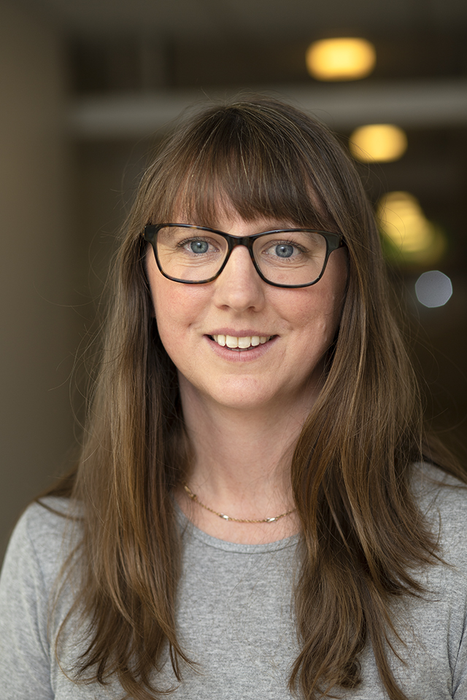
Lina Rydén

Credit: Photp by Josefin Bergenholtz

For people with atrial fibrillation, one of our most common cardiac disorders, dementia risk is elevated. This is shown by a University of Gothenburg thesis based on research at population level.

Atrial fibrillation (AF), a common heart condition in older people, is characterized by irregular and often rapid heartbeats. These symptoms may be chronic, or come and go, and many people have the condition without being aware of it.

AF is already known to be associated with an increased risk of stroke, and stroke in turn is known to exacerbate dementia risk. However, the connection between AF and dementia with no incidence of stroke has not been established previously.

Lina Rydén, who has a PhD in neuropsychiatric epidemiology at Sahlgrenska Academy, University of Gothenburg, based her thesis on data from extensive population surveys known as the Gothenburg H70 Birth Cohort (H70) studies.

Rydén’s research includes data on 70-year-olds examined in 2000, who were then monitored up to age 82 to find out who developed dementia, and on 70-year-olds examined in 2014. Magnetic resonance imaging of the latter group was performed to detect structural changes in the brain.

Several possible causes

“There may be several reasons why the risk of dementia is elevated in people with arial fibrillation, even if they don’t get a stroke. Dementia may be caused by, for example, altered blood flow to the brain; silent brain infarcts, which are lesions in the brain that are visible on brain imaging but don’t cause any typical stroke symptoms; or AF triggering an inflammatory process that raises dementia risk,” Rydén says.

Besides elevated dementia and stroke risk, she found that people with AF have silent brain infarcts and small infarcts deeper inside the white matter of the brain, more frequently than others. These small infarcts, or lacunas as they are called, may be signs of cerebral small vessel disease .

“The fact that AF also causes small infarcts deeper inside the white matter of the brain may mean that AF causes not only stroke and silent infarcts due to blood clots that migrate from the heart and attach themselves to the vessels of the brain, but that other mechanisms resulting in oxygen deficiency can affect the brain in AF. But to understand more specifically how AF affects the brain requires more research,” Rydén says.

Important to treat dementia risk factors

Current treatment of AF is aimed primarily at mitigating symptoms and preventing stroke. However, more knowledge is needed about which treatment is best, and when it should be applied, to reduce dementia risk.

“Since there is no curative treatment for dementia today, it’s important to detect and treat risk factors for dementia in the best way to prevent onset of the disease in the first place,” Rydén says.

Title: AF in aging; methodological aspects and the relation to dementia and cerebral vascular disease, http://hdl.handle.net/2077/69811


Article Publication Date

30-Mar-2022

Share12Tweet8Share2ShareShareShare2

Related Posts

Florida Cane Toad: Complex Spread and Selective Evolution

Florida Cane Toad: Complex Spread and Selective Evolution

February 7, 2026
New Study Uncovers Mechanism Behind Burn Pit Particulate Matter–Induced Lung Inflammation

New Study Uncovers Mechanism Behind Burn Pit Particulate Matter–Induced Lung Inflammation

February 6, 2026

DeepBlastoid: Advancing Automated and Efficient Evaluation of Human Blastoids with Deep Learning

February 6, 2026

Navigating the Gut: The Role of Formic Acid in the Microbiome

February 6, 2026

POPULAR NEWS

  • Robotic Ureteral Reconstruction: A Novel Approach

    Robotic Ureteral Reconstruction: A Novel Approach

    82 shares
    Share 33 Tweet 21
  • Digital Privacy: Health Data Control in Incarceration

    63 shares
    Share 25 Tweet 16
  • Study Reveals Lipid Accumulation in ME/CFS Cells

    57 shares
    Share 23 Tweet 14
  • Breakthrough in RNA Research Accelerates Medical Innovations Timeline

    53 shares
    Share 21 Tweet 13

About

We bring you the latest biotechnology news from best research centers and universities around the world. Check our website.

Follow us

Recent News

Improving Dementia Care with Enhanced Activity Kits

Decoding Prostate Cancer Origins via snFLARE-seq, mxFRIZNGRND

Digital Health Perspectives from Baltic Sea Experts

Subscribe to Blog via Email

Enter your email address to subscribe to this blog and receive notifications of new posts by email.

Join 73 other subscribers
  • Contact Us

Bioengineer.org © Copyright 2023 All Rights Reserved.

Welcome Back!

Login to your account below

Forgotten Password?

Retrieve your password

Please enter your username or email address to reset your password.

Log In
No Result
View All Result
  • Homepages
    • Home Page 1
    • Home Page 2
  • News
  • National
  • Business
  • Health
  • Lifestyle
  • Science

Bioengineer.org © Copyright 2023 All Rights Reserved.