Yasin Dagdas, Group Leader at the Gregor Mendel Institute of Molecular Plant Biology (GMI) of the Austrian Academy of Sciences, is awarded a Consolidator Grant from the European Research Council (ERC). This funding will allow Dagdas to decipher the role of Autophagy as a rescue mechanism for stalled, membrane-bound ribosomes. The ERC is Europe’s most prestigious and highly competitive funding body for basic research carried out within the EU.
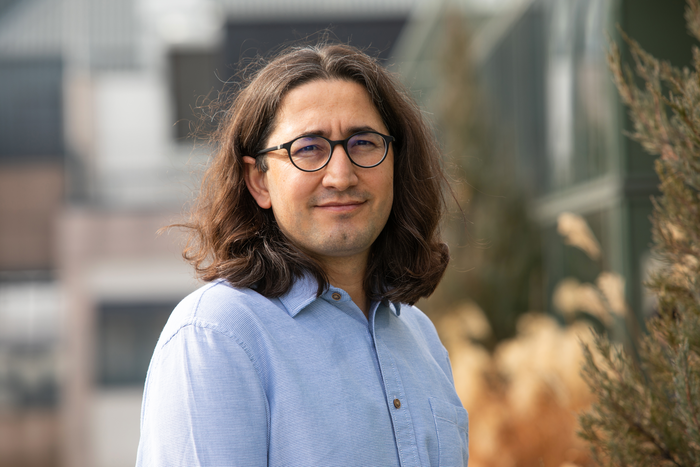
Credit: ©Schartel/GMI
Yasin Dagdas, Group Leader at the Gregor Mendel Institute of Molecular Plant Biology (GMI) of the Austrian Academy of Sciences, is awarded a Consolidator Grant from the European Research Council (ERC). This funding will allow Dagdas to decipher the role of Autophagy as a rescue mechanism for stalled, membrane-bound ribosomes. The ERC is Europe’s most prestigious and highly competitive funding body for basic research carried out within the EU.
For the smallest units of life to function seamlessly, several intracellular activities must take place simultaneously. Complex machineries must often function without the luxury of space. This is well illustrated by the cellular protein synthesis machinery. To realize this process, multiple macromolecules called ribosomes operate within very close distance to translate a single messenger RNA (mRNA). As a result, multiple copies of the required protein are generated when needed. Under cellular stress conditions, the delicate mechanism gets disrupted by “roadblocks” on the mRNA, and the ribosomes collide. Through such collisions, harmful incomplete protein fragments accumulate in the cell. This, luckily, does not mean “the end” for the ribosomes, as cells have developed elaborate quality control mechanisms to help deal with such cellular stress situations. To add a layer of complexity, not all ribosomes operate freely in the cell. If the protein being synthesized requires packaging and targeting to specific cellular compartments, the ribosomes can become bound to the endoplasmic reticulum (ER). In lay terms, this is the compartment that functions like a cellular “packaging office and priority post headquarters”, with the addition of having the “press workforce” (the ribosomes) operating right on site.
Quality control mechanisms that rescue the so called cytosolic, or “free floating”, stalled ribosomes are well studied. However, the case of the stalled ER-bound ribosomes is more complex, and the cellular harm of such collisions is greater. Recently, GMI Group Leader Yasin Dagdas and his team were able to show that autophagy or “self-eating”, a major cellular controlled degradation pathway, is induced when ER-bound ribosomes are stalled. Specifically, the researchers identified two receptors conserved between plants and humans that induce autophagy under such conditions. Additionally, they identified an elusive molecular signal that regulates the autophagy mechanism upon the collision of ER-bound ribosomes. “Based on these findings, I postulate that autophagy selectively degrades harmful polypeptides and RNAs, molecules that obstruct the ER-bound ribosomes during collisions,” states Dagdas. As a result, the stalled ER-bound ribosomes are rescued by this conserved cellular quality control mechanism. With funding from the European Research Council, the scientist aims to decipher the role of Autophagy in rescuing stalled ER-bound ribosomes. Dagdas’s approach will allow to comprehensively dissect this cellular phenomenon using model plants and human cell cultures. Dagdas concludes: “This work aims to fill a fundamental gap in our understanding of ribosome-associated quality control mechanisms.”
The current ERC Consolidator Grant is the sixth ERC grant at the Gregor Mendel Institute.
The European Research Council (ERC) is a highly prestigious funding body of the European Union. The ERC’s mission is to facilitate the highest quality of research across all fields in Europe through competitive funding. The projects may be headed by starting or established researchers, and the sole criterion for selection is scientific excellence.
The Gregor Mendel Institute was founded by the Austrian Academy of Sciences (ÖAW) in 2000 to promote research excellence in plant molecular biology. Research at the GMI covers many aspects of molecular biology, including basic mechanisms of epigenetics, cell biology, plant-pathogen interactions, developmental biology, and population genetics. The GMI is part of the Vienna BioCenter, one of Europe’s foremost life science research hotspots.