Fusing human retinal cells with adult stem cells could be a potential therapeutic strategy to treat retinal damage and visual impairment, according to the findings of a new study published in the journal eBioMedicine. The hybrid cells act by awakening the regenerative potential of human retinal tissue, previously only thought to be the preserve of cold-blood vertebrates.
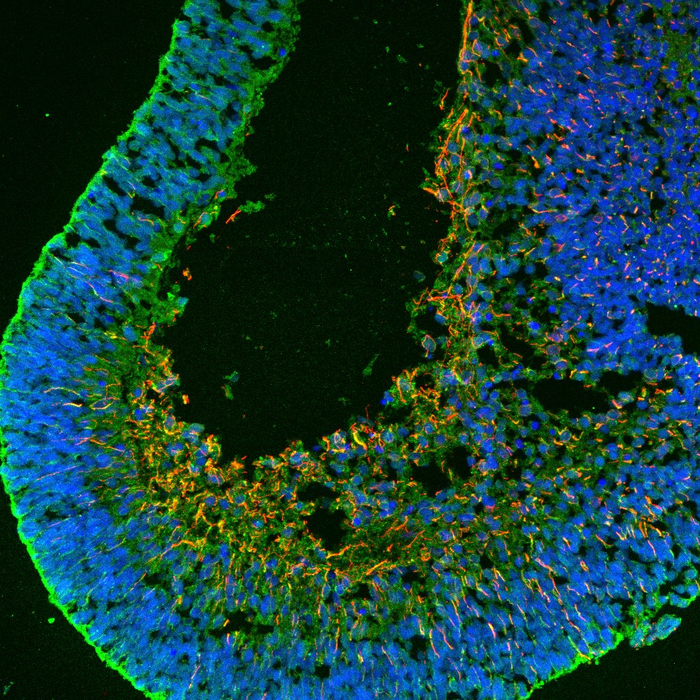
Credit: Sergi Bonilla/Lancet eBioMedicine
Fusing human retinal cells with adult stem cells could be a potential therapeutic strategy to treat retinal damage and visual impairment, according to the findings of a new study published in the journal eBioMedicine. The hybrid cells act by awakening the regenerative potential of human retinal tissue, previously only thought to be the preserve of cold-blood vertebrates.
Cell fusion events – the combination of two different cells into one single entity – are known to be a possible mechanism contributing to tissue regeneration. Though rare in humans, the phenomenon has been consistently detected in the liver, brain, and gastrointestinal tract.
A team led by ICREA Research Professor Pia Cosma at the Centre for Genomic Regulation (CRG) in Barcelona and funded by Fundació “la Caixa” has now found that cell fusion events also take place in the human retina.
The researchers tested whether cell fusion events could differentiate into cells that turn into neurons, which would show potential for tissue regeneration. The team fused Müller glia, cells that play a secondary but important role in maintaining the structure and function of the retina, with adult stem cells derived from human adipose tissue or bone marrow.
“We were able to carry out cell fusion in vitro, creating hybrid cells. Importantly, the process was more efficient in the presence of a chemical signal transmitted from the retina in response to damage, resulting in rates of hybridisation increasing twofold. This gave us an important clue for the role of cell fusion in the retina,” says Sergi Bonilla, postdoctoral researcher at the CRG at the time of publication and first author of the study.
The hybrid cells were injected into a growing retinal organoid, a model that closely resembles the function of the human retina. The researchers found that the hybrid cells successfully engrafted into the tissue and differentiated into cells that closely resemble ganglion cells, a type of neuron essential for vision.
“Our findings are important because they show that the Müller Glia in the human retina have the potential to regenerate neurons,” says Pia Cosma. “Salamanders and fish can repair damage caused to the retina thanks to their Müller glia, which differentiate into neurons that rescue or replace damaged neurons. Mammalian Müller glia have lost this regenerative capacity, which means retinal damage or degradation can lead to visual impairment for life. Our findings bring us one step closer to recovering this ability.”
The authors caution that much work remains to be done before the development of any potential treatments. One of the next steps is understanding why hybrid cells – with four complete sets of chromosomes – don’t result in chromosomal instability and cancer development. The authors of the study believe the retina may have a mechanism regulating chromosome segregation similar to the liver, which contains tetraploid cells that act as a genetic reservoir, undergoing mitosis in response to stress and injury.
The study was led by the Centre for Genomic Regulation in collaboration with the Institute for Bioengineering of Catalonia (IBEC) and the Barraquer Ophthalmology Center. The work is mainly funded by the CaixaResearch Health Research Call from Fundació “la Caixa” awarded to Pia Cosma (CRG), Nuria Montserrat (IBEC) and Justin Christopher D’Antin (Barrraquer). It is also funded by the European Union’s FET-Open EcaBox project, Velux Stiftung, the Spanish Ministry of Science and Innovation and the Catalan Agency for Management of University and Research (AGAUR).
Journal
EBioMedicine
DOI
10.1016/j.ebiom.2022.103914
Method of Research
Experimental study
Subject of Research
Human tissue samples
Article Title
Müller glia fused with adult stem cells undergo neural differentiation in human retinal models
Article Publication Date
9-Mar-2022