• HOME
  • NEWS
  • EXPLORE
    • CAREER
      • Companies
      • Jobs
    • EVENTS
    • iGEM
      • News
      • Team
    • PHOTOS
    • VIDEO
    • WIKI
  • BLOG
  • COMMUNITY
    • FACEBOOK
    • INSTAGRAM
    • TWITTER
Saturday, February 7, 2026
BIOENGINEER.ORG
No Result
View All Result
  • Login
  • HOME
  • NEWS
  • EXPLORE
    • CAREER
      • Companies
      • Jobs
        • Lecturer
        • PhD Studentship
        • Postdoc
        • Research Assistant
    • EVENTS
    • iGEM
      • News
      • Team
    • PHOTOS
    • VIDEO
    • WIKI
  • BLOG
  • COMMUNITY
    • FACEBOOK
    • INSTAGRAM
    • TWITTER
  • HOME
  • NEWS
  • EXPLORE
    • CAREER
      • Companies
      • Jobs
        • Lecturer
        • PhD Studentship
        • Postdoc
        • Research Assistant
    • EVENTS
    • iGEM
      • News
      • Team
    • PHOTOS
    • VIDEO
    • WIKI
  • BLOG
  • COMMUNITY
    • FACEBOOK
    • INSTAGRAM
    • TWITTER
No Result
View All Result
Bioengineer.org
No Result
View All Result
Home NEWS Science News Biology

New study sheds light on early human hair evolution

Bioengineer by Bioengineer
March 9, 2022
in Biology
Reading Time: 2 mins read
0
Milne-Edwards's sifaka
Share on FacebookShare on TwitterShare on LinkedinShare on RedditShare on Telegram

WASHINGTON (March 9, 2022) — Hair is an important feature of primate — including human — diversity and evolution, serving functions tied to thermoregulation, protection, camouflage and signaling. However, the evolution of wild primate hair remained relatively understudied until recently.
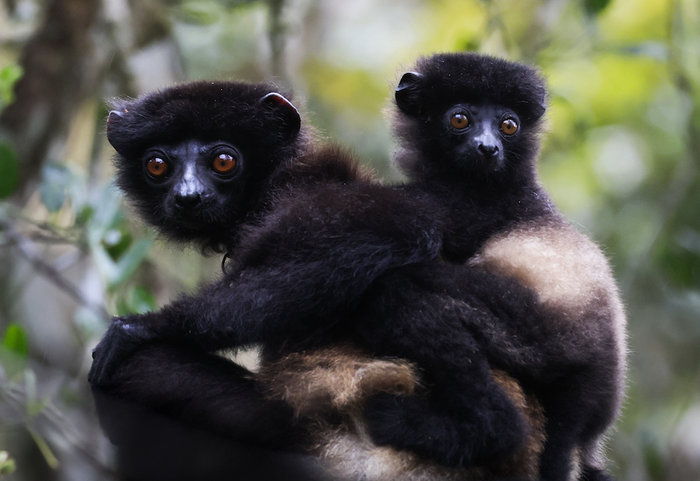
Milne-Edwards's sifaka

Credit: NRowe, AllTheWorldsPrimates.org

WASHINGTON (March 9, 2022) — Hair is an important feature of primate — including human — diversity and evolution, serving functions tied to thermoregulation, protection, camouflage and signaling. However, the evolution of wild primate hair remained relatively understudied until recently.

Researchers in the Primate Genomics Lab at the George Washington University examined what factors drive hair variation in a wild population of lemurs known as Indriidae. Specifically, the researchers aimed to assess the impacts of climate, body size and color vision on hair evolution. They found:

  • Sifaka lemurs, which are native to Madagascar, have denser hair in dry, open environments. The researchers believe that, like early humans, the lemurs’ hair helps protect against the strong rays of the sun.
  • Lemurs in colder regions are more likely to have dark hair. This is the first evidence in mammals for a classic pattern in nature called Bogert’s Rule, which states that dark colors could aid with thermoregulation as they help absorb heat from the sun’s rays.
  • Red hair in lemurs is associated with enhanced color vision. According to the researchers, populations that can see a larger range of colors are more likely to have patches of red hair.
  • Multiple evolutionary pressures may act on one trait and the strength of their influence may vary between species.

“Human hair evolution remains a mystery, largely because hair does not fossilize,” Elizabeth Tapanes, lead author on the paper and a postdoctoral scholar at the University of San Diego, California, said. (Tapanes conducted the study while a doctoral student at GW.) “The lemurs we studied exhibit an upright posture like humans and live in a variety of ecosystems like early humans, so our results provide a unique window into human hair evolution.”

Brenda Bradley, an associate professor of anthropology who directs GW’s Primate Genomics Lab and is a co-author on the study, explained our understanding of hair evolution and diversity in other primates helps us fill in the gaps of our own human evolutionary story.

“Most people are intrigued by the diversity of hair on their own bodies, and the variety of hair types among people around the world,” Bradley said. “Understanding hair patterns in non-human primates, such as these lemurs, may provide a comparative context for understanding how variation arose in human hair.”

The researchers note future work should focus on samples across smaller geographic or phylogenetic (family-level, genus-level) scales and from diverse non-human and human populations.

The study, “Hair phenotype diversity across Indriidae lemurs,” was published March 8, 2022, in the American Journal of Biological Anthropology.

-GW-


Journal

American Journal of Biological Anthropology

DOI

10.1002/ajpa.24508

Article Title

Hair phenotype diversity across Indriidae lemurs

Article Publication Date

8-Mar-2022

Share12Tweet8Share2ShareShareShare2

Related Posts

New Study Uncovers Mechanism Behind Burn Pit Particulate Matter–Induced Lung Inflammation

New Study Uncovers Mechanism Behind Burn Pit Particulate Matter–Induced Lung Inflammation

February 6, 2026

DeepBlastoid: Advancing Automated and Efficient Evaluation of Human Blastoids with Deep Learning

February 6, 2026

Navigating the Gut: The Role of Formic Acid in the Microbiome

February 6, 2026

AI-Enhanced Optical Coherence Photoacoustic Microscopy Revolutionizes 3D Cancer Model Imaging

February 6, 2026

POPULAR NEWS

  • Robotic Ureteral Reconstruction: A Novel Approach

    Robotic Ureteral Reconstruction: A Novel Approach

    82 shares
    Share 33 Tweet 21
  • Digital Privacy: Health Data Control in Incarceration

    63 shares
    Share 25 Tweet 16
  • Study Reveals Lipid Accumulation in ME/CFS Cells

    57 shares
    Share 23 Tweet 14
  • Breakthrough in RNA Research Accelerates Medical Innovations Timeline

    53 shares
    Share 21 Tweet 13

About

We bring you the latest biotechnology news from best research centers and universities around the world. Check our website.

Follow us

Recent News

Exploring Decision-Making in Dementia Caregivers’ Mobility

Succinate Receptor 1 Limits Blood Cell Formation, Leukemia

Palmitoylation of Tfr1 Drives Platelet Ferroptosis and Exacerbates Liver Damage in Heat Stroke

Subscribe to Blog via Email

Enter your email address to subscribe to this blog and receive notifications of new posts by email.

Join 73 other subscribers
  • Contact Us

Bioengineer.org © Copyright 2023 All Rights Reserved.

Welcome Back!

Login to your account below

Forgotten Password?

Retrieve your password

Please enter your username or email address to reset your password.

Log In
No Result
View All Result
  • Homepages
    • Home Page 1
    • Home Page 2
  • News
  • National
  • Business
  • Health
  • Lifestyle
  • Science

Bioengineer.org © Copyright 2023 All Rights Reserved.