By combining CRISPR technology with a protein designed with artificial intelligence, it is possible to awaken individual dormant genes by disabling the chemical “off switches” that silence them. Researchers from the University of Washington School of Medicine in Seattle describe this finding in the journal Cell Reports.
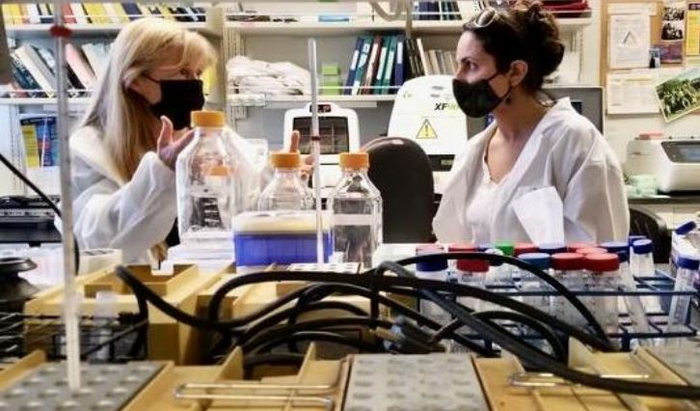
Credit: Thatcher Heldring/UW Medicine Institute for Stem Cell and Regenerative Medicine
By combining CRISPR technology with a protein designed with artificial intelligence, it is possible to awaken individual dormant genes by disabling the chemical “off switches” that silence them. Researchers from the University of Washington School of Medicine in Seattle describe this finding in the journal Cell Reports.
The approach will allow researchers to understand the role individual genes play in normal cell growth and development, in aging, and in such diseases as cancer, said Shiri Levy, a postdoctoral fellow in UW Institute for Stem Cell and Regenerative Medicine (ISCRM) and the lead author of the paper.
“The beauty of this approach is we can safely upregulate specific genes to affect cell activity without permanently changing the genome and cause unintended mistakes,” Levy said.
The project was led by Hannele Ruohola-Baker, professor of biochemistry and associate director of ISCRM. The AI-designed protein was developed at the UW Medicine Institute for Protein Design (IPD) under the leadership of David Baker, also a professor of biochemistry and head of the IPD.
The new technique controls gene activity without altering the DNA sequence of the genome by targeting chemical modifications that help package genes in our chromosomes and regulate their activity. Because these modifications occur not in, but on top of genes, they are called epigenetic, from the Greek epi “over” or “above” the genes. The chemical modifications that regulate gene activity are called epigenetic markers.
Scientists are particularly interested in epigenetic modifications because not only do they affect gene activity in normal cell function, epigenetic markers accumulate with time, contribute to aging, and can affect of the health of future generations as we can pass them on to our children.
In their work, Levy and her colleagues focused on a complex of proteins called PRC2 that silences genes by attaching a small molecule, called a methyl group, to a protein that packages genes called histones. These methyl groups must be refreshed so if PRC2 is blocked the genes it has silenced. it can be reawakened.
PRC2 is active throughout development but plays a particularly important role during the first days of life when embryonic cells differentiate into the variouscell types that will form the tissues and organs of the growing embryo. PRC2 can be blocked with chemicals, but they are imprecise, affecting PRC2 function throughout the genome. The goal of the UW researchers was to find a way to block PRC2 so that only one
Journal
Cell Reports
DOI
10.1016/j.celrep.2022.110457
Method of Research
Experimental study
Subject of Research
Cells
Article Title
dCas9 fusion to computer-designed PRC2 inhibitor reveals functional TATA box in distal promoter region
Article Publication Date
1-Mar-2022
COI Statement
Shiri Levy, Hannele Ruohoia Baker, and David Baker are co-inventors on US patent application no. 17/434,832. Shiri Levyis a founder and stockholder at Histone Therapeutics Corp., a company that aims to develop inventions described in this manuscript. Karol Bomsztyk is a co-founder, board member, and equity holder of Matchstick Technologies, Inc., and the developer and maker of the PIXUL instrument.