• HOME
  • NEWS
  • EXPLORE
    • CAREER
      • Companies
      • Jobs
    • EVENTS
    • iGEM
      • News
      • Team
    • PHOTOS
    • VIDEO
    • WIKI
  • BLOG
  • COMMUNITY
    • FACEBOOK
    • INSTAGRAM
    • TWITTER
Friday, August 21, 2026
BIOENGINEER.ORG
No Result
View All Result
  • Login
  • HOME
  • NEWS
  • EXPLORE
    • CAREER
      • Companies
      • Jobs
        • Lecturer
        • PhD Studentship
        • Postdoc
        • Research Assistant
    • EVENTS
    • iGEM
      • News
      • Team
    • PHOTOS
    • VIDEO
    • WIKI
  • BLOG
  • COMMUNITY
    • FACEBOOK
    • INSTAGRAM
    • TWITTER
  • HOME
  • NEWS
  • EXPLORE
    • CAREER
      • Companies
      • Jobs
        • Lecturer
        • PhD Studentship
        • Postdoc
        • Research Assistant
    • EVENTS
    • iGEM
      • News
      • Team
    • PHOTOS
    • VIDEO
    • WIKI
  • BLOG
  • COMMUNITY
    • FACEBOOK
    • INSTAGRAM
    • TWITTER
No Result
View All Result
Bioengineer.org
No Result
View All Result
Home NEWS Science News Biology

New molecular mechanism promotes growth of duckweed, an important plant in aquatic ecosystems

Bioengineer by Bioengineer
February 23, 2022
in Biology
Reading Time: 3 mins read
0
First Author Tadashi Toyama
Share on FacebookShare on TwitterShare on LinkedinShare on RedditShare on Telegram

A representative producer in aquatic ecosystems, duckweed yields sustainable biomass for animal feeds, human food, and biofuels. It also contributes toward effective wastewater treatment. Due to these benefits, there is great interest in enhancing duckweed productivity – and recent research has identified a way to promote duckweed growth.

Plant growth-promoting bacteria (PGPB) can improve the productivity of terrestrial plants. Scientists based in Japan were interested in identifying the molecular mechanisms underlying a duckweed-PGPB interaction. Through their research, they successfully isolated a new PGPB (Ensifer sp. SP4), which increased the biomass productivity of duckweed by 2.7-fold with elevated photosynthesis.

“We found that organic compounds were transferred from the PGPB to duckweed. These compounds, particularly glutamic acid, might trigger an increase in the photosynthetic activity,” explained Tadashi Toyama, first author on this research paper.

Toyama and colleagues proposed a new model for the molecular mechanism of duckweed growth promotion by Ensifer sp. SP4, which they describe as a promising PGPB for increasing biomass yield, wastewater purification activity, and CO2 capture.

This is the first study to present a molecular mechanism model that unravels the interactions between duckweed plants and new plant growth-promoting bacteria in aquatic ecosystems. To learn more, read “Growth Promotion of Giant Duckweed Spirodela polyrhiza (Lemnaceae) by Ensifer sp. SP4 Through Enhancement of Nitrogen Metabolism and Photosynthesis” published in the MPMI journal.
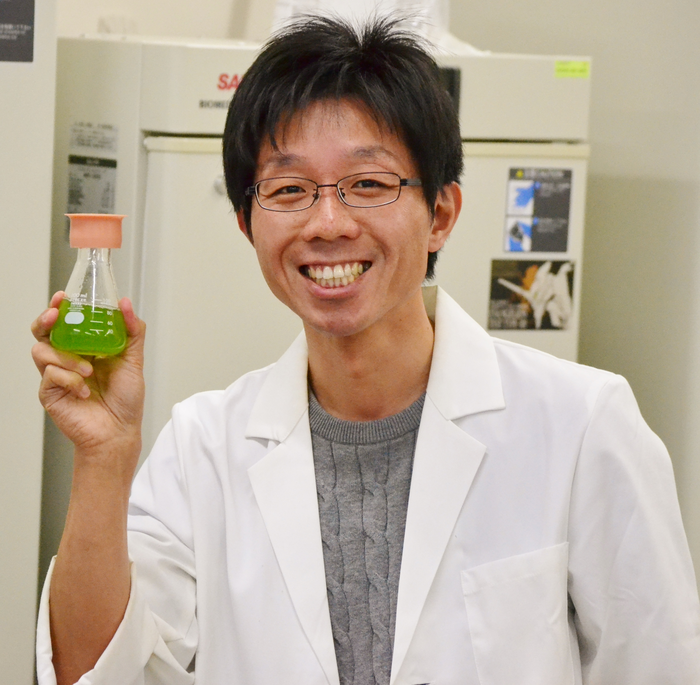
First Author Tadashi Toyama

Credit: Tadashi Toyama

A representative producer in aquatic ecosystems, duckweed yields sustainable biomass for animal feeds, human food, and biofuels. It also contributes toward effective wastewater treatment. Due to these benefits, there is great interest in enhancing duckweed productivity – and recent research has identified a way to promote duckweed growth.

Plant growth-promoting bacteria (PGPB) can improve the productivity of terrestrial plants. Scientists based in Japan were interested in identifying the molecular mechanisms underlying a duckweed-PGPB interaction. Through their research, they successfully isolated a new PGPB (Ensifer sp. SP4), which increased the biomass productivity of duckweed by 2.7-fold with elevated photosynthesis.

“We found that organic compounds were transferred from the PGPB to duckweed. These compounds, particularly glutamic acid, might trigger an increase in the photosynthetic activity,” explained Tadashi Toyama, first author on this research paper.

Toyama and colleagues proposed a new model for the molecular mechanism of duckweed growth promotion by Ensifer sp. SP4, which they describe as a promising PGPB for increasing biomass yield, wastewater purification activity, and CO2 capture.

This is the first study to present a molecular mechanism model that unravels the interactions between duckweed plants and new plant growth-promoting bacteria in aquatic ecosystems. To learn more, read “Growth Promotion of Giant Duckweed Spirodela polyrhiza (Lemnaceae) by Ensifer sp. SP4 Through Enhancement of Nitrogen Metabolism and Photosynthesis” published in the MPMI journal.


Journal

Molecular Plant-Microbe Interactions

DOI

10.1094/MPMI-06-21-0157-R

Method of Research

Experimental study

Subject of Research

Not applicable

Article Title

Growth Promotion of Giant Duckweed Spirodela polyrhiza (Lemnaceae) by Ensifer sp. SP4 Through Enhancement of Nitrogen Metabolism and Photosynthesis

Article Publication Date

23-Jan-2022

Share12Tweet8Share2ShareShareShare2

Related Posts

OSPREY trial broadens neurostimulation treatment options for obstructive sleep apnea

OSPREY trial broadens neurostimulation treatment options for obstructive sleep apnea

August 21, 2026
Postglacial Colonization and Isolation Shape Venustaconcha ellipsiformis Population Structure, Informing Conservation

Postglacial Colonization and Isolation Shape Venustaconcha ellipsiformis Population Structure, Informing Conservation

August 21, 2026

KAIST develops technology reversing irreversible biological changes, advancing aging and cancer research

August 21, 2026

Mainz cell biologist Uwe Wolfrum honored for major contributions to vision research

August 21, 2026

POPULAR NEWS

  • Hidden survival strategy emerges for California’s most endangered salmon

    29 shares
    Share 12 Tweet 7
  • Stanford study shows molecular glue converts cancer driver into built-in kill switch

    29 shares
    Share 12 Tweet 7
  • CASUS and Microsoft Research Partner to Advance Scientific Discovery

    29 shares
    Share 12 Tweet 7
  • Heart failure patients, caregivers, and clinicians embrace mobile health despite adoption barriers

    29 shares
    Share 12 Tweet 7

About

We bring you the latest biotechnology news from best research centers and universities around the world. Check our website.

Follow us

Recent News

Hidden survival strategy emerges for California’s most endangered salmon

Stanford study shows molecular glue converts cancer driver into built-in kill switch

CASUS and Microsoft Research Partner to Advance Scientific Discovery

Subscribe to Blog via Email

Enter your email address to subscribe to this blog and receive notifications of new posts by email.

Join 85 other subscribers
  • Contact Us

Bioengineer.org © Copyright 2023 All Rights Reserved.

Welcome Back!

Login to your account below

Forgotten Password?

Retrieve your password

Please enter your username or email address to reset your password.

Log In
No Result
View All Result
  • Homepages
    • Home Page 1
    • Home Page 2
  • News
  • National
  • Business
  • Health
  • Lifestyle
  • Science

Bioengineer.org © Copyright 2023 All Rights Reserved.