CHAMPAIGN, Ill. — Embryonic stem cells and other pluripotent cells divide rapidly and have the capacity to become nearly any cell type in the body. Scientists have long sought to understand the signals that prompt stem cells to switch off pluripotency and adopt their final functional state.

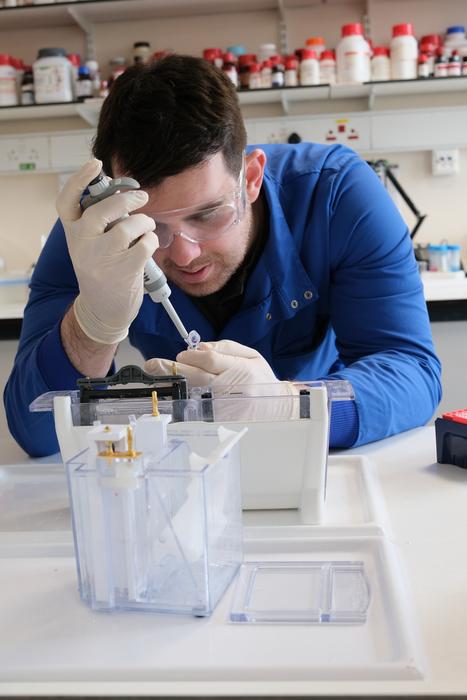
Credit: Photo by L. Brian Stauffer
CHAMPAIGN, Ill. — Embryonic stem cells and other pluripotent cells divide rapidly and have the capacity to become nearly any cell type in the body. Scientists have long sought to understand the signals that prompt stem cells to switch off pluripotency and adopt their final functional state.
In a study published in the Proceedings of the National Academy of Sciences, researchers report that they have identified a key regulator of this process. They discovered that a molecule known as BEND3 shuts down expression of hundreds of genes associated with differentiation, maintaining the cell’s stem cell-like status. Only when BEND3 is downregulated can cells adopt their final form and function. Once they differentiate, they usually stop actively proliferating.
The findings are relevant to understanding normal development and also may be useful in cancer research, said University of Illinois Urbana-Champaign cell and developmental biology professor and department head Supriya Prasanth, who led the research.
“In most cancers, cells are going through this rampant proliferation because cell-cycle regulators are not functioning properly,” she said. “The prognosis of how cancer cells will respond to treatment often relates to its status of differentiation. The more differentiated a tumor is, the better the prognosis.”
Stem cells have the capacity to repopulate a cancer tumor after it has shrunk during treatment, Prasanth said. Finding a molecular switch that will shift cancer cells away from proliferation and toward differentiation could aid in cancer treatment.
Prasanth’s laboratory focuses on cell cycle regulators. Her early studies identified BEND3 as a potentially important player in the system. Her team found that when BEND3 bound to strategic locales along the chromosome, it reduced or blocked the expression of dozens of genes. When BEND3 was removed, gene expression rebounded.
“When you do these gene-expression studies, you can see hundreds of genes go up, hundreds down,” Prasanth said. “But what does it really mean?”
In the new work, she and her colleagues found that many of the genes repressed by BEND3 promote cell differentiation. Illinois graduate students Fredy Kurniawan and Neha Chetlangia spearheaded the work with postdoctoral researcher Mohammad Kamran, in collaboration with the laboratory of U. of I. cell and developmental biology professor Kannanganattu Prasanth and Mirit Aladjem, a senior investigator at the National Institutes of Health’s National Cancer Institute.
“The binding of BEND3 to these genes blocks their expression, preventing the cells from entering a differentiated state,” Supriya Prasanth said. “And the moment you remove that control, the cells are now moving toward the differentiation pathway.”
BEND3 is not the only regulator of the cell-differentiation pathway; it binds to and interacts with many other molecular regulators of this process, Supriya Prasanth said. But its presence or absence appears critical to determining a cell’s fate, making it an attractive target for potential medical interventions when the process goes awry.
In an accompanying paper published in the journal Genes and Development, the Supriya Prasanth lab and collaborators at the Memorial Sloan Kettering Cancer Center provided structural insights into BEND3-mediated gene regulation.
The National Institutes of Health, the National Science Foundation and the Cancer Center at Illinois supported this research.
Editor’s notes:
To reach Supriya Prasanth, email [email protected].
The paper “BEND3 safeguards pluripotency by repressing differentiation-associated genes” is available by contacting [email protected].
Journal
Proceedings of the National Academy of Sciences
DOI
10.1073/pnas.2107406119
Method of Research
Experimental study
Subject of Research
Cells
Article Title
BEND3 safeguards pluripotency by repressing differentiation-associated genes
Article Publication Date
21-Feb-2022
COI Statement
The authors declare no competing financial interests.