• HOME
  • NEWS
  • EXPLORE
    • CAREER
      • Companies
      • Jobs
    • EVENTS
    • iGEM
      • News
      • Team
    • PHOTOS
    • VIDEO
    • WIKI
  • BLOG
  • COMMUNITY
    • FACEBOOK
    • INSTAGRAM
    • TWITTER
Saturday, June 27, 2026
BIOENGINEER.ORG
No Result
View All Result
  • Login
  • HOME
  • NEWS
  • EXPLORE
    • CAREER
      • Companies
      • Jobs
        • Lecturer
        • PhD Studentship
        • Postdoc
        • Research Assistant
    • EVENTS
    • iGEM
      • News
      • Team
    • PHOTOS
    • VIDEO
    • WIKI
  • BLOG
  • COMMUNITY
    • FACEBOOK
    • INSTAGRAM
    • TWITTER
  • HOME
  • NEWS
  • EXPLORE
    • CAREER
      • Companies
      • Jobs
        • Lecturer
        • PhD Studentship
        • Postdoc
        • Research Assistant
    • EVENTS
    • iGEM
      • News
      • Team
    • PHOTOS
    • VIDEO
    • WIKI
  • BLOG
  • COMMUNITY
    • FACEBOOK
    • INSTAGRAM
    • TWITTER
No Result
View All Result
Bioengineer.org
No Result
View All Result
Home NEWS Science News Biology

Marine life can cling together to survive effects of climate change

Bioengineer by Bioengineer
December 16, 2021
in Biology
Reading Time: 2 mins read
0
Studyspecies
Share on FacebookShare on TwitterShare on LinkedinShare on RedditShare on Telegram

Some marine species can help protect others from climate change by shielding them from heat, according to a new study by a Texas A&M University at Galveston professor.
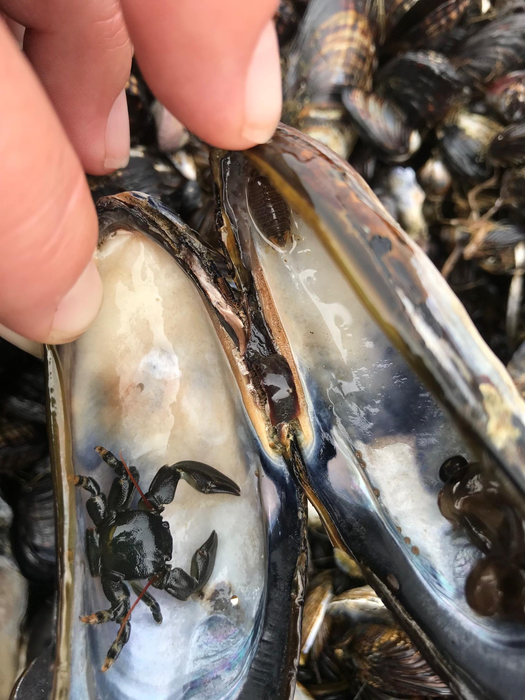
Studyspecies

Credit: Laura Jergens / Texas A&M-Galveston

Some marine species can help protect others from climate change by shielding them from heat, according to a new study by a Texas A&M University at Galveston professor.

Laura Jurgens, assistant professor of marine biology, and colleagues from the University of Vermont and the University of California at Davis detail the findings in the current issue of Ecology.

The team studied how tiny crabs and isopods – which are marine versions of pill bugs – that live on rocky shores react to warming of their natural rocky shore habitats. They found that the mussel beds these animals live in protect them from temperature swings and keep them from drying out and dying on hot, sunny days.

“These mussel beds provide a sort of ‘ecological air conditioning system’ within their canopies, just like forests,” Jurgens said. “The results show how conserving habitats formed by plants and animals can help buy time for heat-sensitive species, helping them weather the near-term effects of climate change. But it also means that habitat destruction can make other species more vulnerable to climate warming.”

The research was conducted in marine areas near Bodega Bay in northern California.

Jurgens said without the protection of mussel beds, some marine species cannot survive under present-day conditions.

“But they can tolerate even a worse-case climate scenario for perhaps as long as the year 2099 as the mussel bed environment remains intact,” she said. “This research shows that it’s more important than ever to protect vulnerable habitats like mussel beds, which are threatened by trampling and destructive recreational harvests of mussels in many coastal areas of the U.S.”

The study was funded by the National Science Foundation.


Journal

Ecology

DOI

10.1002/ecy.3596

Method of Research

News article

Subject of Research

Not applicable

Article Title

Facilitation alters climate change risk on rocky shores

Article Publication Date

23-Nov-2021

Share12Tweet8Share2ShareShareShare2

Related Posts

Natural Hallucinogens: Evolution’s Ecological Tools, Not Mere Chemical Byproducts

June 25, 2026

This Famous Butterfly Revealed: Three Distinct Species Hidden in One

June 25, 2026

Scientists Attack Soybean Cyst Nematode by Starving Its Food Source

June 25, 2026

Decoding the Secret Code of a Crucial Immune Sensor

June 24, 2026

POPULAR NEWS

  • Saying Goodbye to PGY-6: Pediatric Fellowship Realities

    103 shares
    Share 41 Tweet 26
  • Multi-Hospital Study Reveals Long Covid Burden Is Twice as High as Current Estimates

    92 shares
    Share 36 Tweet 23
  • Detection of EDCs in Breast Milk and Infant Urine Up to Six Months Highlights Early Exposure Risks

    77 shares
    Share 31 Tweet 19
  • New Drug Candidate Developed at McMaster Shows Potential for Treating Brain Cancer

    58 shares
    Share 23 Tweet 15

About

We bring you the latest biotechnology news from best research centers and universities around the world. Check our website.

Follow us

Recent News

Tracking Lanthanide-Labeled Microplastics in Plants

POSTECH Researchers Slash Cost of Reconstituted Cell-Free Systems by 95%

AI and Physics Collaborate to Design Advanced Hydrogen Storage Materials

Subscribe to Blog via Email

Success! An email was just sent to confirm your subscription. Please find the email now and click 'Confirm' to start subscribing.

Join 82 other subscribers
  • Contact Us

Bioengineer.org © Copyright 2023 All Rights Reserved.

Welcome Back!

Login to your account below

Forgotten Password?

Retrieve your password

Please enter your username or email address to reset your password.

Log In
No Result
View All Result
  • Homepages
    • Home Page 1
    • Home Page 2
  • News
  • National
  • Business
  • Health
  • Lifestyle
  • Science

Bioengineer.org © Copyright 2023 All Rights Reserved.