• HOME
  • NEWS
  • EXPLORE
    • CAREER
      • Companies
      • Jobs
    • EVENTS
    • iGEM
      • News
      • Team
    • PHOTOS
    • VIDEO
    • WIKI
  • BLOG
  • COMMUNITY
    • FACEBOOK
    • INSTAGRAM
    • TWITTER
Monday, August 24, 2026
BIOENGINEER.ORG
No Result
View All Result
  • Login
  • HOME
  • NEWS
  • EXPLORE
    • CAREER
      • Companies
      • Jobs
        • Lecturer
        • PhD Studentship
        • Postdoc
        • Research Assistant
    • EVENTS
    • iGEM
      • News
      • Team
    • PHOTOS
    • VIDEO
    • WIKI
  • BLOG
  • COMMUNITY
    • FACEBOOK
    • INSTAGRAM
    • TWITTER
  • HOME
  • NEWS
  • EXPLORE
    • CAREER
      • Companies
      • Jobs
        • Lecturer
        • PhD Studentship
        • Postdoc
        • Research Assistant
    • EVENTS
    • iGEM
      • News
      • Team
    • PHOTOS
    • VIDEO
    • WIKI
  • BLOG
  • COMMUNITY
    • FACEBOOK
    • INSTAGRAM
    • TWITTER
No Result
View All Result
Bioengineer.org
No Result
View All Result
Home NEWS Science News Biology

Kurī overlooked for ecological impact on early New Zealand

Bioengineer by Bioengineer
December 16, 2021
in Biology
Reading Time: 3 mins read
0
Kuri bones
Share on FacebookShare on TwitterShare on LinkedinShare on RedditShare on Telegram

The arrival of humans, and the kiore (Pacific rat) they brought with them, has been well documented as bringing about major changes to Aotearoa New Zealand’s environment, but what about their pets?
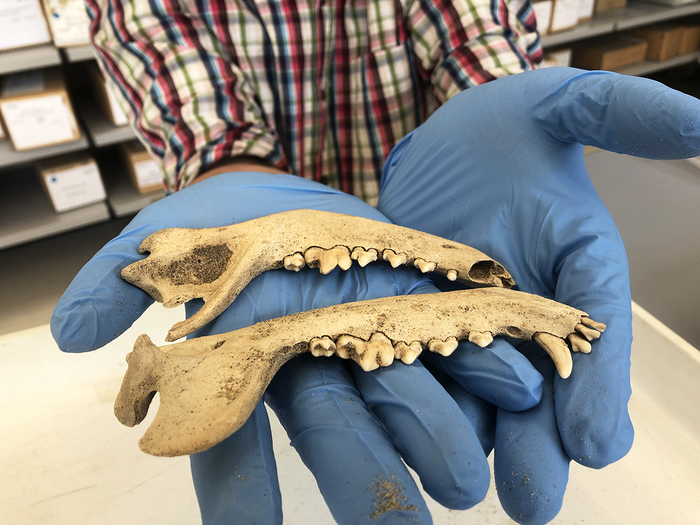
Kuri bones

Credit: University of Otago

The arrival of humans, and the kiore (Pacific rat) they brought with them, has been well documented as bringing about major changes to Aotearoa New Zealand’s environment, but what about their pets?


University of Otago researchers believe kurī (Polynesian dogs) have been overlooked, and even erroneously exonerated by some scientists, for their ecological impact.


In an article published in Frontiers in Ecology and Evolution, Dr Karen Greig, Co-Director of the Southern Pacific Archaeological Research unit and Dr Nic Rawlence, Director of the Otago Palaeogenetics Laboratory in the Department of Zoology, take a fresh look at kurī and argue dogs should be included in any extinction models pertaining to the impact of humans.


“The story of kurī is important for understanding New Zealand’s past and human interactions with the environment, but also for the wider story of people, dogs and the environment globally,” Dr Greig says.


“Their impact on biodiversity has been difficult to scientifically assess but advances in biomolecular methods may enable us to take a closer look.”


New Zealand’s unique animals evolved over millions of years, in the absence of mammalian predators. The arrival of humans marked the beginning of major changes to the country’s biodiversity including widespread extinctions, range contractions, population bottlenecks and biological turnover events. 


“To date, research has focused on the direct impacts of humans, such as over-hunting, and environmental modification, like the widespread burning of forests, and predation by kiore,” Dr Rawlence says.


“Kurī have largely been overlooked in contributing to the ecological consequences of human colonisation with some scientists saying they are ‘exonerated’ from any culpability regarding the impacts of human colonisation.”


The researchers believe that, far from being confined to villages, kurī could have had a significant and widespread impact on New Zealand’s birds, reptiles and marine mammals  as a predator of medium-sized animals (between small and large animals hunted by kiore and humans, respectively), including moa chicks and juveniles, takahē, kākāpō, kiwi, burrowing seabirds, seals and sea lions.


“Kuri may have even formed feral populations in pre-European New Zealand but will require further research we are currently undertaking,” Dr Rawlence says.

Dr Greig believes kurī potentially amplified the already significant impacts of Polynesian colonists and their descendants on New Zealand’s ecosystem, prior to European arrival.


“As such, kurī should be included in models of human impact in addition to over-hunting, environmental modification and predation by kiore,” she says.


Publication details:


The potential contribution of kurī (Polynesian dog) to the ecological impacts of the human settlement of Aotearoa New Zealand


Karen Greig and Nicolas J. Rawlence


Frontiers in Ecology and Evolution


https://www.frontiersin.org/articles/10.3389/fevo.2021.757988


Journal

Frontiers in Ecology and Evolution

DOI

10.3389/fevo.2021.757988

Article Title

The Contribution of Kurī (Polynesian Dog) to the Ecological Impacts of the Human Settlement of Aotearoa New Zealand

Article Publication Date

15-Dec-2021

Share12Tweet7Share2ShareShareShare1

Related Posts

Cochrane Map Reveals Major Evidence Gaps in Dengue Prevention Research

Cochrane Map Reveals Major Evidence Gaps in Dengue Prevention Research

August 24, 2026
Delayed antiviral response in alveolar type 2 cells heightens influenza susceptibility

Delayed antiviral response in alveolar type 2 cells heightens influenza susceptibility

August 22, 2026

Genetic evidence links sleep disruption to hemorrhoidal disease, revealing a hidden connection

August 22, 2026

LASIK Versus Contact Lenses for Correcting Myopia

August 22, 2026

POPULAR NEWS

  • Cochrane Map Reveals Major Evidence Gaps in Dengue Prevention Research

    Cochrane Map Reveals Major Evidence Gaps in Dengue Prevention Research

    29 shares
    Share 12 Tweet 7
  • Study reveals surge in type 2 diabetes among people under 20

    29 shares
    Share 12 Tweet 7
  • KAIST discovers pathway to faster-charging, longer-lasting electric vehicle batteries

    29 shares
    Share 12 Tweet 7
  • Blocking glucosylceramide production kills cancer cells via lysosomal dysfunction, not ceramide buildup

    29 shares
    Share 12 Tweet 7

About

We bring you the latest biotechnology news from best research centers and universities around the world. Check our website.

Follow us

Recent News

Cochrane Map Reveals Major Evidence Gaps in Dengue Prevention Research

Study reveals surge in type 2 diabetes among people under 20

KAIST discovers pathway to faster-charging, longer-lasting electric vehicle batteries

Subscribe to Blog via Email

Enter your email address to subscribe to this blog and receive notifications of new posts by email.

Join 85 other subscribers
  • Contact Us

Bioengineer.org © Copyright 2023 All Rights Reserved.

Welcome Back!

Login to your account below

Forgotten Password?

Retrieve your password

Please enter your username or email address to reset your password.

Log In
No Result
View All Result
  • Homepages
    • Home Page 1
    • Home Page 2
  • News
  • National
  • Business
  • Health
  • Lifestyle
  • Science

Bioengineer.org © Copyright 2023 All Rights Reserved.