When it comes to climate-friendly behaviour, there is often a gap between what we want and what we actually do. Although most people want to see climate change slowed down, many do not behave in an appropriately sustainable way. Researchers at the University of Bern have now used brain stimulation to demonstrate that the ability to mentalise with the future victims of climate change encourages sustainable behaviour.
Credit: photo provided by the authors
When it comes to climate-friendly behaviour, there is often a gap between what we want and what we actually do. Although most people want to see climate change slowed down, many do not behave in an appropriately sustainable way. Researchers at the University of Bern have now used brain stimulation to demonstrate that the ability to mentalise with the future victims of climate change encourages sustainable behaviour.
Global climate change may be the biggest challenge faced by humanity today. Despite decades of warnings and political resolutions, however, sustainability remains a long way from being achieved. “The fact that people aren’t acting in a more climate friendly way isn’t because we know too little about this critical situation, though.” explains Daria Knoch, Professor for Social Neuroscience at the University of Bern. To find out more about the reasons that prevent us from acting sustainably, Daria Knoch and her team have conducted a neuroscientific study. The findings have just been published in the renowned international journal Cortex.
While some effects of global warming are already visible today, those affected more strongly will be people in the future who we do not know. “It is precisely our inability to mentalise with these strangers that discourages climate-friendly action,” says Daria Knoch, commenting on the findings of the new study that she carried out with her research group in the “Social Neuro Lab” at the University of Bern. During the study, participants received stimulation to a part of their brain which plays an important role for taking the perspective of others. This stimulation led to more sustainable behaviour.
Stimulation of the part of the brain responsible for forming perspectives
During the experiment, participants in groups of four withdrew real money from a shared pool. Each participant decided for themself: the more money they withdrew from the pool, the more they ultimately had in their pocket. However, if the group of four withdrew too much money overall, this had consequences for the next group: the payment they received was much lower. Thus, the experiment mimicked a real situation in which the overuse of a resource has negative consequences for other people in the future.
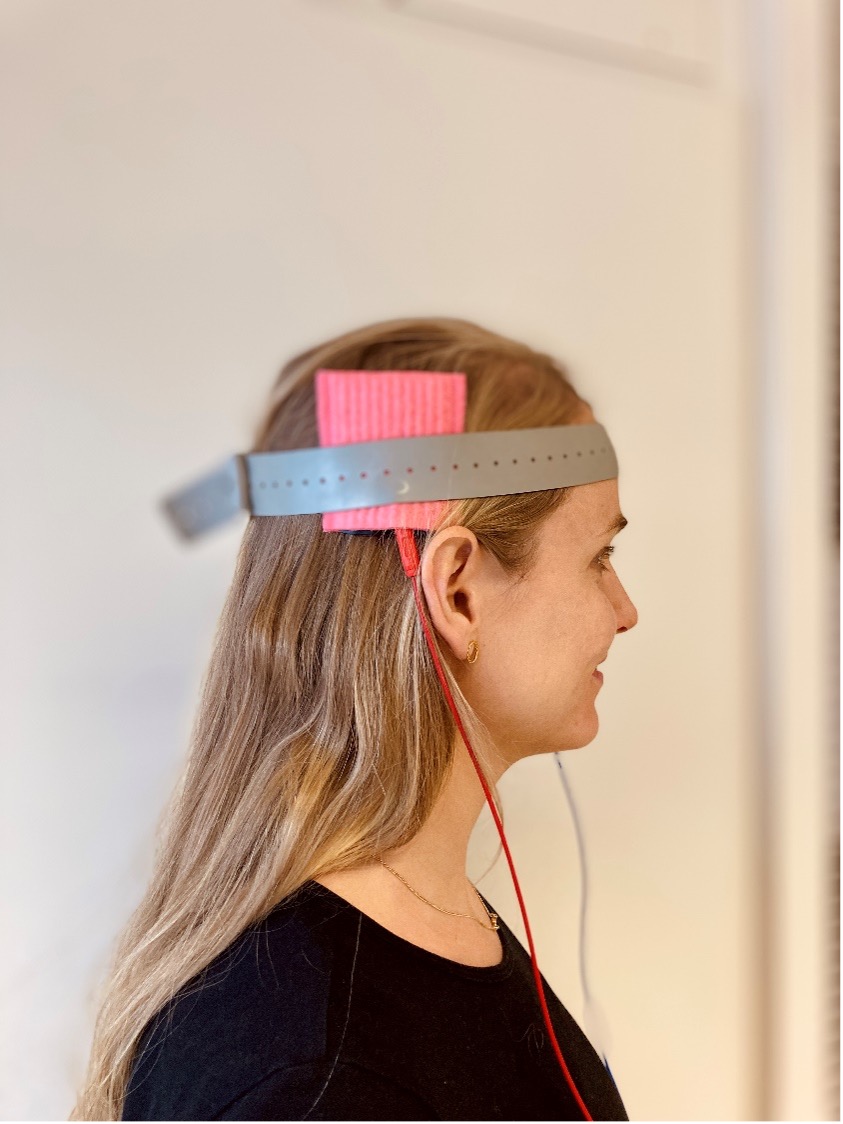
While deciding on the amount of money to withdraw, some participants received a brain stimulation (experimental group): a non-invasive, harmless, mild electrical current was applied to the skull to increase the function of the stimulated brain area. The researchers in Bern stimulated an area which plays a strong role in taking the perspective of others, and discovered that it had a considerable impact: the stimulated individuals made more sustainable decisions than the participants without the stimulation (control group), by deciding not to withdraw an excessive amount of money from the pool.
Benefits for climate communication
“Applying brain stimulation to the general public is out the question, of course,” explains Benedikt Langenbach, lead author of the study and a former PhD student at the Social Neuro Lab. However, according to the researchers, the functioning brain area in question can also be enhanced, for example, through neurofeedback and meditation. According to Benedikt Langenbach, who now works at the University of Duisburg-Essen, additional strategies are also available to improve the forming of perspectives: “We know that people are more likely to empathise with someone – a victim of climate change, for example – if they are able to identify with them.”
Daria Knoch adds: “Our neuroscientific findings can therefore help to make communication on the climate crisis more effective, for instance by giving those affected a name and a face instead of talking about an anonymous ‘future generation’.”
Journal
Cortex
DOI
10.1016/j.cortex.2021.11.006
Method of Research
Experimental study
Subject of Research
People
Article Title
Mentalizing with the future: Electrical stimulation of the right TPJ increases sustainable decision-making