Moderate to vigorous physical activity is associated with risk reductions of non-communicable diseases and mortality. However, whether cardiovascular health status affects the relationship between physical activity and health outcomes is unknown. A study publishing December 2nd in PLOS Medicine by Thijs Eijsvogels at Radboud University Medical Center, The Netherlands and colleagues suggests that while risk reduction for healthy individuals plateaus at higher levels of physical activity, those with cardiovascular disease have no upper limit of physical activity beyond which there is no further benefit.
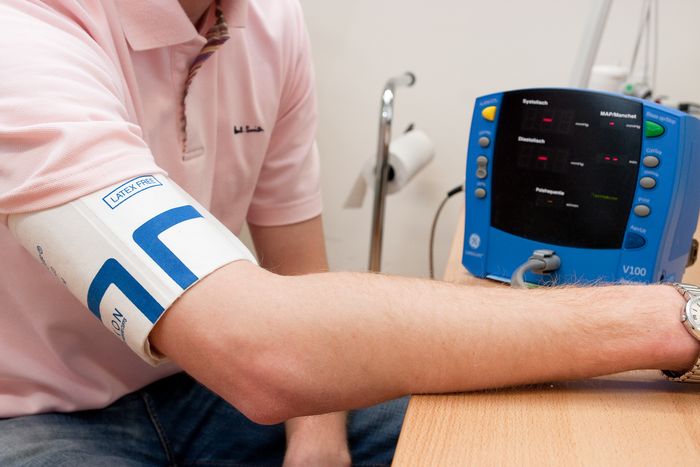
Credit: Lifelines (https://www.lifelines.nl/), CC BY 4.0 (https://creativecommons.org/licenses/by/4.0/)
Moderate to vigorous physical activity is associated with risk reductions of non-communicable diseases and mortality. However, whether cardiovascular health status affects the relationship between physical activity and health outcomes is unknown. A study publishing December 2nd in PLOS Medicine by Thijs Eijsvogels at Radboud University Medical Center, The Netherlands and colleagues suggests that while risk reduction for healthy individuals plateaus at higher levels of physical activity, those with cardiovascular disease have no upper limit of physical activity beyond which there is no further benefit.
How cardiovascular health status affects the association between physical activity and health outcomes is not well understood. To investigate, researchers used prospectively gathered data from the Lifelines Cohort Study; a population-based cohort of 167,729 individuals living in the Northern Netherlands. They compared the association between physical activity and major adverse cardiovascular events as well as all-cause mortality across healthy individuals, individuals with elevated levels of cardiovascular risk factors, and individuals with cardiovascular disease.
The researchers found that increasing physical activity reduced mortality risk in all groups. However, health benefits appeared to level-off above a certain volume of physical activity in healthy individuals and those with cardiovascular risk factors. In cardiovascular disease patients, the researchers found no evidence of an upper physical activity limit above which there is no further health benefit. The study was limited in that it relied on self-reported physical activity data from participants, so future research is needed to further validate the findings.
According to the authors, “These findings suggest that cardiovascular disease patients should be encouraged that ‘more is better’ in regard to physical activity. Physical activity recommendations should not follow a ‘one-guideline-fits-all’ approach but underline the need for precision medicine in which physical activity prescription may be dependent, amongst other factors, on an individual’s cardiovascular health status.”
#####
In your coverage, please use this URL to provide access to the freely available paper in PLOS Medicine: http://journals.plos.org/plosmedicine/article?id=10.1371/journal.pmed.1003845
Citation: Bakker EA, Lee D-c, Hopman MTE, Oymans EJ, Watson PM, Thompson PD, et al. (2021) Dose–response association between moderate to vigorous physical activity and incident morbidity and mortality for individuals with a different cardiovascular health status: A cohort study among 142,493 adults from the Netherlands. PLoS Med 18(12): e1003845. https://doi.org/10.1371/journal.pmed.1003845
Author Countries: The Netherlands, United Kingdom, United States
Funding: The work of T.M.H.E is supported by the Netherlands Heart Foundation [Senior E-Dekker grant #2017T051]. The Lifelines Biobank initiative received funding from the Dutch Ministry of Health, Welfare and Sport, the Dutch Ministry of Economic Affairs, the University Medical Center Groningen [UMCG], University Groningen and the Northern Provinces of the Netherlands. The funders had no role in study design, data collection and analysis, decision to publish, or preparation of the manuscript.
Journal
PLoS Medicine
DOI
10.1371/journal.pmed.1003845
Method of Research
Observational study
Subject of Research
People
COI Statement
PDT is a member of the study executive committee for the Esperion Pharmaceuticals CLEAR OUTCOMES study. All other authors declare that they have no conflict of interest.